


The human brain is a marvel of biological engineering, a complex network of neurons that orchestrates everything from basic survival instincts to the highest forms of abstract reasoning. To understand how we navigate the world, make decisions, and communicate our thoughts, we must look closely at the cerebral cortex. Among its various regions, the frontal lobe stands out as the "command center" of the brain, playing a pivotal role in regulating behavior, executing motor functions, and facilitating the complex mechanics of language.
The Frontal Lobe: The Brain's Executive Suite
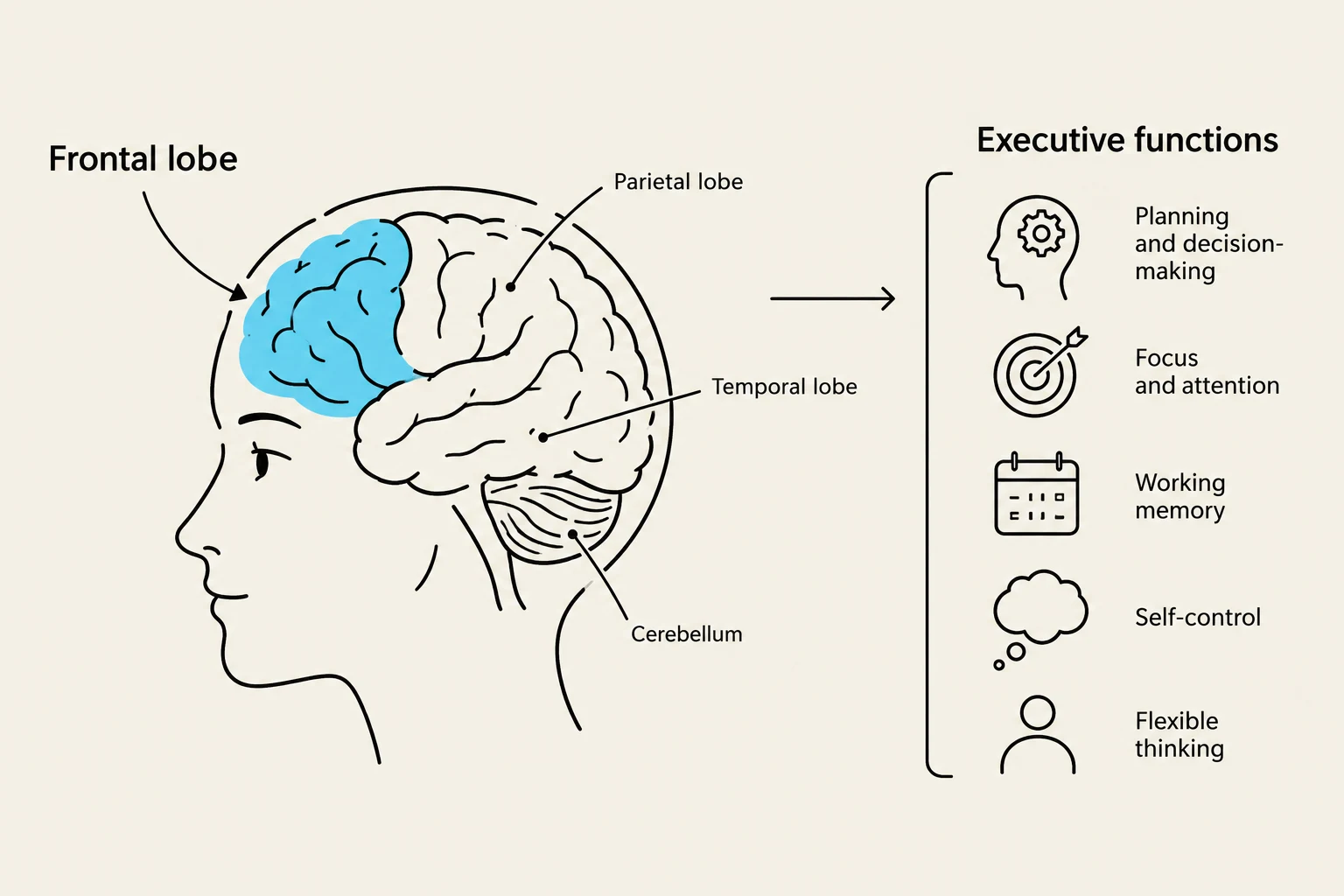
The frontal lobe is located at the front of the cerebral cortex, directly behind the forehead. It is arguably the most advanced part of the human brain, responsible for what psychologists call "executive functions." These functions allow us to plan for the future, weigh the consequences of our actions, and inhibit impulsive behaviors that might be socially inappropriate.
Unlike the more primitive parts of the brain (such as the brainstem), which handle autonomic functions like breathing, the frontal lobe is heavily involved in higher-order cognitive processes. This includes:
- Decision Making: Evaluating different options and choosing a course of action.
- Problem Solving: Using logic and reasoning to navigate complex situations.
- Impulse Control: The ability to pause before acting, a key component of emotional regulation.
- Working Memory: Holding and manipulating information in your mind over short periods.
Exam Tip: If a clinical case study describes a patient who has become suddenly impulsive, socially inappropriate, or unable to plan their daily routine after a head injury, look toward the frontal lobe as the primary site of dysfunction.
Keep reading for free.
Create an account to finish this reading and make it part of your study routine.
Continue reading freeAlready have an account? Log in
Updated