This article explores methods for emptying the colon, managing bowel incontinence, and specialized care for ostomy patients, covering enemas, rectal interventions, oral intestinal lavage, incontinence-associated dermatitis, and ostomy types and care.
Effective bowel elimination is a fundamental aspect of patient health and comfort. Whether managing a patient with temporary incontinence or a permanent ostomy, healthcare providers must understand the physiological processes of the gastrointestinal tract and the various interventions used to maintain hygiene, skin integrity, and nutritional balance. This article explores the methods for emptying the colon, the management of incontinence, and the specialized care required for ostomy patients.
Methods for Emptying the Colon
When natural peristalsis—the rhythmic contractions that move waste through the intestine—is insufficient, clinicians may need to employ various methods to empty the colon. These interventions range from localized rectal treatments to systemic oral preparations.
Enemas and Rectal Interventions
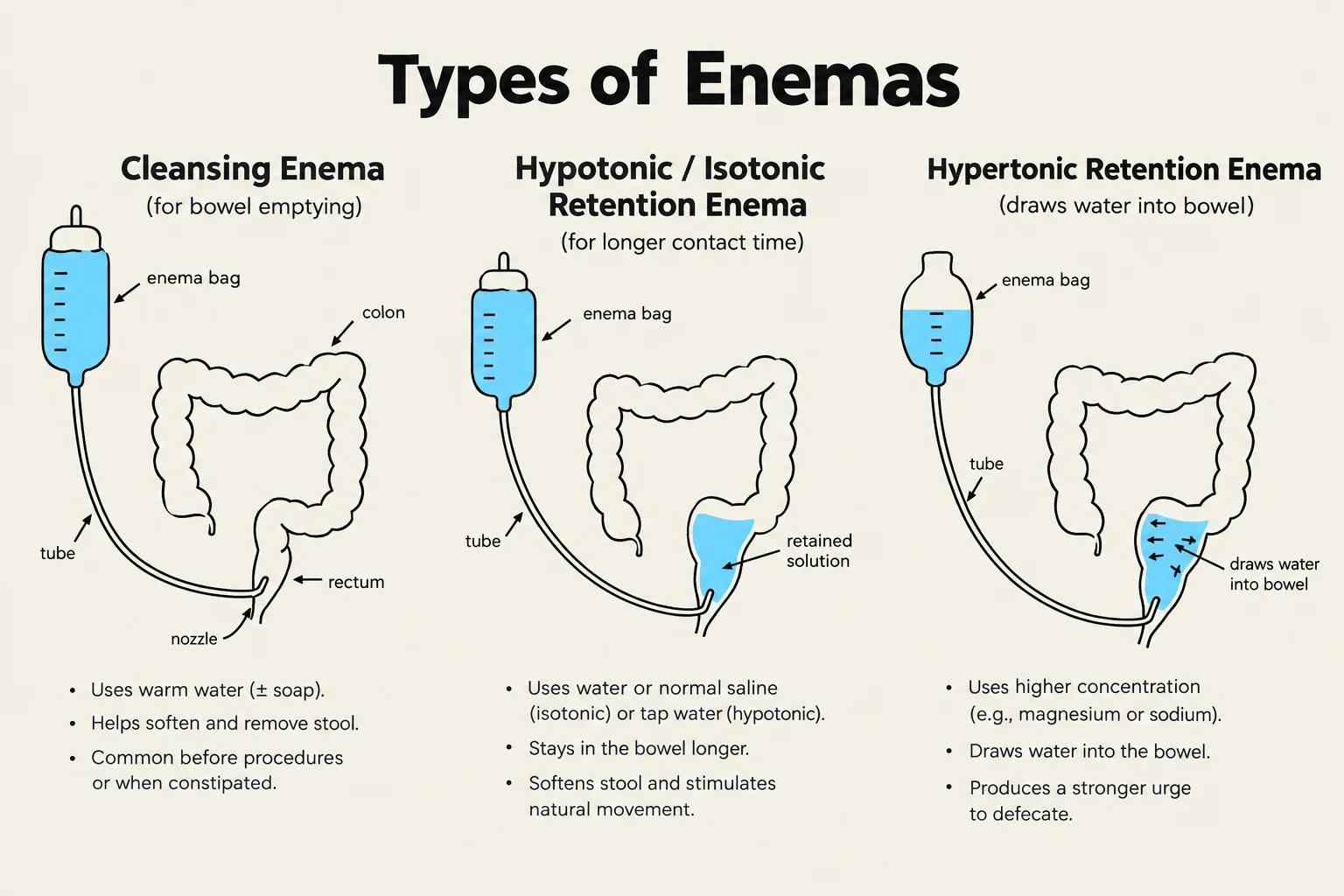
Enemas are one of the most common methods for bowel evacuation. They are categorized based on their intended effect and the solution used:
Cleansing Enemas: Used to stimulate peristalsis and evacuate the colon of feces.
Retention Enemas: These are designed to stay in the rectum for a period to achieve a specific effect. They utilize different types of solutions:
Hypotonic or Isotonic Solutions: These work by drawing fluid into the bowel to soften stool.
Hypertonic Solutions: These use a higher concentration of solutes to pull water from the surrounding tissues into the colon, stimulating evacuation.
Oil Retention Enemas: These involve instilling oil into the rectum to lubricate the stool and the intestinal wall, making defecation easier.
Other rectal methods include rectal suppositories, which are inserted into the rectum to stimulate movement or deliver medication, and digital removal of stool, a manual procedure used in cases of severe fecal impaction.
Diagram illustrating three types of enemas: Cleansing Enema, Hypotonic/Isotonic Retention Enema, and Hypertonic Retention Enema, with descriptions of their uses and mechanisms.
Oral Intestinal Lavage
Unlike enemas, which are administered rectally, oral intestinal lavage involves the ingestion of solutions to cleanse the entire intestinal tract. This is often used in preparation for diagnostic procedures or surgeries.
Management of Bowel Incontinence
Bowel incontinence occurs when a patient is unable to control the expulsion of stool. Management focuses on two primary goals: maintaining skin integrity and establishing predictable elimination patterns.
Clinical Interventions
To manage incontinence effectively, nurses should implement:
Scheduled Toileting: Frequent trips to the bathroom based on the patient's established routine.
Bowel Training Programs: Structured programs designed to help the patient regain control over bowel movements.
Hygiene Maintenance: Keeping the skin clean and dry and changing bed linens frequently to prevent irritation.
For bedridden patients, specialized devices can protect the skin. An indwelling rectal tube can be inserted into the rectum to direct loose stool into a collection bag, while an external anal pouch uses a wafer that adheres to the perianal area to catch stool.
Incontinence-Associated Dermatitis (IAD)
A significant risk of incontinence is Incontinence-Associated Dermatitis (IAD), also known as moisture-associated skin damage. This damage is caused by prolonged contact with urine or stool.
Symptoms of IAD include:
Pain and warmth in the affected area.
Firmness of the skin.
The potential development of pressure injuries.
Clinical Alert: If a patient's skin dermatitis does not show improvement within two weeks of a strict cleansing regimen, a referral to a wound/ostomy nurse or a dermatologist is required.
Ostomy Management
An ostomy is a surgically created opening (stoma) that diverts the flow of waste from the digestive tract to an external appliance. The type of ostomy depends on where the bowel was diverted.
Types of Diversions
The anatomical location of the stoma determines the consistency of the output and the level of care required:
Ascending Colostomy: Located in the ascending colon; output is typically liquid or semi-liquid.
Transverse Colostomy: Located in the transverse colon; output is often semi-formed.
Descending Colostomy: Located in the descending colon; output is usually formed.
Sigmoid Colostomy: Located in the sigmoid colon; output is typically well-formed.
Ileostomy: Diverts waste from the small intestine (ileum); output is very liquid and contains digestive enzymes, making skin care critical.
Colostomy Care and Stoma Inspection
Regular monitoring is essential for preventing complications. Clinicians must perform frequent stoma inspections. While a stoma may appear different immediately after surgery, its size should stabilize within 6 to 8 weeks.
Key components of colostomy care include:
Odor Control: Emptying the appliance frequently to minimize odors.
Skin Integrity: Keeping the skin around the stoma site clean and dry.
Fluid Monitoring: Measuring the patient's fluid intake and output, which is especially vital for ileostomy patients.
Patient Teaching and Psychosocial Support
Successful transition to life with an ostomy depends heavily on comprehensive patient teaching. Education should not be limited to the mechanics of changing an appliance; it must address the "why" and the "how" of long-term management.
Educational Goals
Educators should ensure the patient can:
Understand the rationale for the bowel diversion and the treatment plan.
Demonstrate self-care behaviors, such as emptying the bag and cleaning the stoma.
Identify where to obtain necessary supplies in their community.
Describe follow-up care requirements.
Psychosocial Considerations
Beyond physical care, clinicians must address the psychological impact of bowel diversion. Patients may experience significant distress regarding their body image. Nurses should encourage patients to verbalize their fears and concerns and work toward fostering a positive body image.
Nursing Tip: Always encourage the patient to look at and care for their own ostomy as soon as they are able. This promotes autonomy and helps normalize the presence of the stoma.
Keep reading for free.
Create an account to finish this reading and make it part of your study routine.