


Bone is far more than a static structural scaffold; it is a highly dynamic, living connective tissue. While it provides essential mechanical support, protects vital organs, and serves as a reservoir for calcium () and phosphate (), its ability to adapt to mechanical stress and maintain mineral homeostasis depends entirely on a specialized group of cells. These cells work in a continuous cycle of synthesis, maintenance, and resorption to remodel the bone matrix.
The Organic Matrix: Osteoid
Before bone becomes hard and rigid, it exists as an uncalcified organic matrix known as osteoid. The quality of this organic component is critical for the bone's structural integrity.
The primary constituent of osteoid is Type I collagen, which forms large fiber bundles that provide tensile strength. Interspersed within these fibers is the "ground substance," a complex mixture of glycosaminoglycans (GAGs), proteoglycans, and glycoproteins such as osteonectin and osteocalcin. These glycoproteins play a vital role in the subsequent process of calcification.
Clinical Correlation: The balance between organic and inorganic components is delicate. If the osteoid (organic matrix) is lost or insufficient, the bone becomes brittle. Conversely, if the mineral component is lost, the bone becomes flimsy and rubbery.
Bone Builders: Osteoblasts
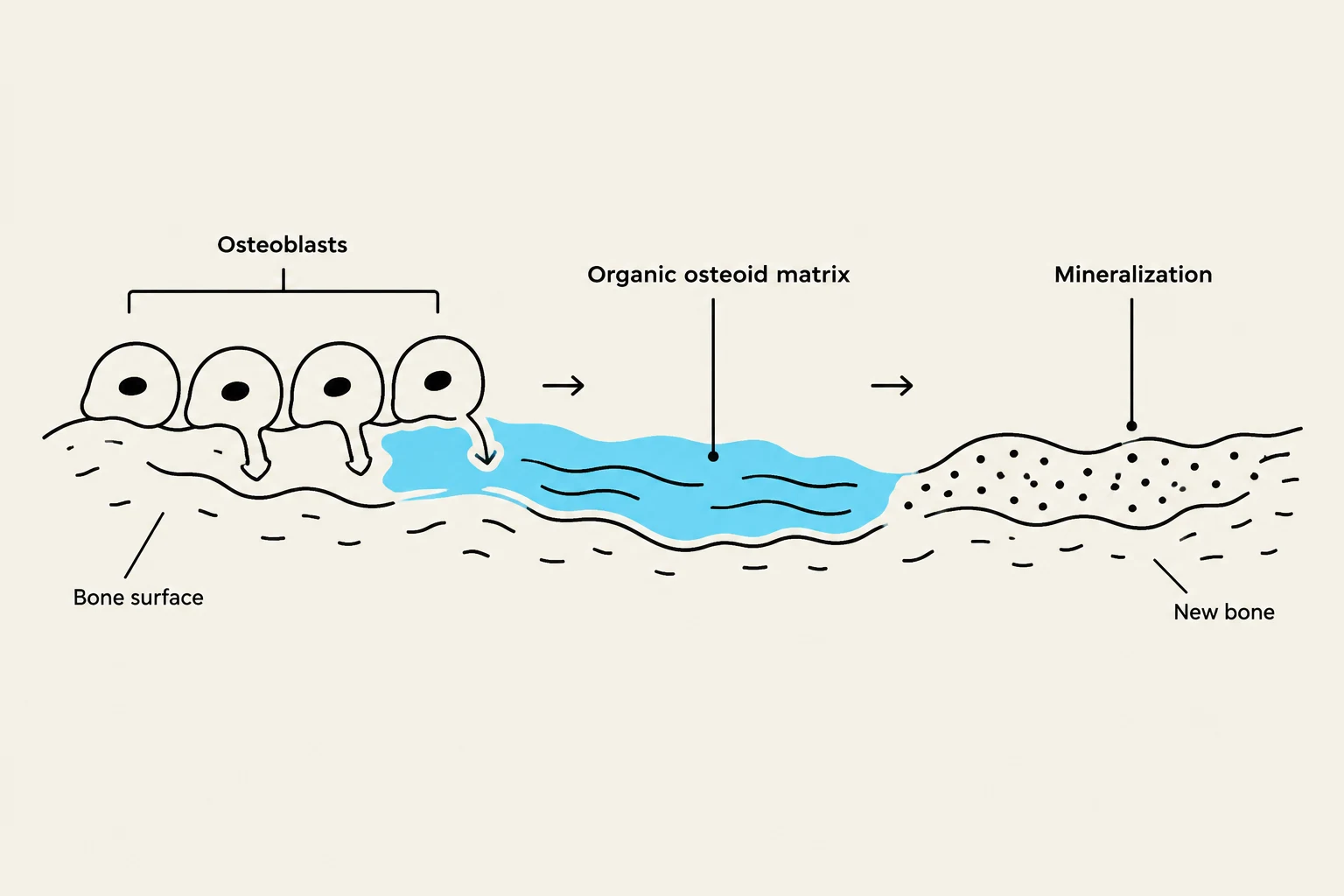
Osteoblasts are the cells responsible for the synthesis of the bone matrix. They are typically located on the surfaces of bone tissue, often arranged side-by-side in a manner similar to an epithelial cell layer.
The primary function of the osteoblast is to secrete osteoid. Once the organic matrix is laid down, osteoblasts facilitate the deposition of hydroxyapatite crystals—a combination of calcium and phosphate salts ()—into the matrix. This process "calcifies" or hardens the matrix, providing the bone with its characteristic rigidity.
Keep reading for free.
Create an account to finish this reading and make it part of your study routine.
Continue reading freeAlready have an account? Log in
Updated