


The posterior shoulder is a complex anatomical region where multiple arterial systems converge to ensure robust vascularization. This network is characterized by a sophisticated system of connections known as the scapular arcade, which provides critical collateral blood flow to the upper limb. Understanding these vessels is essential for grasping how the shoulder maintains perfusion, especially during potential arterial occlusions.
The Primary Arterial Contributors
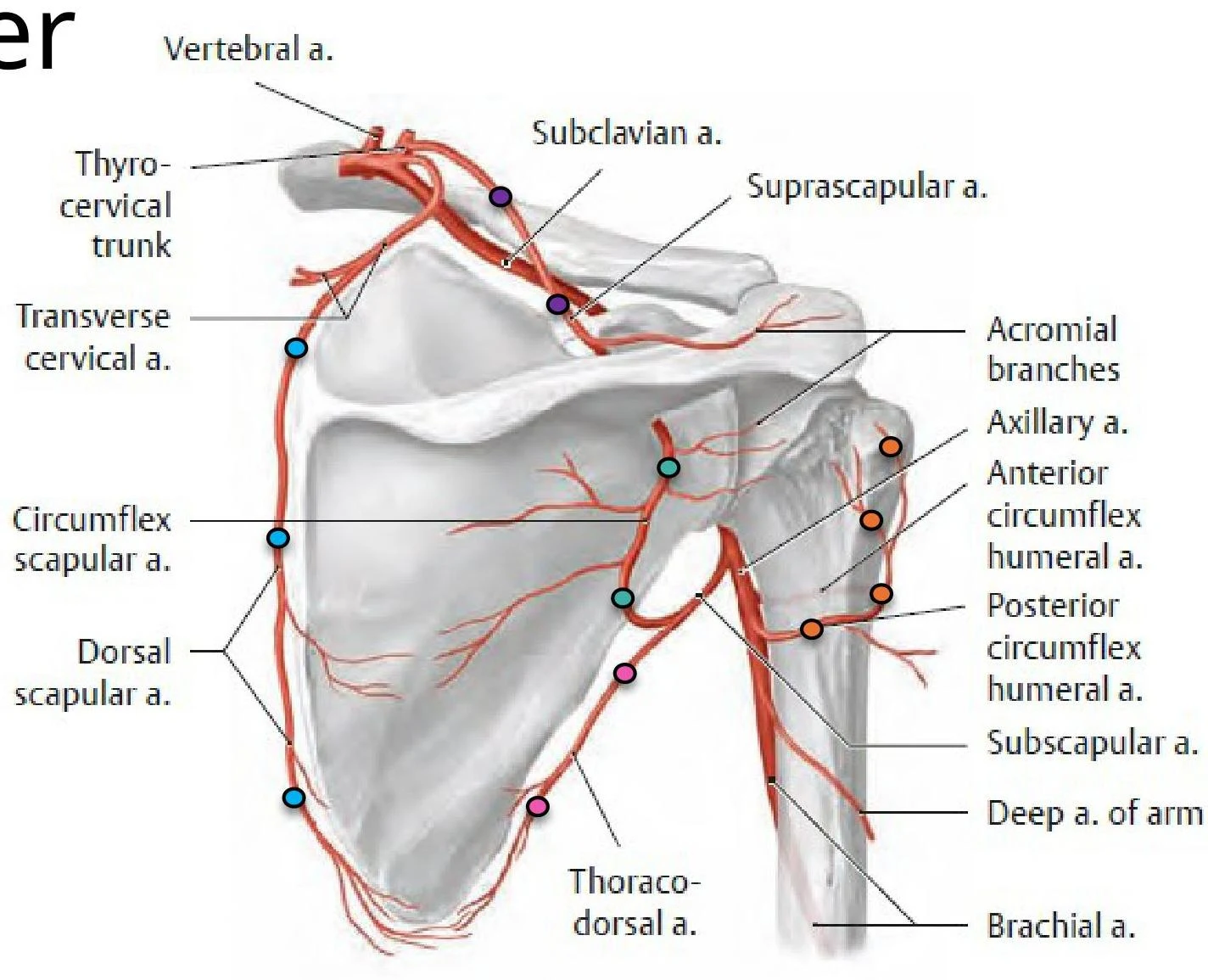
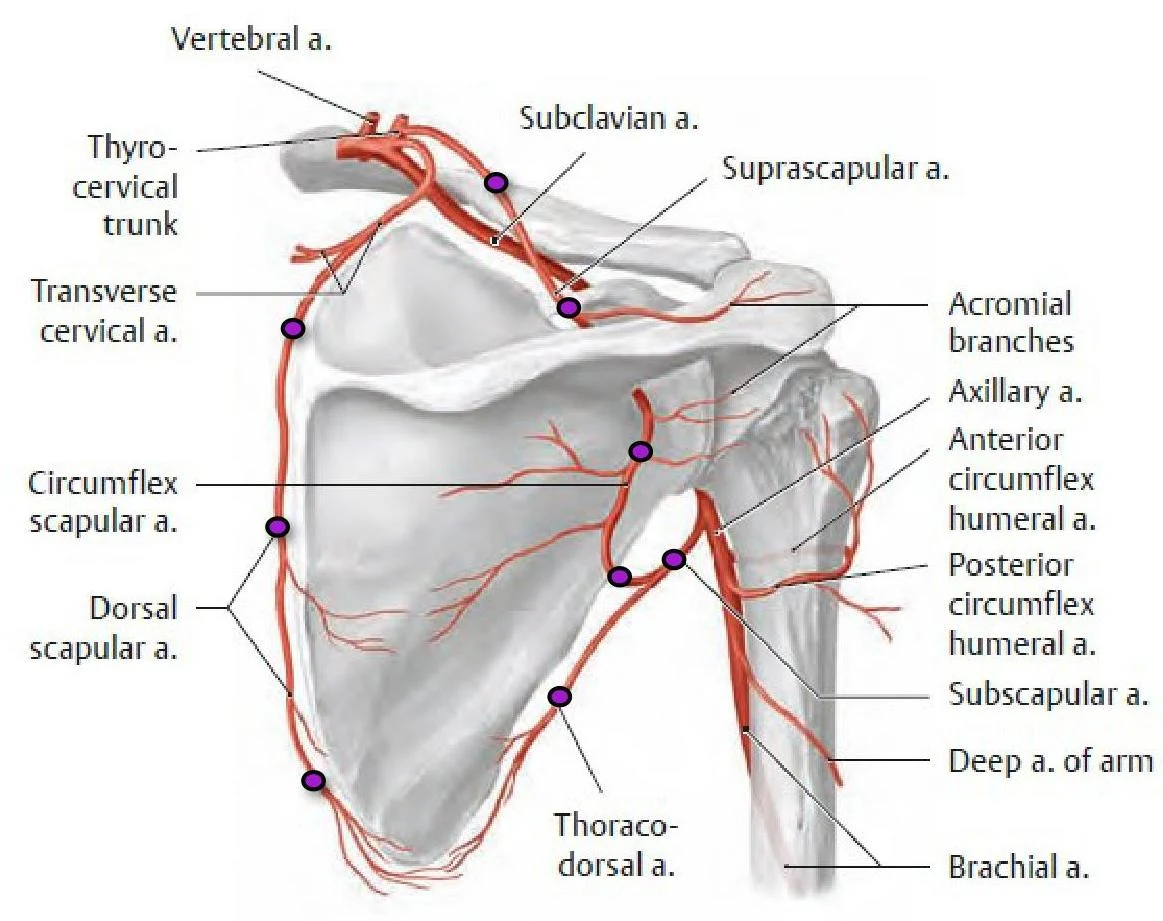
The blood supply to the posterior shoulder is derived from branches of two major vessels: the subclavian artery and the axillary artery. These vessels give rise to several key arteries that target specific muscles and bony landmarks of the scapula and humerus.
Suprascapular and Circumflex Arteries
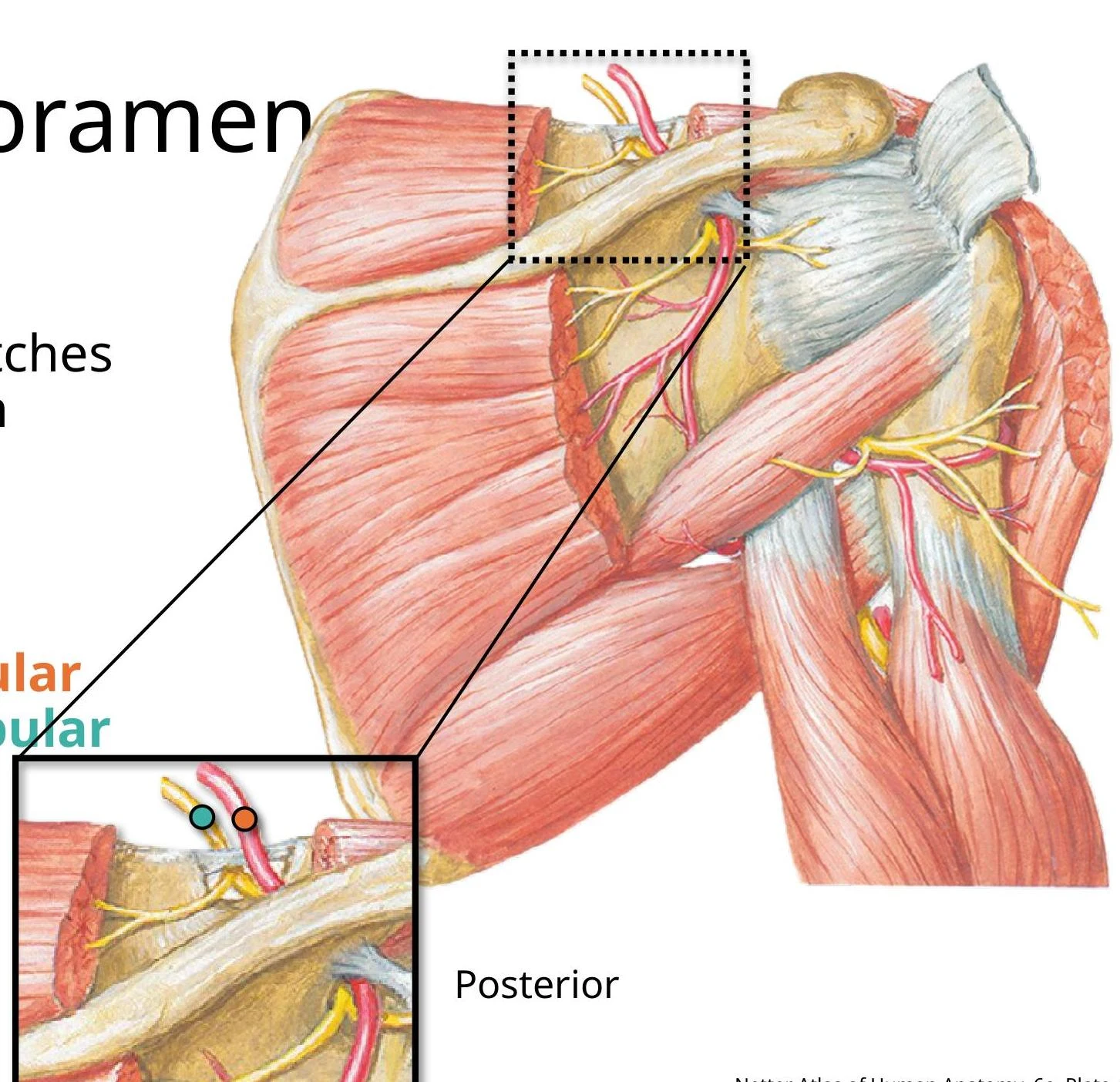
The suprascapular artery plays a vital role in supplying the supraspinous and infraspinous fossae. This ensures that the supraspinatus and infraspinatus muscles, which are key components of the rotator cuff, receive adequate oxygenation.
Moving toward the humerus, the anterior and posterior circumflex humeral arteries are critical vessels that encircle the surgical neck of the humerus. The posterior circumflex humeral artery, in particular, is a key resident of the quadrangular space.
Scapular and Thoracodorsal Arteries
The circumflex scapular artery provides blood to the posterior shoulder by curving around the lateral border of the scapula to enter the infraspinous fossa. It is a primary occupant of the triangular space.
Further contributing to the network is the dorsal scapular artery, which serves as a major hub for connections. It anastomoses with the suprascapular, circumflex scapular, and thoracodorsal arteries. The thoracodorsal artery specifically courses toward the inferior angle of the scapula to supply the latissimus dorsi muscle.

Keep reading for free.
Create an account to finish this reading and make it part of your study routine.
Continue reading freeAlready have an account? Log in
Updated