


Blood is a specialized connective tissue that serves as the primary transport medium of the body. It is not merely a simple liquid but a complex mixture of living cells suspended in a fluid matrix, working in unison to provide defense, transport oxygen, and facilitate clotting. Understanding the distinction between the liquid and cellular components is fundamental to clinical hematology.
The Composition of Whole Blood
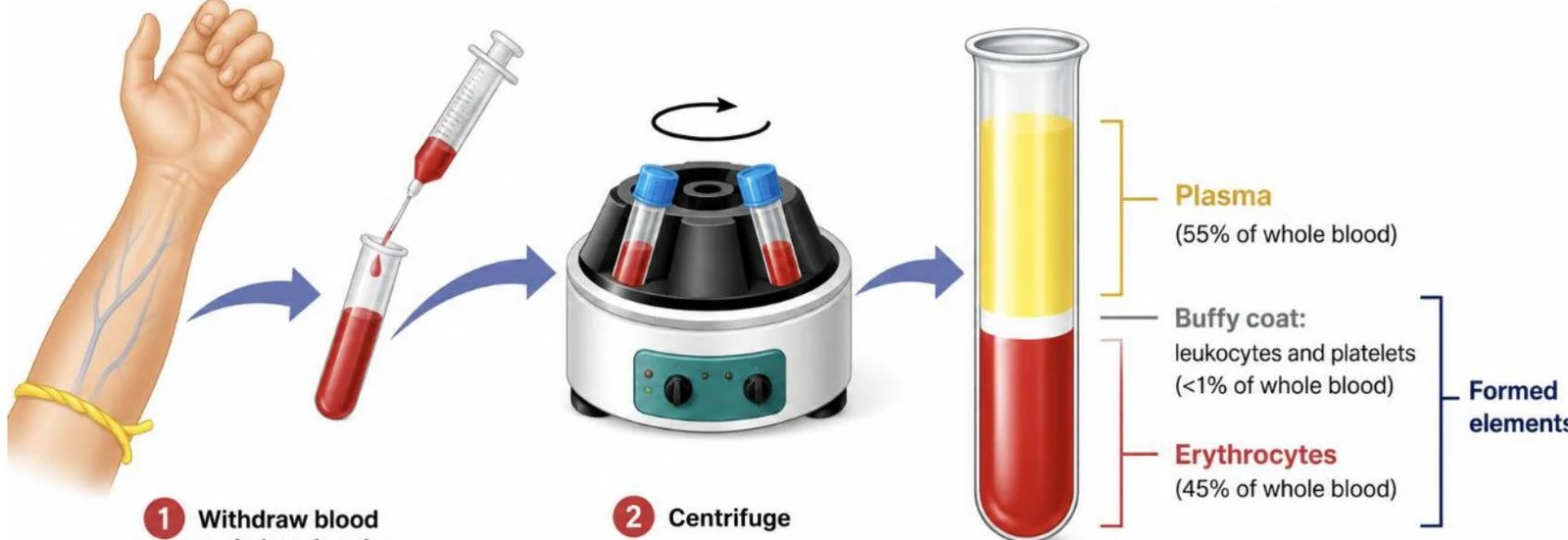
Whole blood is composed of two primary components: plasma and formed elements.
Plasma: The Liquid Medium
Plasma is the fluid portion of the blood that carries the cellular elements throughout the cardiovascular system. It serves as the medium for transporting nutrients, hormones, and waste products.
Formed Elements: The Cellular Components
The "formed elements" refer to the solid, cellular components of the blood. These are highly specialized to perform specific physiological tasks:
- Erythrocytes (Red Blood Cells/RBCs): These cells are specialized for the transport of oxygen.
- Leukocytes (White Blood Cells/WBCs): These cells function as the primary agents of immune defense.
- Platelets: Small cell fragments that are essential for blood clotting.
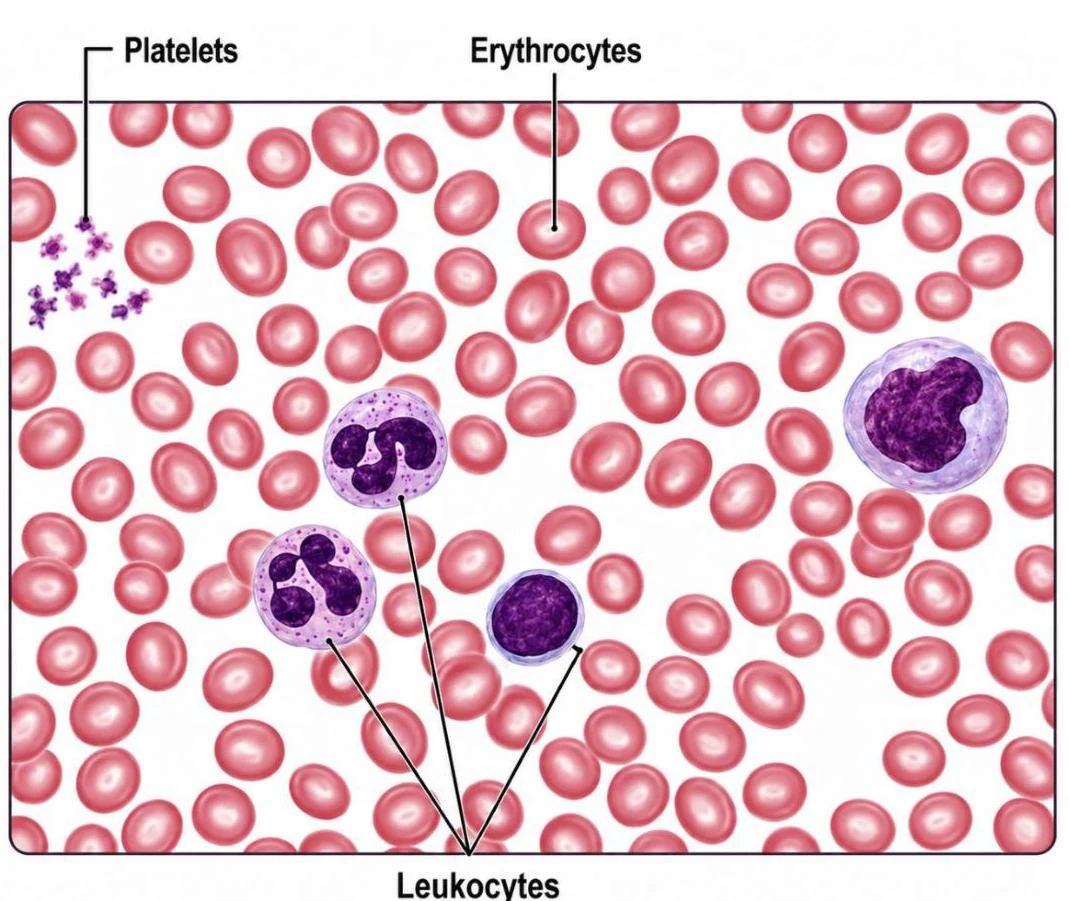
The clotting process is further supported by fibrinogen, a vital protein found within the blood.
Hematocrit Analysis
One of the most common hematology procedures is determining the hematocrit. The hematocrit represents the percentage of the total blood volume that is occupied by red blood cells. Because RBCs are heavier than plasma, they can be separated through a process called centrifugation.
The Centrifugation Procedure
To measure hematocrit, a sample is placed in a heparinized capillary tube and sealed with clay. The tube is then placed in a microcentrifuge and spun at high speeds—typically between 10,000 and 12,000 rpm—for approximately 5 minutes.
Keep reading for free.
Create an account to finish this reading and make it part of your study routine.
Continue reading freeAlready have an account? Log in
Updated