An overview of blood as a specialized fluid connective tissue, detailing its composition (plasma and formed elements), essential functions (transportation, regulation, protection), and the process of hematopoiesis from pluripotent stem cells.
Blood is much more than just a red liquid flowing through our veins; it is a specialized fluid connective tissue that serves as the body's primary transport system. It connects every part of the body by delivering essential nutrients and oxygen while simultaneously hauling away metabolic waste products. Because it consists of living cells suspended in a liquid matrix and contains proteins capable of forming fibers for clotting, it meets all the structural requirements of a connective tissue.
Blood Composition: Plasma and Formed Elements
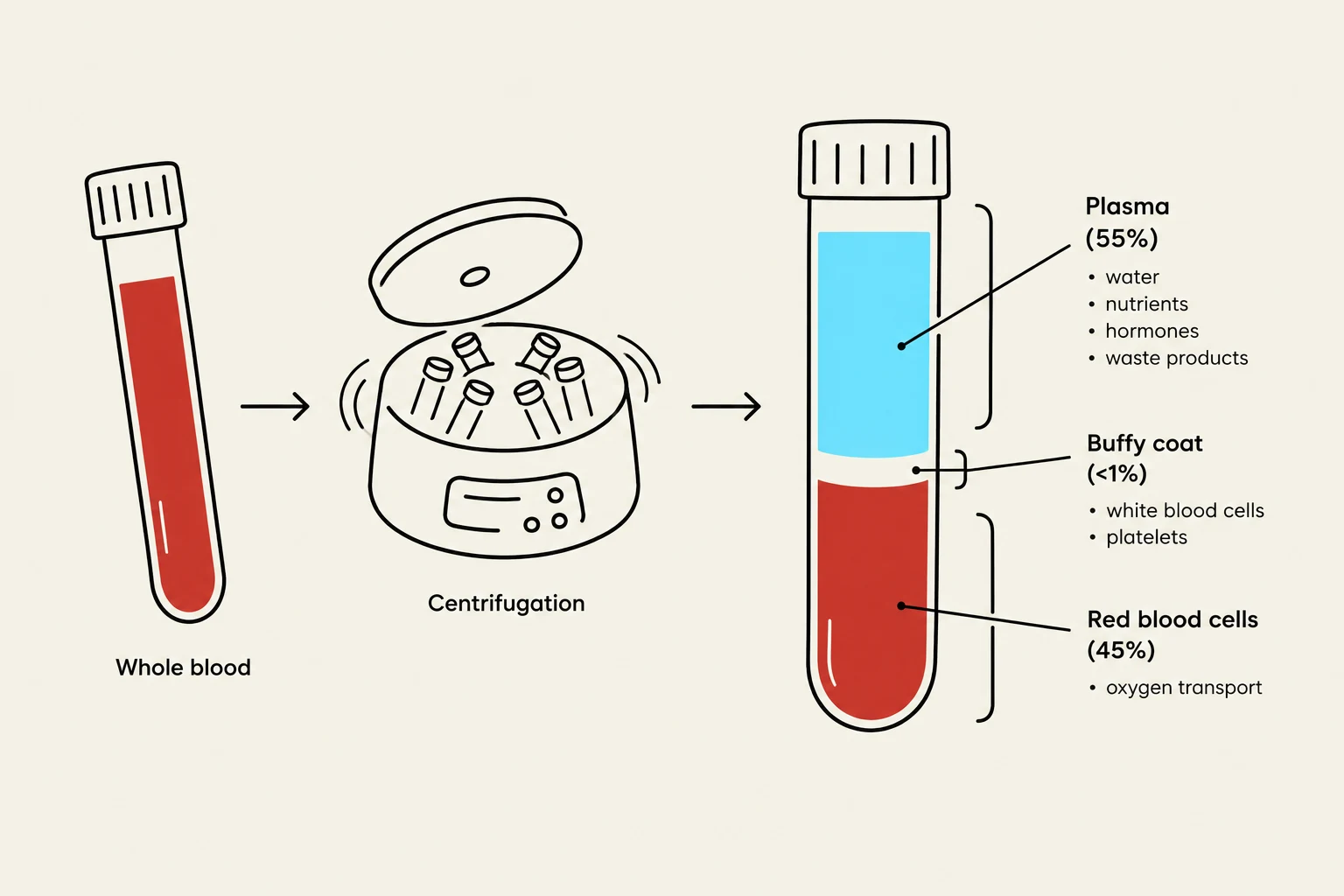
If you were to place a sample of blood in a centrifuge and spin it at high speeds, it would separate into distinct layers based on density. This separation reveals the two main components of blood: plasma and formed elements.
Blood Plasma
Plasma makes up approximately 55% of total blood volume. It is a straw-colored liquid matrix that serves as the medium in which all other components float. Plasma is crucial for transporting dissolved substances, including hormones, nutrients, and ions, and it plays a vital role in maintaining homeostasis by regulating pH, body temperature, and fluid levels.
Formed Elements
The remaining 45% of blood consists of the "formed elements," which are the cellular components of blood. These include:
Erythrocytes (Red Blood Cells/RBCs): These are the most numerous cells and are responsible for transporting respiratory gases (oxygen and carbon dioxide).
Leukocytes (White Blood Cells/WBCs): These cells are the primary drivers of the body's immune response.
Thrombocytes (Platelets): These are cell fragments essential for blood clotting and preventing blood loss.
When blood is centrifuged, the layers appear as follows: the plasma sits at the top, a thin middle layer called the buffy coat (containing WBCs and platelets) appears in the center, and the heavy RBCs settle at the bottom. The specific percentage of total blood volume occupied by erythrocytes is known as the hematocrit.
This diagram illustrates the process of blood centrifugation, separating whole blood into its components: plasma, the buffy coat (containing white blood cells and platelets), and red blood cells.
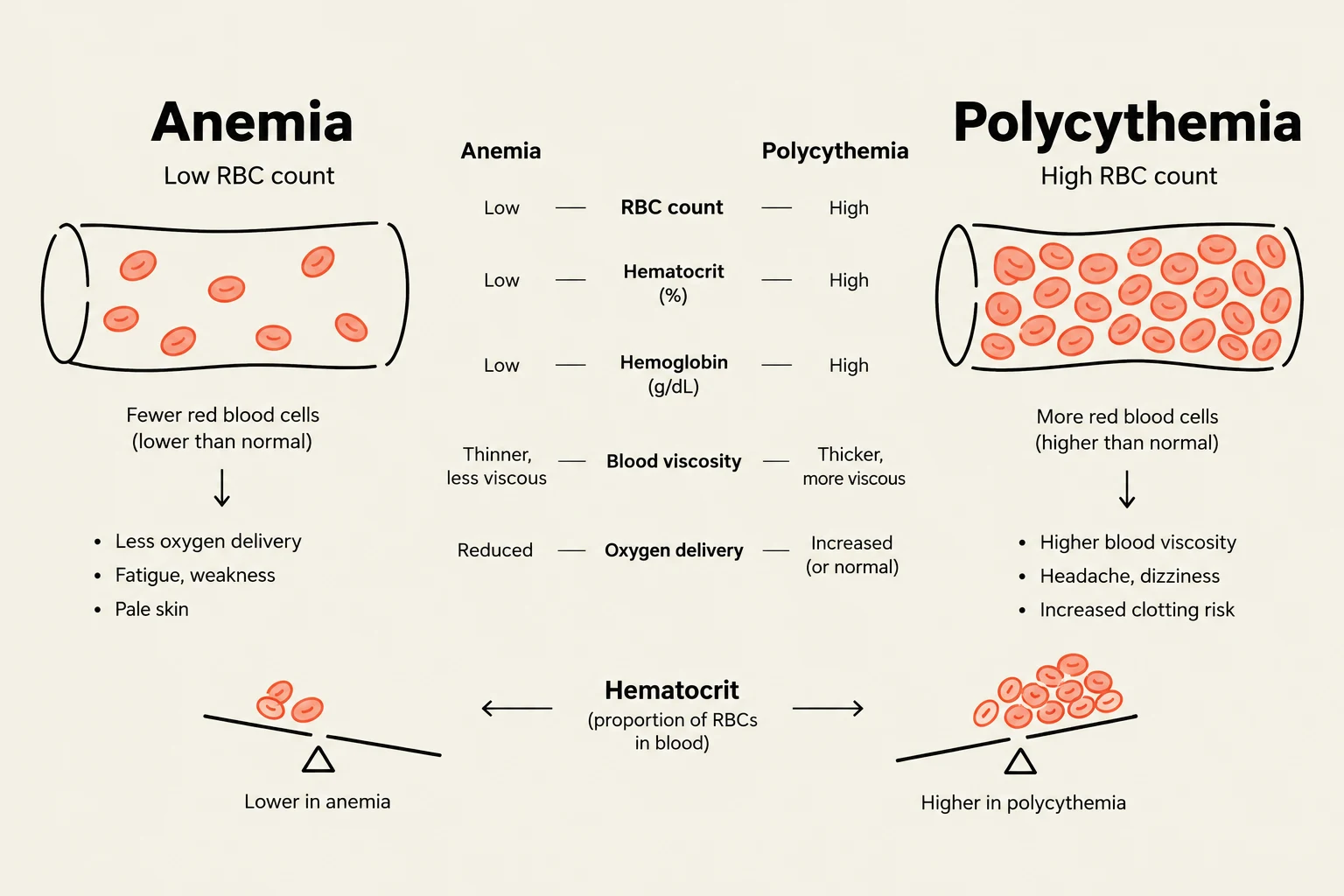
Exam Tip: Remember that the hematocrit is a measure of RBC concentration. A high hematocrit increases blood viscosity (thickness), while a low hematocrit is often a sign of anemia.
Functions of Blood: The Three Pillars
The physiological roles of blood can be categorized into three essential functions:
Transportation: Blood moves oxygen from the lungs to tissues, carbon dioxide from tissues to the lungs, nutrients from the digestive tract to cells, and metabolic wastes to the kidneys or lungs for excretion.
Regulation: It maintains homeostasis by regulating body temperature, pH levels, and the concentration of ions within the body's fluids.
Protection: Blood protects the body through the immune system (via WBCs and antibodies) and through clotting mechanisms (via platelets and fibrinogen) that prevent excessive blood loss.
Hematopoiesis: The Origin of Blood Cells
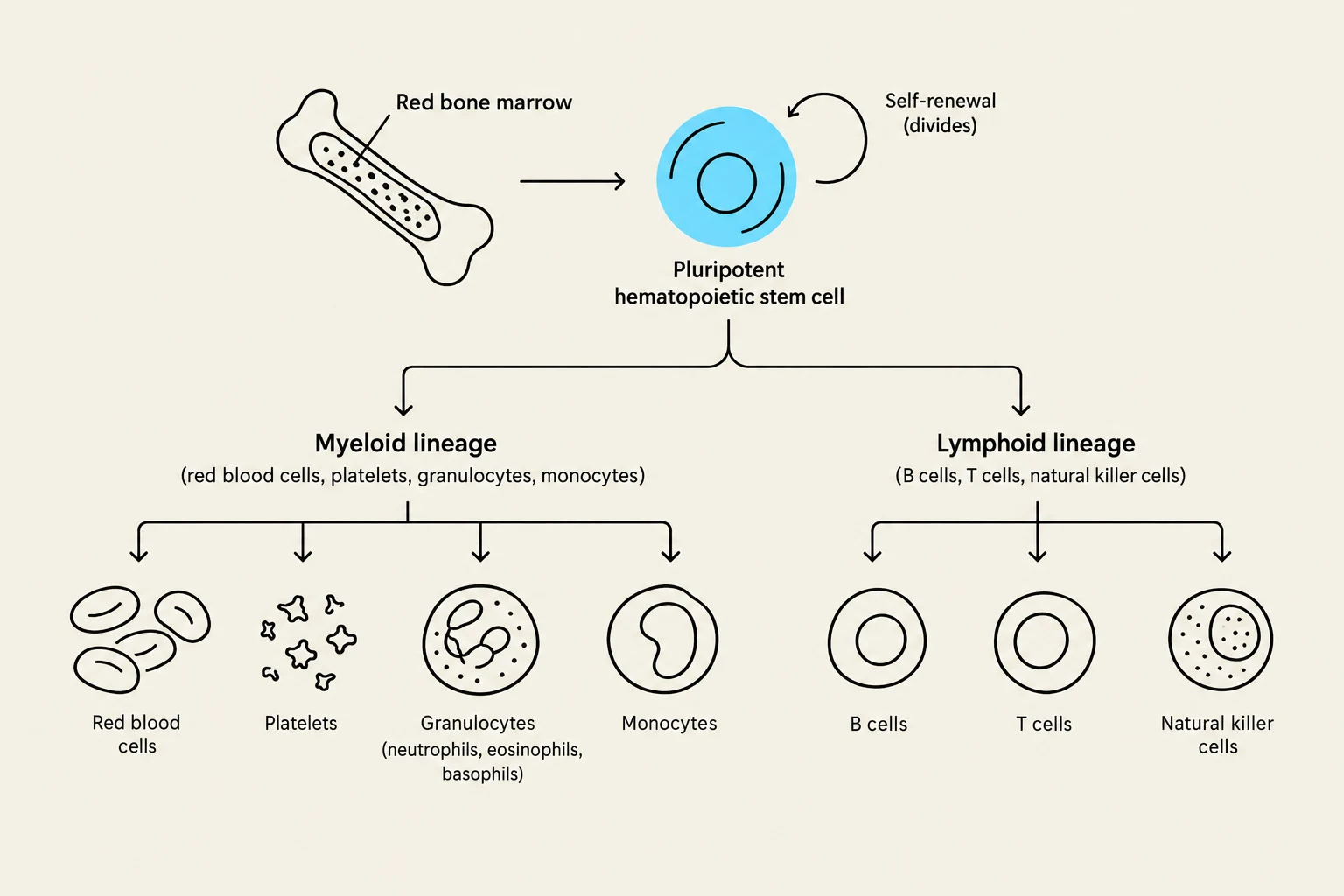
All blood cells—regardless of their final function—originate from a single source: the pluripotent hematopoietic stem cell. This process of blood cell formation is called hematopoiesis, and it occurs primarily within the red bone marrow, specifically found in the spongy bone of the ribs, sternum, vertebrae, and pelvis.
Pluripotent stem cells are unique because they have the capacity for both proliferation (multiplication) and differentiation (changing into specialized cell types). During differentiation, these stem cells follow two major lineages:
The Myeloid Lineage
Cells from the myeloid lineage primarily circulate in the blood and are the main players in innate immunity (the body's immediate, non-specific defense). This lineage produces:
Erythrocytes (RBCs)
Thrombocytes (Platelets)
Granulocytes (including neutrophils, eosinophils, and basophils)
Monocytes
The Lymphoid Lineage
The lymphoid lineage produces cells that often mature in lymphatic tissue rather than the bone marrow. These cells are responsible for adaptive immunity, which provides long-term, pathogen-specific protection. This lineage includes:
B cells
T cells
Natural Killer (NK) cells (often categorized as lymphocytes)
This diagram illustrates the differentiation of pluripotent hematopoietic stem cells originating from red bone marrow into myeloid and lymphoid lineages, which further develop into various blood cells like red blood cells, platelets, granulocytes, monocytes, B cells, T cells, and natural killer cells.
Clinical Correlations: When Blood Composition Fails
Because blood is so central to survival, imbalances in its composition lead to significant medical conditions.
Anemia (Low RBC/Hemoglobin)
Anemia occurs when there is a reduced number of RBCs or a decrease in hemoglobin content, leading to hypoxia (insufficient oxygen in tissues).
Iron Deficiency Anemia: Caused by a lack of iron, which is a required component of the heme group in hemoglobin.
Pernicious Anemia: An autoimmune disorder resulting from a lack of Vitamin B12 or intrinsic factor, which is necessary for B12 absorption.
Sickle Cell Anemia: A genetic disorder where abnormal hemoglobin causes RBCs to take on a "sickle" shape when deoxygenated, leading to vessel blockages and tissue damage.
Polycythemia (High RBC)
While athletes sometimes seek a higher RBC count to increase stamina (sometimes through "blood doping"), pathological polycythemia can be dangerous.
Primary Polycythemia (Polycythemia Vera): Often caused by a JAK-2 mutation that sends continuous, uncontrolled signals to the bone marrow to produce RBCs.
Secondary Polycythemia: Occurs when the body responds to low oxygen levels (hypoxia) by releasing erythropoietin (EPO) from the kidneys, which stimulates excessive RBC production.
This illustration compares anemia, characterized by a low red blood cell count, with polycythemia, characterized by a high red blood cell count. It details differences in RBC count, hematocrit, hemoglobin, blood viscosity, and oxygen delivery, along with associated symptoms and risks for each condition.
Summary Table: Hemoglobin Function
Component
Composition
Primary Function
Heme
Contains Iron
Binds and transports Oxygen (O2)
Globin
Protein chains
Binds and transports Carbon Dioxide (CO2)
Note: When oxygen binds to heme, it forms oxyhemoglobin. When carbon dioxide binds to globin, it forms carbaminohemoglobin.
Keep reading for free.
Create an account to finish this reading and make it part of your study routine.