An overview of blood composition, including plasma and formed elements like erythrocytes, leukocytes, and platelets. It also details the process of hematopoiesis, the origin of blood cells, and various hematological disorders.
Blood is a specialized fluid connective tissue that serves as the primary transport medium of the cardiovascular system. It acts as a continuous link between the various organ systems, ensuring that every cell in the body receives necessary supplies while simultaneously removing metabolic byproducts.
Blood Composition and Layers
Blood is not a homogeneous liquid; rather, it is a mixture of a liquid matrix and living cellular components. When a blood sample is placed in a centrifuge and spun at high speeds, the components separate into three distinct layers based on their density:
Plasma (approximately $55%$): The uppermost layer, consisting of a straw-colored fluid that carries dissolved substances such as hormones, nutrients, gases, and wastes.
Buffy Coat (< $1%$): A very thin, whitish middle layer that contains the leukocytes (white blood cells) and platelets.
Erythrocytes (approximately $45%$): The dense, bottom layer composed of heavy red blood cells.
Exam Tip: Hematocrit
The hematocrit is a specific clinical measurement representing the percentage of total blood volume occupied by erythrocytes. For example, a normal male hematocrit is approximately 47%±5%, while a normal female is 42%±5%.
Functions of Blood
The physiological roles of blood can be categorized into three primary areas: transport, regulation, and protection.
Transport: Blood delivers oxygen (O2) from the lungs to tissues and carries carbon dioxide (CO2) from tissues back to the lungs. It also transports nutrients from the digestive tract, hormones to target organs, and metabolic wastes to the kidneys and lungs for excretion.
Regulation: It helps maintain homeostasis by regulating body temperature, electrolyte concentrations, pH levels, and fluid volume.
Protection: Blood protects the body through immune responses (using white blood cells and antibodies) and prevents blood loss through hemostasis (clotting) facilitated by platelets.
Hematopoiesis: The Origin of Blood Cells
All blood cells originate from pluripotential hematopoietic stem cells located within the red bone marrow (found in flat and irregular bones, such as the ribs, sternum, and pelvis). This process, known as hematopoiesis, involves the proliferation, differentiation, and maturation of stem cells into specialized lineages.
There are two distinct lineages in hematopoiesis:
1. Myeloid Lineage
Cells of the myeloid lineage primarily manage innate immunity and mature within the bone marrow environment. This lineage produces:
Erythrocytes (Red blood cells)
Platelets (Cellular fragments)
Granulocytes (A type of leukocyte)
Monocytes (A type of leukocyte)
2. Lymphoid Lineage
Cells of the lymphoid lineage are central to adaptive (specific) immunity. While they originate in the bone marrow, their maturation often requires an environment outside the marrow, such as lymphatic tissue or the thymus. This lineage produces:
B cells (Responsible for humoral immunity via antibody production)
This diagram illustrates the differentiation pathways of hematopoietic stem cells into various blood cell types, including erythrocytes, granulocytes, agranulocytes, and platelets.
The Formed Elements
Erythrocytes (Red Blood Cells)
Erythrocytes are specialized for gas transport. They are characterized by a flattened, biconcave disc shape and lack a nucleus or organelles to maximize space for hemoglobin.
Hemoglobin is the protein responsible for binding O2 and CO2. Each hemoglobin molecule contains four heme groups, each with an iron (Fe2+) atom that can bind one oxygen molecule.
Clinical Correlation: Anemia
Anemia is a condition characterized by a reduced number of RBCs or a decrease in hemoglobin, leading to a low O2-carrying capacity. This can result in symptoms like fatigue, pallor, and dyspnea. Common types include:
Iron-deficiency anemia: Due to low iron intake or blood loss.
Pernicious anemia: An autoimmune disorder causing Vitamin B12 malabsorption.
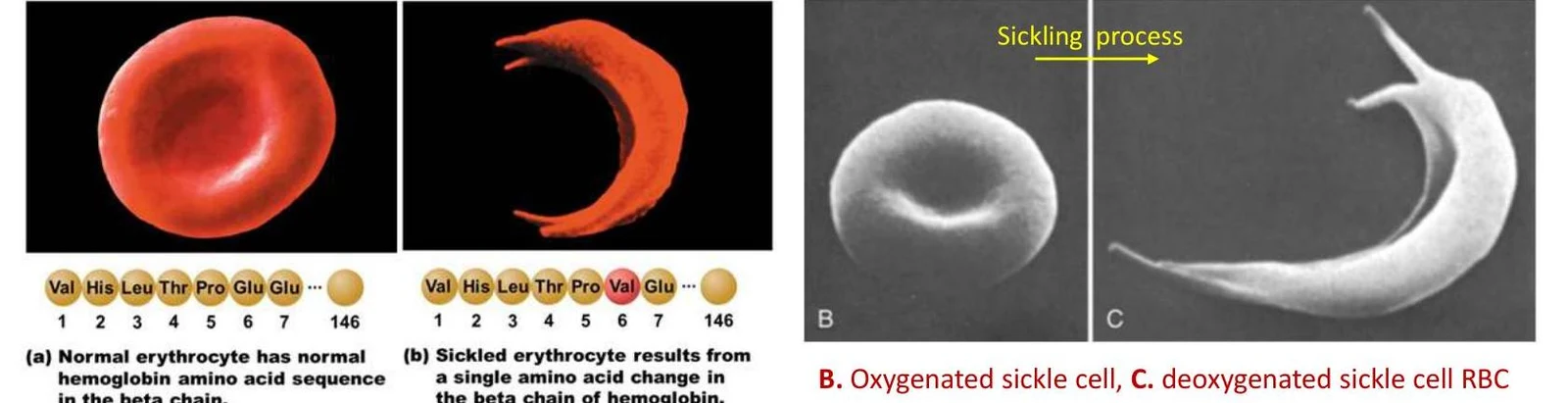
Sickle cell anemia: A genetic defect causing hemoglobin to polymerize and distort the cell into a "sickle" shape.
Comparison of normal and sickled red blood cells, illustrating the effect of a single amino acid change in the beta chain of hemoglobin on red blood cell shape.
Leukocytes (White Blood Cells)
Leukocytes are the primary defense cells of the body. They are divided into two main groups:
Granulocytes: These contain visible granules in their cytoplasm (e.g., neutrophils, eosinophils, basophils).
Agranulocytes: These lack abundant granules and include:
Lymphocytes: Essential for adaptive immunity. T cells provide cellular immunity by attacking cells directly, while B cells provide humoral immunity by releasing antibodies.
Monocytes: The largest leukocytes, which act as highly effective phagocytic cells and antigen-presenting cells (APCs). Once they leave the circulation and enter tissues, they are referred to as macrophages.
Platelets
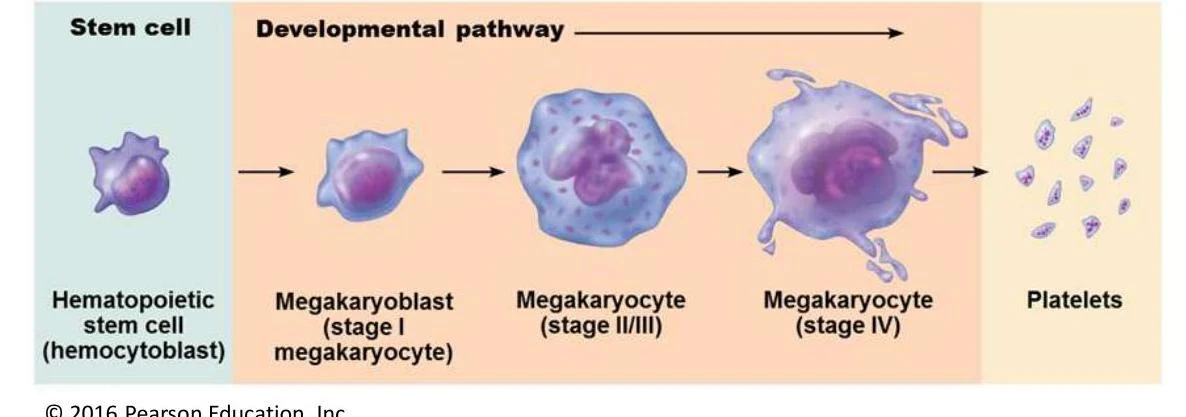
Platelets are not true cells but rather small cellular fragments derived from much larger cells called megakaryocytes located in the red bone marrow. They are essential for hemostasis (the prevention of blood loss) and the release of growth factors necessary for tissue repair.
This diagram illustrates the developmental pathway of hematopoietic stem cells into platelets, showing the stages of megakaryoblast and megakaryocyte development.
Hematological Disorders (Blood Dyscrasias)
Disorders affecting the blood, bone marrow, or lymphatic system are collectively known as hematological disorders or blood dyscrasias. These can range from mild nutritional deficiencies to life-threatening malignancies.
RBC Disorders: Includes various anemias (low capacity) or polycythemia (excessive RBC mass).
WBC Disorders: Can involve immune deficiencies or cancers of the lymphatic system.
Platelet/Clotting Disorders: Includes thrombocytopenia (low platelet count, often seen as petechiae or bruising) and disorders affecting the ability to form or dissolve clots.
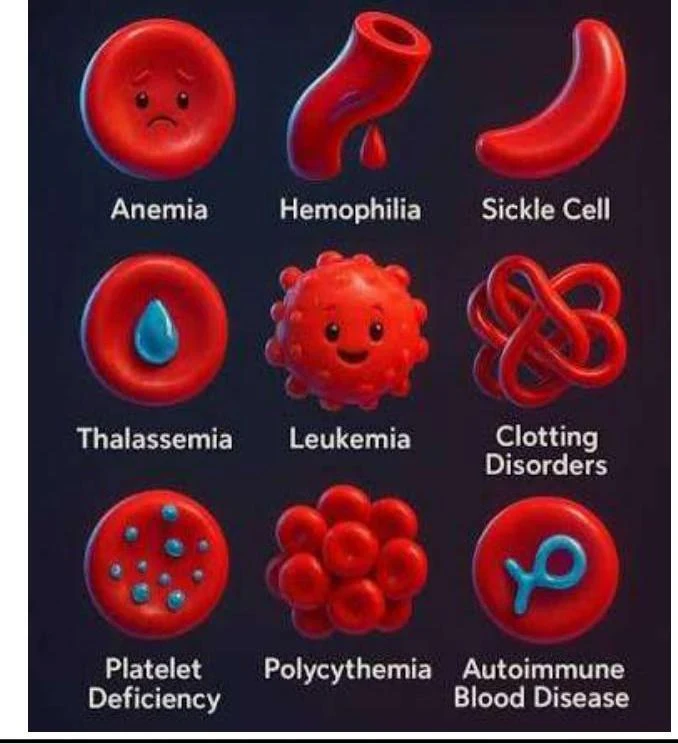
This illustration depicts various blood conditions including Anemia, Hemophilia, Sickle Cell, Thalassemia, Leukemia, Clotting Disorders, Platelet Deficiency, Polycythemia, and Autoimmune Blood Disease.
Keep reading for free.
Create an account to finish this reading and make it part of your study routine.