This content covers bioterrorism categories, delivery methods, specific pathogen symptoms, prevention, and levels of prevention in disasters, including the role of disaster nursing and clinical concepts like triage.
In the field of emergency management, healthcare professionals must prepare for a wide spectrum of crises, ranging from natural disasters like floods and wildfires to human-made disasters such as terrorism and toxic spills. While natural disasters are often driven by environmental shifts, bioterrorism represents a deliberate attempt to cause harm using biological agents. For the disaster nurse, managing these threats requires a deep understanding of epidemiology and a structured approach to prevention and response.
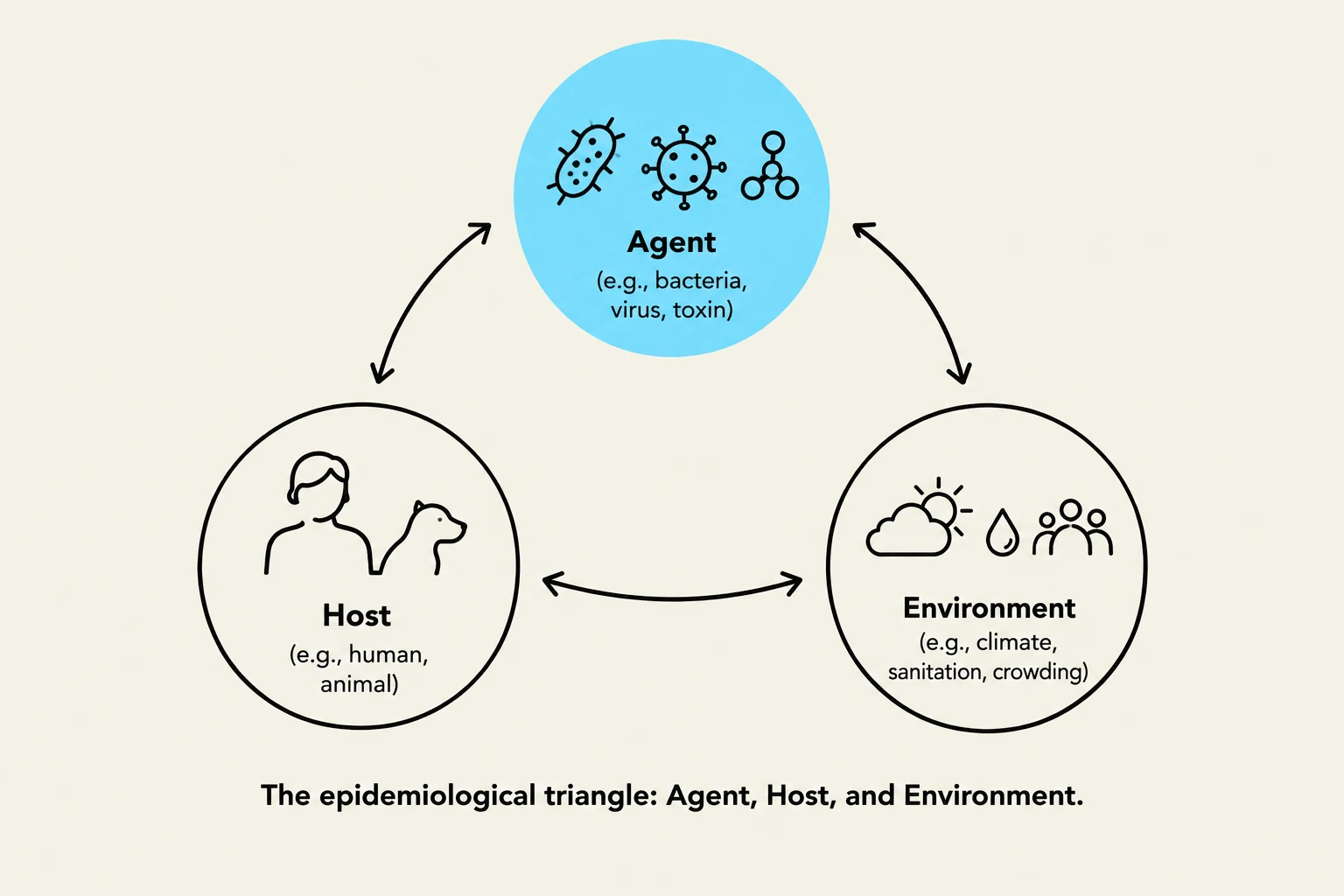
The epidemiological triangle illustrates the relationship between an agent, a host, and the environment in the spread of disease.
At the heart of managing any infectious threat is the epidemiological triangle, which consists of three interacting components: the agent (the infectious, physical, or chemical factor), the host (the living being affected), and the environment (the setting or surroundings that sustain the host).
Bioterrorism Classifications and Delivery
Biological agents are categorized based on their ease of transmission, the severity of the illness they cause, and their potential impact on public health.
Category A: These are the most critical threats. They are easily transmitted, result in high mortality rates, and require significant public health preparedness. Examples include Anthrax, Botulism, Smallpox, Ebola, and Plague.
Category B: These agents offer moderate dissemination and high morbidity (illness rates) but typically have lower mortality rates. Examples include Ricin toxin, Typhus fever, E. coli, West Nile virus, and COVID-19.
Category C: These are emerging pathogens that could be engineered for high morbidity and mortality. Examples include Hantavirus, Influenza, Tuberculosis, and Rabies.
Delivery Methods
Terrorists may deploy these agents through various means to maximize impact:
Direct contact: Physical touch or close proximity.
Simple dispersal devices: Aerosolizing agents in crowded areas like airports or bus stations.
Contamination: Introducing pathogens into food or water supplies.
Vectors/Droplets: Using insects (like fleas) or respiratory droplets to spread the agent.
High-Priority Pathogens: Symptoms and Management
Visual differentiation between Smallpox and Chickenpox lesions, illustrating key characteristics of each.
Nurses must maintain a high clinical suspicion for unusual symptoms to ensure rapid identification and containment.
Anthrax (Inhalation)
Anthrax is often transmitted through inhaled particles.
Symptoms: Initial vague symptoms like headache, fever, and chills, progressing to severe respiratory distress, dyspnea, and shock.
Treatment/Prevention: High-risk groups may receive vaccines. Post-exposure prophylaxis includes Ciprofloxacin or Doxycycline, along with antitoxin treatments and IV antibiotics.
Botulism
Botulism primarily attacks the neurological system.
Symptoms: Blurred vision, slurred speech, dysphagia (difficulty swallowing), and progressive muscle weakness, eventually leading to respiratory distress.
Treatment/Prevention: There is no vaccine. Treatment focuses on airway management (often requiring intubation), antitoxins, and potentially inducing vomiting or surgical wound excision.
Smallpox
Smallpox is a highly contagious airborne disease.
Symptoms: Sudden high fever, fatigue, and a characteristic rash that begins on the face and tongue before spreading to the trunk and extremities. The lesions are deep, non-collapsing, and all appear in the same stage of development.
Prevention/Treatment: Vaccines are available for high-risk groups if administered within 3 days of exposure. Treatment involves symptom management (hydration, pain relief) and CDC-provided antivirals.
Ebola
Ebola is transmitted through contact with infected body fluids.
Symptoms: Fever, severe headache, hemorrhage (bleeding), vomiting, and diarrhea.
Prevention/Treatment: Requires strict droplet and contact precautions using impermeable gowns, boot covers, double gloves, and N95 masks. Treatment includes antibodies and intensive supportive care.
Plague
Plague can be transmitted via fleas or animals (like rats) and presents in three forms:
Pneumonic: A respiratory infection characterized by chest pain and bloody, watery sputum.
Bubonic: Characterized by fever, chills, and swollen, tender lymph nodes.
Septicemic: Involves abdominal pain, shock, and gangrene of the nose and digits.
Management: While no longer a vaccine available, treatment involves Gentamicin and fluoroquinolones.
Exam Tip: Differential Diagnosis
When distinguishing Smallpox from Chickenpox, remember that Smallpox lesions are deep, non-collapsing, and all in the same stage of development, whereas Chickenpox lesions are superficial and appear in various stages of development.
The Role of Disaster Nursing and Levels of Prevention
Disaster nursing is a specialized field that rarely serves as an entry-level position; it often requires prior experience in hospital or public health nursing. Nurses may work in dedicated disaster teams within large organizations or within the military.
Effective response is organized into three distinct levels of prevention:
1. Primary Prevention (Planning)
This stage focuses on preparedness before an event occurs.
Activities: Conducting disaster drills, identifying at-risk populations, and establishing a chain of command.
Infection Control: Developing protocols for standard, contact, droplet, and airborne precautions to ensure supplies are ready for immediate deployment.
Population Management: Screening populations for exposure and assessing infection rates to determine the need for post-exposure vaccines or medications.
3. Tertiary Prevention (Rehabilitation)
This stage focuses on the long-term recovery of survivors.
Activities: Monitoring medication adherence and managing referrals to specialists (e.g., pulmonologists for chronic respiratory issues caused by inhaled agents).
Evaluation: Assessing the overall effectiveness and timeliness of the initial response to improve future disaster plans.
Clinical Concepts for the Disaster Nurse
To effectively manage a mass casualty event, nurses must be proficient in triage and hospital resource management.
Mass Casualty Triage
Standard color-coded categories for mass casualty triage.
In the field, patients are categorized to ensure the most efficient use of limited resources:
Green: Minor injuries; can be treated with first aid or sent home.
Yellow: Serious but not life-threatening; care can be delayed.
Red: Life-threatening; requires immediate transport and intervention.
Black: Victims unlikely to survive; focus remains on those with a chance of survival.
Hospital Resource Management
When a hospital is overwhelmed, reverse triage may be implemented. This involves prioritizing the discharge of stable, healthy patients to free up beds and staff for critically ill victims arriving from the disaster site.
Keep reading for free.
Create an account to finish this reading and make it part of your study routine.