


Determining when and how life first emerged on Earth is one of the most profound challenges in geoscience. Because the earliest life forms were microscopic and the Earth's surface has undergone billions of years of tectonic and metamorphic changes, scientists cannot rely on a single line of evidence. Instead, they look for biosignatures: traces or remains of ancient life that have been preserved by natural processes. By combining morphological, chemical, and isotopic evidence, researchers attempt to reconstruct the history of the Archean Eon and the co-evolution of life and the Earth's environment.
Morphological Biosignatures: Microfossils and Macrofossils
Morphological biosignatures refer to the physical shapes or structures left behind by organisms. These are generally categorized into two groups:
-
Microfossils: These are microscopic remains, such as the imprints of single-celled microbes or filamentous structures.
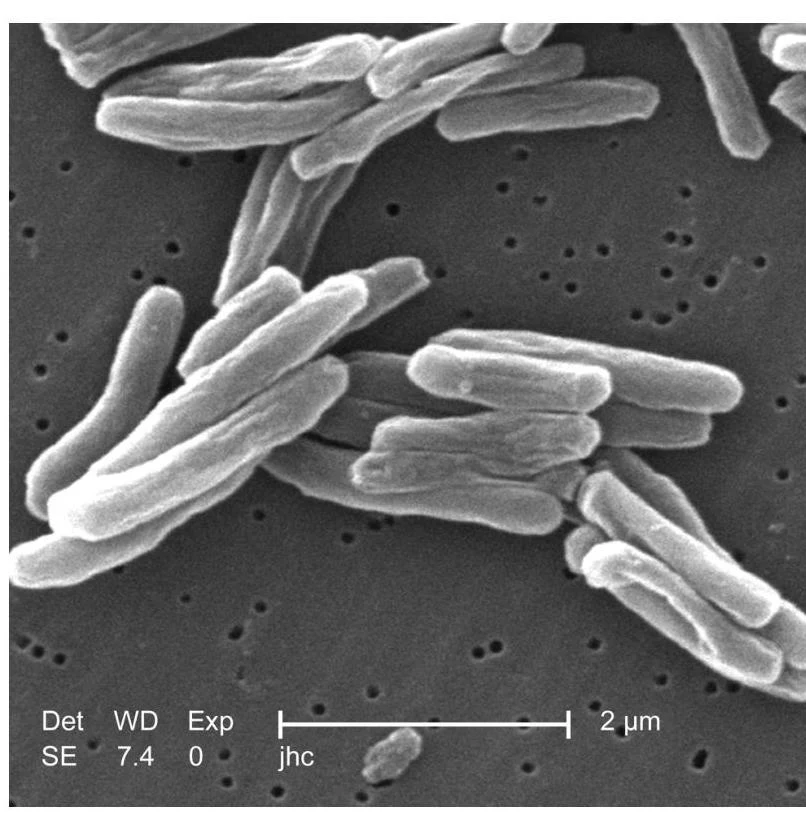
Scanning electron micrograph of Mycobacterium tuberculosis bacteria. -
Macrofossils: These are larger, visible remains, such as shells, skeletons, or large imprints.
A famous and controversial example of microfossils is found in the Apex chert of Western Australia, dating to approximately 3.5 billion years ago (Ga). Researchers identified tiny, carbon-rich filaments that they interpreted as early cyanobacteria. However, the biogenicity of these structures has been debated; some scientists argue they might be "pseudofossils" created by hydrothermal alteration or mineral fractures.
Chemical Fossils: Molecular Biomarkers
When physical shapes are lost to time, we look for molecular biomarkers—organic molecules preserved in sedimentary rocks that provide clues about the organisms that once lived.
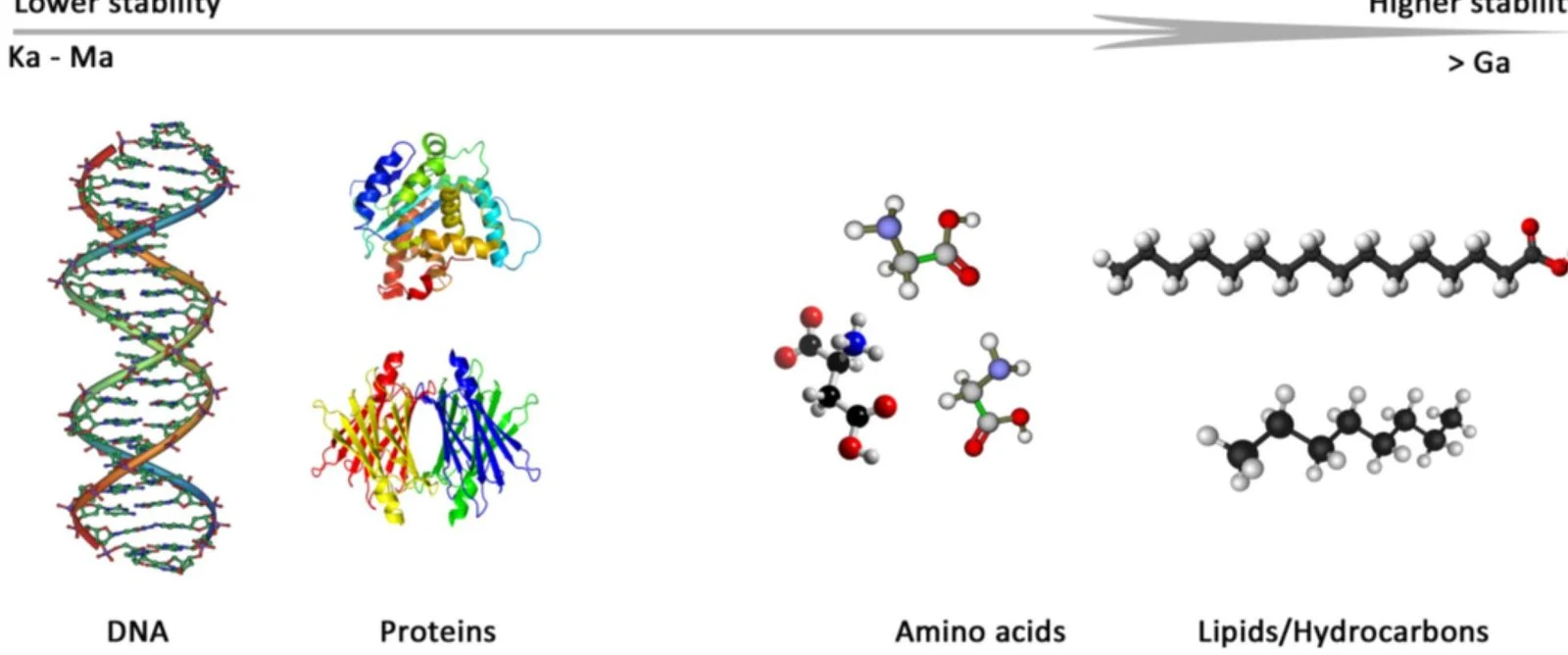
The preservation potential of these molecules varies wildly. For instance, RNA is extremely short-lived, with a half-life of only hours. DNA can persist longer in specific anoxic (low oxygen) environments, but even then, it is rarely found in samples older than 600,000 years. In contrast, certain lipids (fats) are much more stable and can be preserved for billions of years, offering a window into ancient biological diversity.
Keep reading for free.
Create an account to finish this reading and make it part of your study routine.
Continue reading freeAlready have an account? Log in
Updated