Biopharmaceutical Manufacturing and Immunogenicity
An overview of biopharmaceutical manufacturing processes, including recombinant DNA technology, upstream and downstream processing, and the engineering of monoclonal antibodies. It also covers immunogenicity and the formation of anti-drug antibodies (ADAs), as well as emerging therapies like vaccines, oligonucleotides,
Biopharmaceuticals represent a sophisticated class of therapeutic agents, including recombinant proteins, monoclonal antibodies (mAbs), vaccines, oligonucleotides, and cell therapies. Unlike small-molecule drugs, which are typically synthesized through predictable chemical reactions, biologics are large, complex molecules manufactured within living host cells. This reliance on biological systems introduces unique challenges in production, quality control, and the potential for unintended immune responses.
Recombinant DNA Technology and Protein Expression
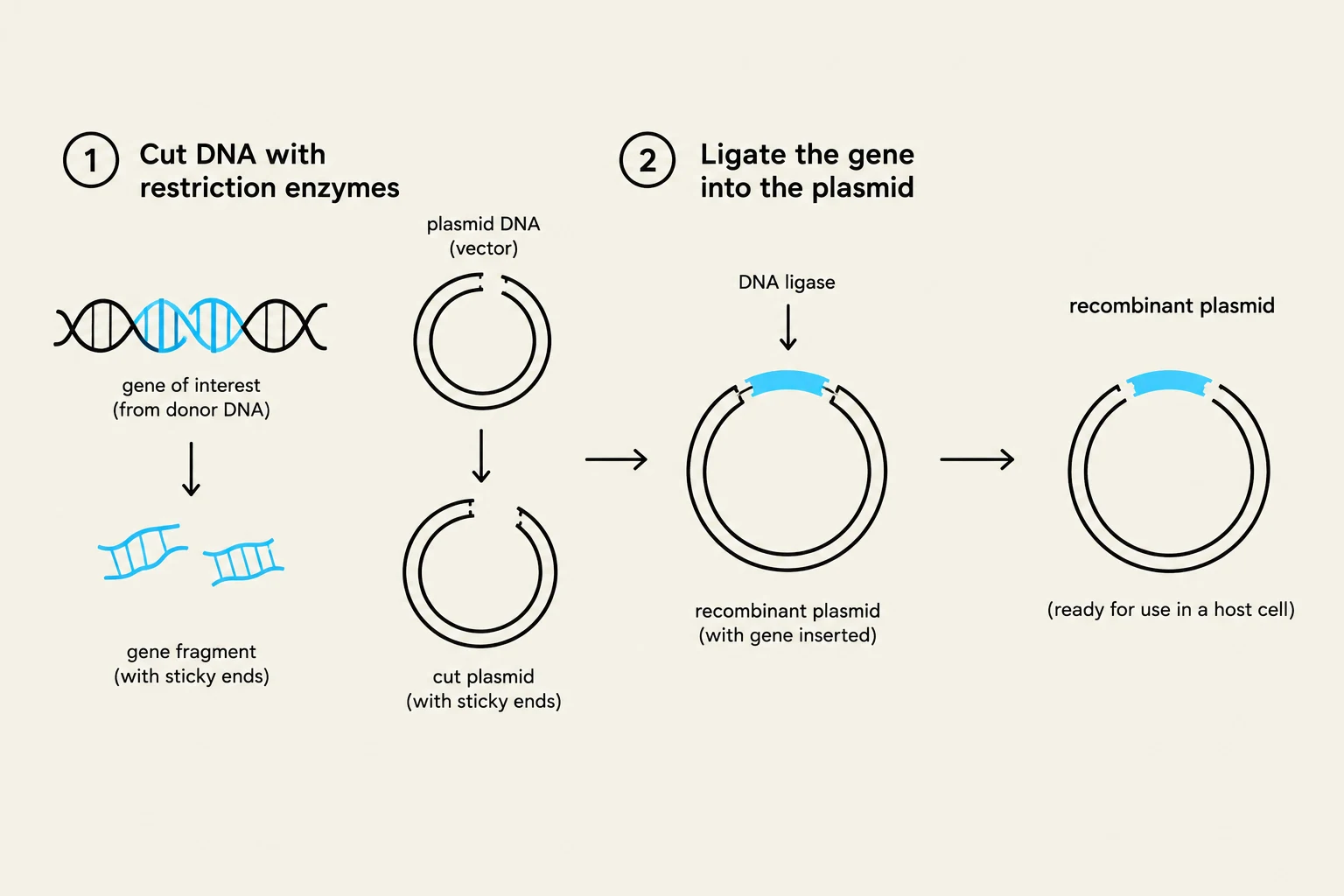
At the heart of modern biomanufacturing is recombinant DNA (rDNA) technology. This process involves combining DNA from different sources to create a hybrid molecule, typically by inserting a human gene of interest into a biological vector, such as a bacterial plasmid.
To achieve this, molecular biologists use restriction enzymes to cut the DNA at specific recognition sites, creating "sticky ends" that allow for precise pairing. DNA ligase is then employed to join the gene of interest to the vector by forming phosphodiester bonds between the $3'$ end of one chain and the $5'$ end of another. Once the recombinant plasmid is introduced into a host organism (such as E. coli, yeast, or mammalian cells) through a process called transformation, the host's cellular machinery begins to express the desired therapeutic protein.
Diagram illustrating the process of creating recombinant DNA by cutting a gene of interest with restriction enzymes and ligating it into a plasmid vector.
Industrial Insulin Production: A Case Study
A classic example of this technology is the production of insulin. In industrial settings, E. coli is used to express proinsulin. Because proinsulin is a precursor, it must undergo post-translational processing:
Cell Lysis: The E. coli cells are broken open to release the intracellular proinsulin.
Enzymatic Cleavage: The C-peptide is enzymatically removed to convert proinsulin into active insulin.
Polishing: The final product is purified using reverse-phase HPLC to remove residual impurities.
The Manufacturing Pipeline: Upstream and Downstream
Biopharmaceutical production is divided into two distinct phases: upstream and downstream processing.
Upstream Processing
Upstream processing focuses on the biosynthesis of the product. This stage includes cell-line selection, establishing a working cell bank, and the initial small-scale culture. The core of this phase is cultivation in bioreactors, where environmental conditions (pH, temperature, dissolved oxygen) are strictly controlled to maximize protein yield. A significant challenge in this stage is scale-up; a process that works in a small laboratory flask may behave differently in a bioreactor containing thousands of liters due to changes in geometry and nutrient distribution.
Downstream Processing
Once the protein is expressed, downstream processing begins with product recovery and purification. This involves:
Harvest and Clarification: Separating the cells from the culture media.
Purification: Utilizing techniques such as chromatography to isolate the target protein from host-cell proteins and DNA.
Formulation: Adjusting the protein to the required concentration and adding excipients to ensure stability and proper administration.
Exam Tip: When describing manufacturing steps, always follow the logical order: Upstream (Biosynthesis) → Downstream (Recovery/Purification) → Formulation/Quality Control. Explain why purification is critical: to remove impurities that could increase immunogenicity.
Monoclonal Antibody (mAb) Engineering
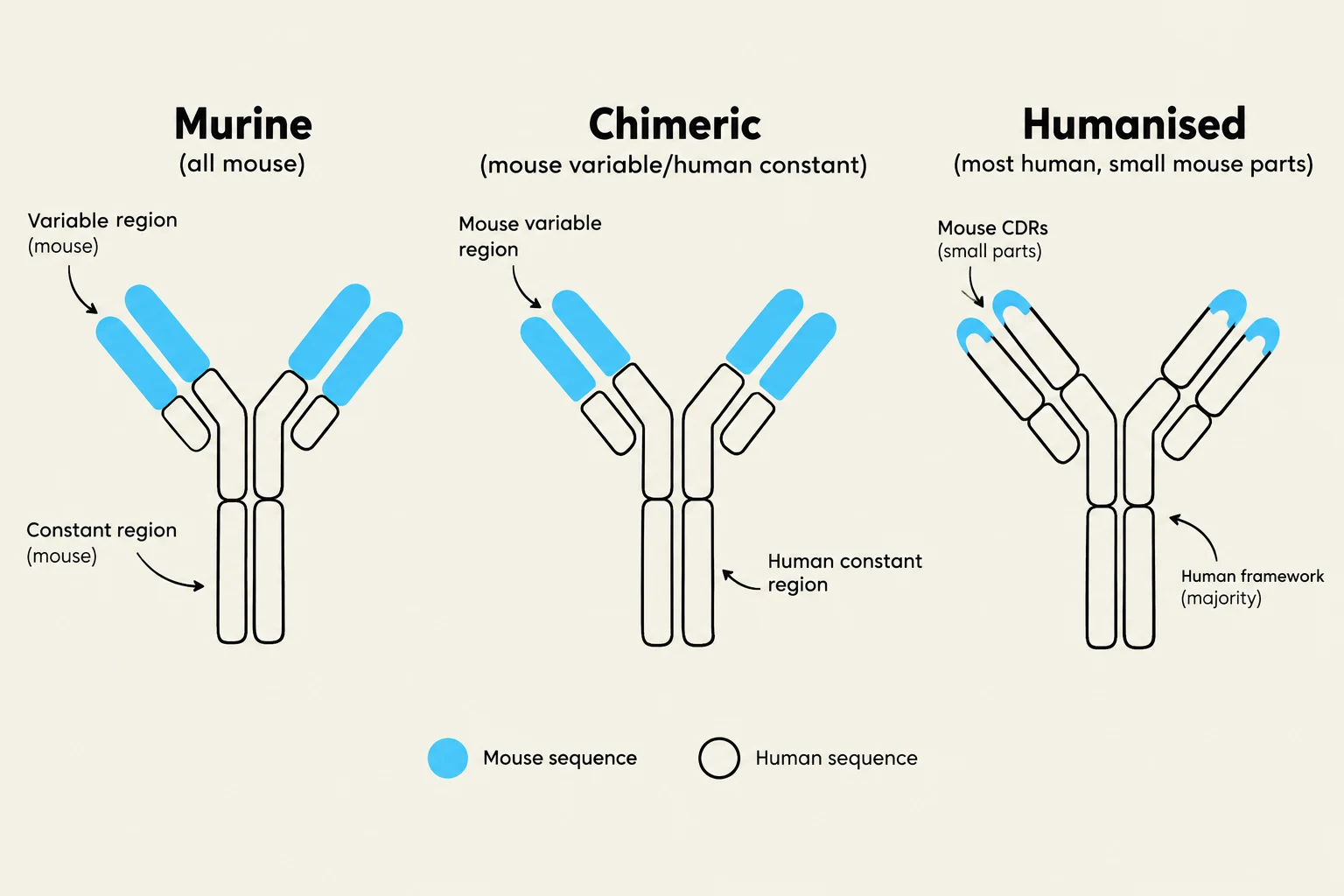
Monoclonal antibodies are highly selective proteins that target specific antigens. Early production relied on hybridoma technology, where a mouse's B cells (which produce antibodies) were fused with immortal myeloma cells to create a continuous cell line. However, these early murine (fully mouse) antibodies were highly immunogenic in humans.
To reduce the risk of the human immune system attacking the drug, engineers developed several iterations of antibody design:
Chimeric mAbs: These contain mouse variable regions (the parts that bind the antigen) and human constant regions.
Humanised mAbs: These are even more human-like, retaining only the mouse Complementarity Determining Regions (CDRs) grafted onto a human framework.
Fully Human mAbs: Produced using transgenic mice or phage display technology to ensure the entire sequence is human.
Diagrams illustrating the differences between murine, chimeric, and humanized antibodies, highlighting the origin of their variable and constant regions.
Immunogenicity and Anti-Drug Antibodies (ADAs)
Immunogenicity is the tendency of a therapeutic to trigger an immune response. The primary clinical concern is the formation of anti-drug antibodies (ADAs), which can compromise patient safety and treatment efficacy.
Types of ADAs
ADAs are classified based on how they interact with the drug:
Neutralising ADAs (NAbs): These bind directly to the active site of the drug or cause conformational changes that prevent the drug from binding to its target. They can also neutralise the body's own (endogenous) proteins, leading to severe side effects like thrombocytopenia.
Non-neutralising (Binding) ADAs: These typically bind to other regions, such as the Fc region. While they do not block the drug's active site, they can form immune complexes that increase drug clearance and alter pharmacokinetics.
Mechanisms of ADA Formation
The immune system can respond to biopharmaceuticals through two main pathways:
T-cell-dependent pathway: The mAb acts as an antigen; antigen-presenting cells (APCs) internalize and process it, presenting it to T-helper cells, which then stimulate B cells to differentiate into antibody-secreting plasma cells.
T-cell-independent pathway: This occurs when mAbs with multiple epitopes or protein aggregates cause B-cell receptor (BCR) cross-linking, directly stimulating B-cell activation.
Manufacturing impurities, particularly protein aggregates or denatured proteins, significantly increase these risks because aggregates can resemble viruses to the immune system, triggering a potent response.
Emerging Therapies: Vaccines, Oligonucleotides, and Cell Therapy
Vaccines and Oligonucleotides
Vaccine manufacturing varies by type, from egg-based influenza vaccines (where the virus replicates in embryonated eggs) to modern mRNA vaccines delivered via lipid nanoparticles (LNPs).
Oligonucleotide therapeutics (short DNA/RNA sequences) are manufactured via solid-phase synthesis. These can act through various mechanisms, such as Antisense Oligonucleotides (ASOs) that modulate splicing or siRNA that uses the RNAi pathway to degrade target mRNA.
Cell and Gene Therapy
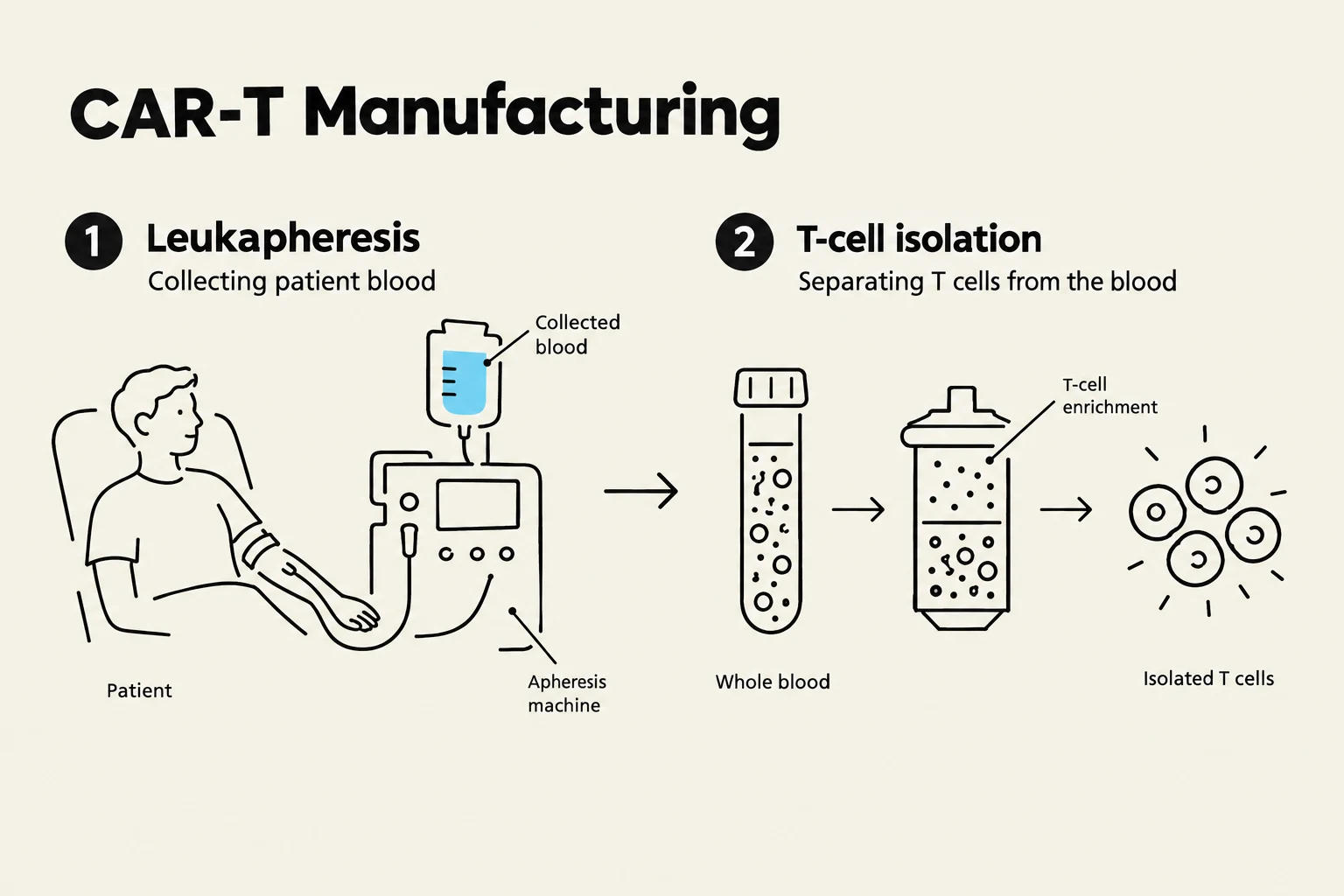
Cell therapies, such as CAR-T cell therapy, involve engineering a patient's own T cells to express a Chimeric Antigen Receptor (CAR). This allows the T cells to recognize tumor antigens independently of the traditional MHC pathway.
This diagram illustrates the CAR-T manufacturing process, beginning with leukapheresis to collect patient blood, followed by T-cell isolation and enrichment to obtain isolated T cells.
While revolutionary, these therapies face significant manufacturing hurdles, including the need for "scale-out" (treating individual patients separately) rather than "scale-up," and the management of severe side effects like Cytokine Release Syndrome (CRS).
Keep reading for free.
Create an account to finish this reading and make it part of your study routine.