Biomaterials-Enabled Electrical Stimulation for Tissue Regeneration
This article explores the use of electroactive and conductive biomaterials to deliver electrical stimulation for tissue regeneration. It covers the role of the electrical microenvironment, different types of conductive and stimuli-responsive biomaterials, their applications in neural repair, cardiac tissue engineering,
In the complex landscape of the human body, cells do not exist in isolation; they are constantly interacting with a dynamic microenvironment of physical and chemical cues. Among these cues, the electrical microenvironment plays a pivotal role in maintaining tissue homeostasis and driving essential processes like wound healing. Recent advancements in bioengineering have shifted focus toward developing specialized platforms that can deliver precise electrical signals to cells to modulate their behavior—influencing how they migrate, proliferate, and differentiate. By utilizing electroactive biomaterials, researchers are creating new ways to foster tissue regeneration across various medical disciplines, from neural repair to bone healing.
The Role of the Electrical Microenvironment
The electrical microenvironment is a fundamental determinant of many pathophysiological processes. For instance, endogenous electrical fields serve as primary directional cues that guide cell migration during the acute stages of wound healing. Beyond simple guidance, electrical signals can promote angiogenesis—the formation of new blood vessels—which is critical for ensuring a sufficient nutrient supply to healing tissues.
At the cellular level, electrical stimulation can activate specific ion channels, such as Ca2+, Na+, K+, and Cl−, leading to ion flow and cytoskeletal changes that directly influence cell motility. While the exact signaling pathways (such as Wnt/GSK3β or PI3K/AKT) are still being mapped, it is clear that electrical cues can synergize with biochemical signals to accelerate recovery.
Conductive Biomaterials and Direct Stimulation
One of the most established strategies for tissue engineering involves using conductive biomaterials that possess electrical conductivity similar to native tissue. These materials are often composed of a hydrophilic polymer matrix embedded with conductive fillers, such as carbon nanotubes (CNTs), graphene oxide (GO), or conductive polymers like polypyrrole (PPy) and polyaniline (PANI).
These materials can be processed into scaffolds or hydrogels to provide "microcurrents" directly to the target site. Depending on how the electrical energy is delivered, researchers use different coupling methods:
Direct Coupling: Conductive electrodes make physical contact with the target tissue.
Capacitive Coupling: Uses capacitors to transmit energy to the tissue without requiring a continuous conductive scaffold.
Inductive Coupling: Utilizes a tunable electromagnetic field generated by a conductive coil.
Applications in Tissue Regeneration
The versatility of these conductive platforms allows them to be tailored for specific tissues:
Neural Repair: Nerve conduits incorporating CNTs or graphene oxide help facilitate axonal growth and functional recovery in spinal cord or peripheral nerve injuries.
This diagram illustrates a cyclical process involving implantable ES-based systems for advanced therapy, modern EchT therapy, ES-responsive substrates by microfabrication, advanced platforms by micro/nano processing, and self-powered wearable devices, all integrated with smart and self-powered devices.
Cardiac Tissue Engineering: PPy-based scaffolds can be used to create engineered cardiac patches that improve electrical integration with the host heart, helping to restore function after a myocardial infarction.
Bone Regeneration: Composites like hydroxyapatite-GO can enhance bone repair by combining electrical conductivity with the release of beneficial ions.
Wound Healing: Silver nanowires or PPy-integrated hydrogels can accelerate skin regeneration by improving re-epithelialization and vascular formation.
Study Tip: When evaluating conductive biomaterials, always consider the balance between electrical conductivity and biocompatibility. While carbon-based materials like CNTs offer excellent stability, they may exhibit cytotoxicity at high concentrations, whereas metals like silver nanowires may corrode in physiological environments.
Stimuli-Responsive and Electroactive Biomaterials
A more recent frontier in biomaterials science is the development of "electroactive" materials—platforms that do not just conduct electricity but actually generate it in response to external or internal stimuli.
Piezoelectric Materials
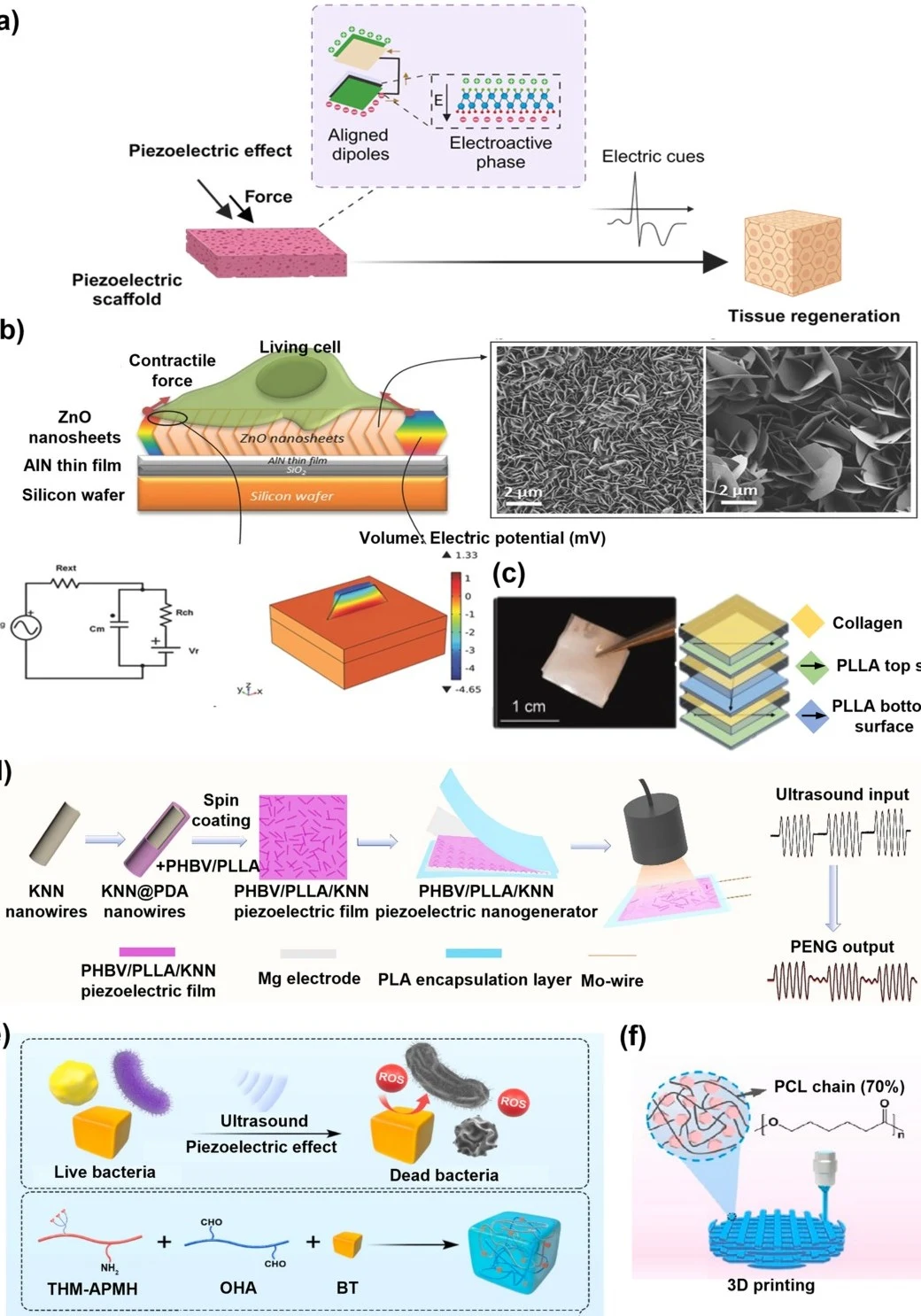
Piezoelectric materials generate an electric potential when subjected to mechanical stress or deformation. This is particularly useful in environments where movement is constant, such as near muscles or bones. Common materials include inorganic substances like ZnO and BaTiO3, or polymers like poly(L-lactic acid) (PLLA) and polyvinylidene fluoride (PVDF).
This figure illustrates the principles and applications of piezoelectric nanogenerators, including their use in tissue regeneration, bacterial inactivation, and 3D printing.
Magnetoactive and Photoactive Materials
Other advanced platforms utilize different energy modalities:
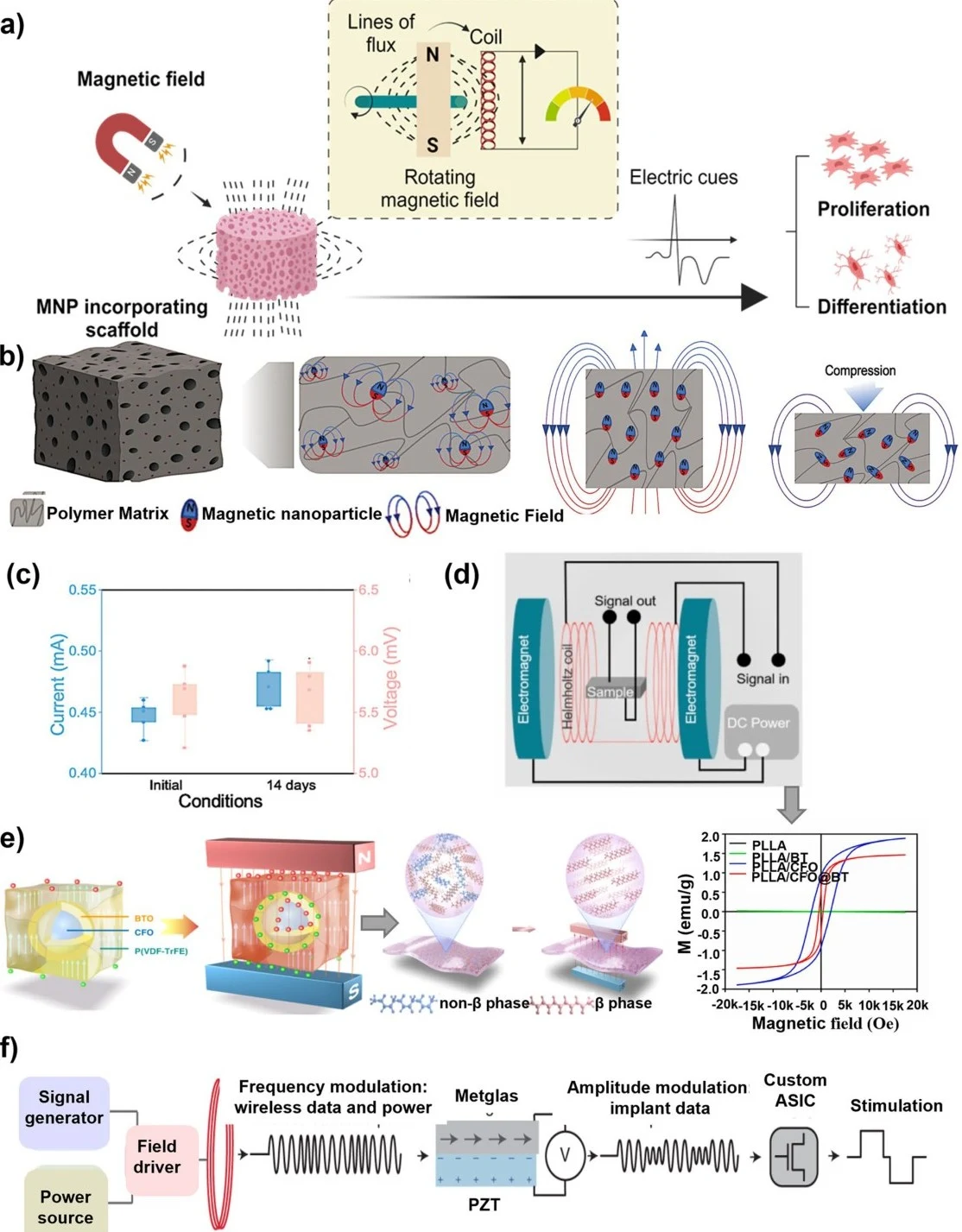
Magnetic Fields: When a material containing magnetic nanoparticles is exposed to an external magnetic field, the alignment of these particles creates a local electric field within the biomaterial.
This figure illustrates the principles of magnetic nanoparticle (MNP) incorporation into scaffolds and their response to magnetic fields, leading to cell proliferation and differentiation. It also shows experimental setups for measuring electrical properties and magnetic hysteresis loops of different materials.
Light (Photoconductivity): Semiconductor-based materials can undergo structural or electronic changes when illuminated, modulating their conductivity to trigger cellular responses.
This figure illustrates the concept of wireless stimulation using light to induce neuronal growth and osteogenesis, potentially for artificial photoreceptors. It details experimental setups and results related to photoconductive scaffolds, cell niches, and photocurrent measurements under varying light intensities and conditions. The final panel shows a cross-section of the retina and how nanostructure arrays can mimic photoreceptor function.
Biofuel Cells (EBCs)
Perhaps the most "natural" approach is the use of enzymatic biofuel cells (EBCs). These devices harness chemical energy from the body itself—specifically from fuels like glucose—to generate electricity. By using enzymes such as glucose oxidase (GOx), these cells can act as self-powered, biocompatible tools for continuous, localized stimulation. For example, glucose-responsive EBC skin patches have been shown to stimulate cell motility and migration, significantly aiding in the healing of diabetic skin wounds.
Challenges and Future Directions
Despite the immense potential of biomaterials-enabled electrical stimulation, several hurdles remain before widespread clinical translation can occur.
Biocompatibility and Toxicity: Ensuring that materials do not trigger inflammation, immune rejection, or release toxic byproducts (like $CO_x$ or $NO_x$) during degradation is paramount.
Long-term Stability: For chronic medical interventions, materials must maintain their electrical properties over time without degrading prematurely.
Power and Integration: While self-powered devices like biofuel cells are promising, optimizing their electrical lifetime and ensuring seamless integration with existing medical practices remains a challenge.
As research progresses, the goal is to move toward "smart" implantable systems that can sense the physiological state of a tissue and provide precisely tuned electrical stimulation to drive optimal healing.
Keep reading for free.
Create an account to finish this reading and make it part of your study routine.