


Viruses are unique infectious particles that exist in a "shady area" between living organisms and chemicals. They are much simpler than even the smallest prokaryotic cells and cannot reproduce or carry out metabolism outside of a host cell. Because they require a host to replicate, they are classified as obligate intracellular parasites.
Viral Structure and Genomes
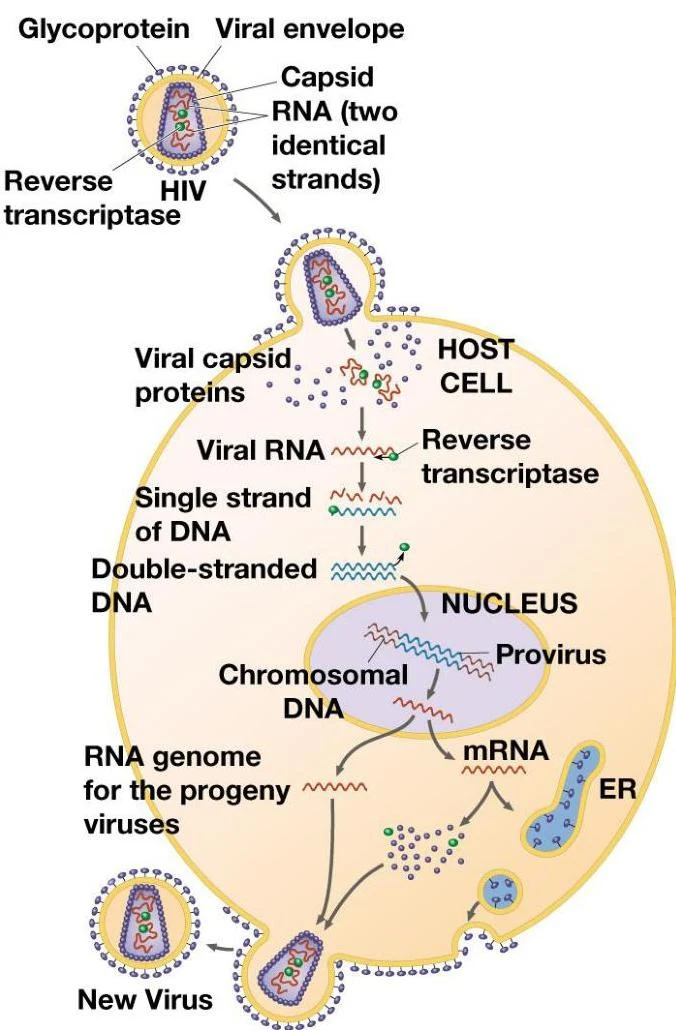
A virus consists of a nucleic acid (the genome) surrounded by a protein coat. The protein shell that encloses the genome is called a capsid, which is constructed from individual protein subunits known as capsomeres. Depending on the virus, the capsid may take on helical or icosahedral shapes.
The viral genome is highly diverse. It can consist of either double-stranded or single-stranded DNA, or double-stranded or single-stranded RNA. This genome may be a single linear or circular molecule and can contain anywhere from 3 to 2,000 genes.
Some viruses possess an additional membranous envelope that surrounds the capsid. These envelopes are typically derived from the membranes of previous host cells, such as the plasma membrane, the nuclear envelope, or the Golgi apparatus.


Keep reading for free.
Create an account to finish this reading and make it part of your study routine.
Continue reading freeAlready have an account? Log in
Updated