Biological Safety and Human Pathogens: Canadian Regulations and Risk Management
An overview of biological agents, Canadian regulations like the Human Pathogens and Toxins Act (HTPA), pathogen risk groups, safety tools such as Pathogen Safety Data Sheets (PSDS), and laboratory containment levels.
In the laboratory setting, working with biological agents requires a rigorous understanding of safety protocols and legal frameworks. Unlike chemical hazards, biological hazards involve living organisms or their products that can replicate, spread, and evolve. To manage these risks, Canada employs a strict regulatory system designed to protect laboratory workers, the public, and the environment from accidental exposure or the release of infectious agents.
Understanding Biological Agents
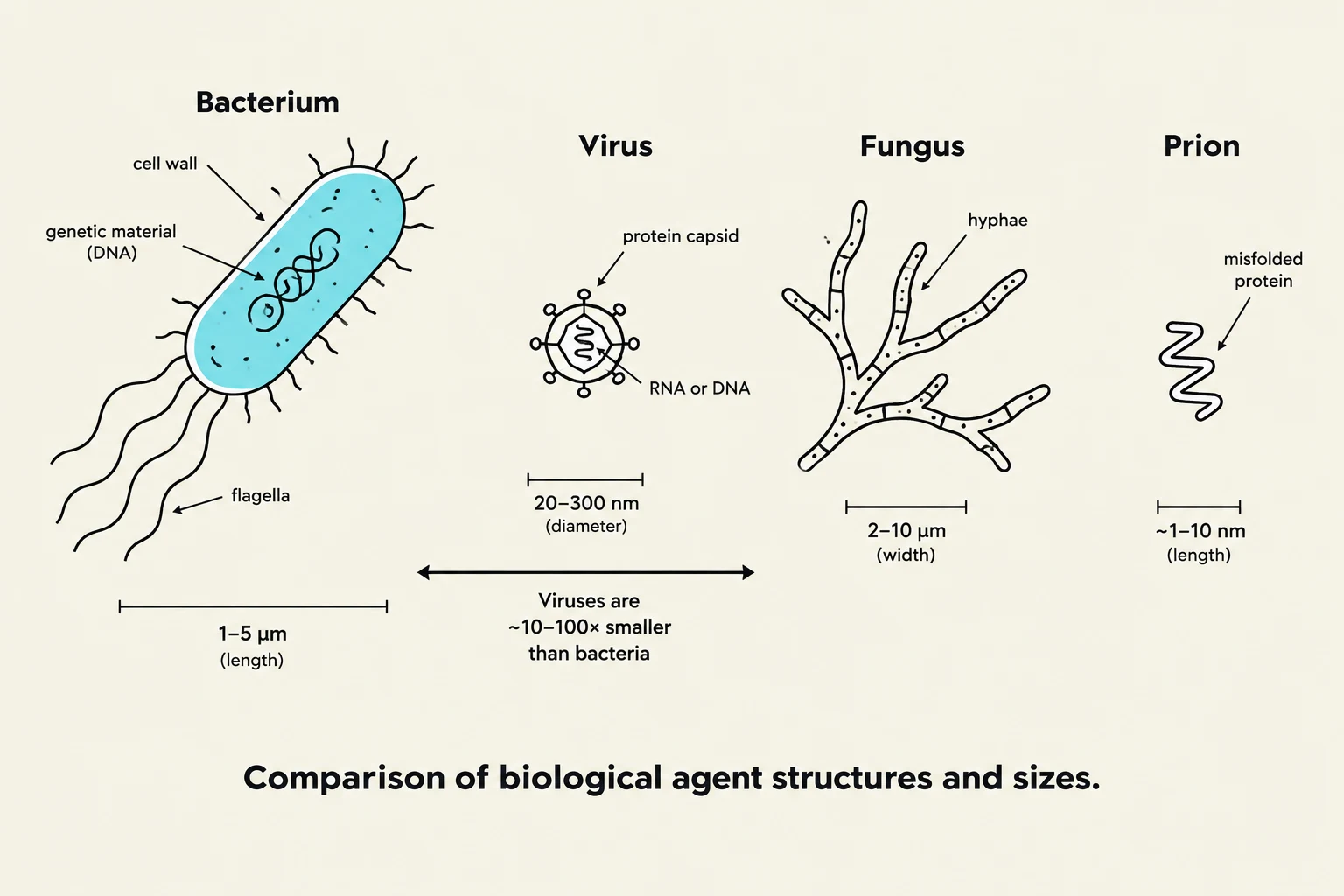
Comparison of biological agent structures and sizes, illustrating a bacterium, virus, fungus, and prion.
Before discussing safety regulations, it is essential to define what constitutes a biological agent. A biological agent is any substance made from a living organism or its products, including viruses, bacteria, fungi, parasites, prions, and toxins.
Common categories include:
Bacteria: Single-celled microorganisms that can often be grown on agar in a lab. While many are beneficial (like those in our gut), others are hazardous.
Viruses: Much smaller than bacteria, viruses consist of genetic material (DNA or RNA) surrounded by a protein coat. They cannot replicate on their own and must "trick" a host cell into making copies of them.
Fungi: A diverse group including yeasts and moulds.
Parasites: Organisms that live on or in a host, deriving nutrients at the host's expense.
Toxins: Poisons produced by microorganisms, such as the botulinum toxin produced by Clostridium botulinum.
Prions: Non-living, misfolded proteins that are extremely difficult to inactivate and can trigger cellular death.
The Regulatory Framework in Canada
The handling of these agents in Canada is governed by the Human Pathogens and Toxins Act (HTPA). This legislation is overseen by the Public Health Agency of Canada (PHAC).
Under the HTPA, any laboratory in Canada that handles biological agents must obtain a permit. This permit is not merely a piece of paperwork; it is a certification that the laboratory has demonstrated competency in the possession, handling, storage, transfer, and testing of specific agents. To maintain oversight, PHAC maintains a national inventory that links specific laboratories to the agents they use and the nature of their work, such as clinical testing, vaccine production, or research.
Exam Tip: If a question asks which agency oversees biosafety legislation in Canada, the answer is the Public Health Agency of Canada (PHAC) under the authority of the Human Pathogens and Toxins Act (HTPA).
Pathogen Risk Levels: The Four Risk Groups
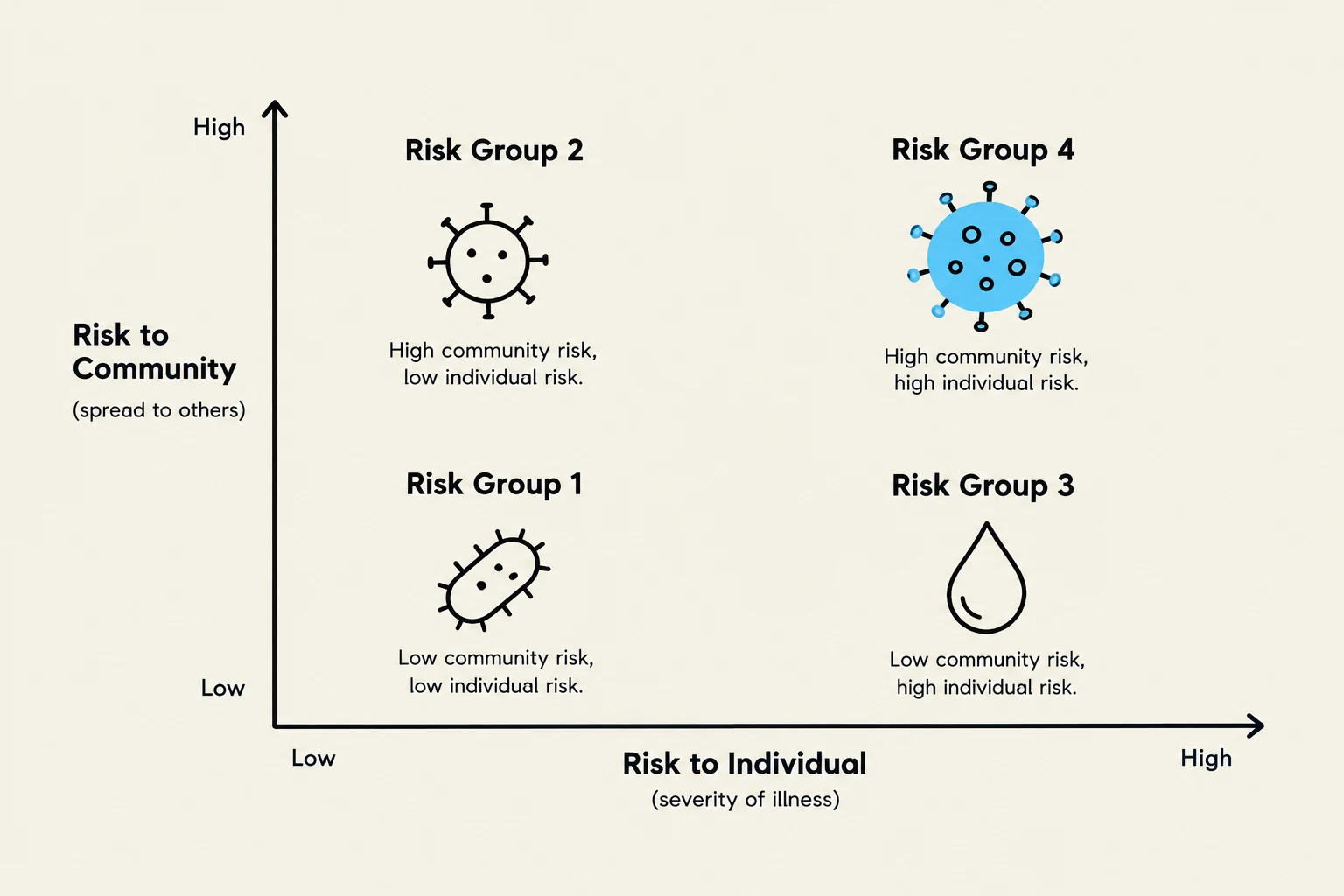
This graph illustrates four risk groups based on community spread and individual illness severity. Risk Group 1 has low community and individual risk. Risk Group 2 has high community risk but low individual risk. Risk Group 3 has low community risk but high individual risk. Risk Group 4 has both high community and individual risk.
To manage the varying levels of danger posed by different microbes, PHAC categorizes human pathogens into four distinct Risk Groups. These groups are based on two primary factors: the risk to the individual worker and the risk to the community.
Risk Group 1
These agents pose a low risk to both individuals and the community. They are generally not associated with disease in healthy adults and often have effective treatments. Examples include normal human flora like E. coli and Lactobacillus acidophilus.
Risk Group 2
Agents in this group are associated with human diseases that rarely cause serious infections. They typically do not spread easily between people, and effective treatments (such as antibiotics) are usually available. Most Canadian clinical laboratories handle agents in this group, such as Streptococcus pyogenes (which causes strep throat) and Giardia intestinalis (the parasite responsible for "beaver fever").
Risk Group 3
These agents pose a high individual risk but typically do not spread via casual contact, resulting in a lower community risk. Preventative measures or treatments may or may not be available. There are approximately 100 labs in Canada authorized to handle these, including provincial public health labs and large tertiary hospitals. Examples include Mycobacterium tuberculosis (TB), HIV, Bacillus anthracis (anthrax), and the H5N1 (bird flu) virus.
Risk Group 4
This group contains the most dangerous and exotic biological agents, posing both high individual and high community risk. These agents cause serious or lethal diseases, are easily transmitted person-to-person, and usually lack effective treatments. Notably, this group contains only viruses, such as Ebola and smallpox. In Canada, the National Microbiology Laboratory in Winnipeg, Manitoba, is the only facility authorized to work with Risk Group 4 viruses.
Safety Tools: Pathogen Safety Data Sheets (PSDS)
To assist laboratory personnel, PHAC maintains Pathogen Safety Data Sheets (PSDS). These are technical documents similar to Safety Data Sheets (SDS) used for chemicals. A PSDS provides nine essential sections of information, including health hazards, dissemination methods, viability (how to kill the agent), medical treatment/prophylaxis, and recommended laboratory precautions.
Breaking the Chain of Transmission
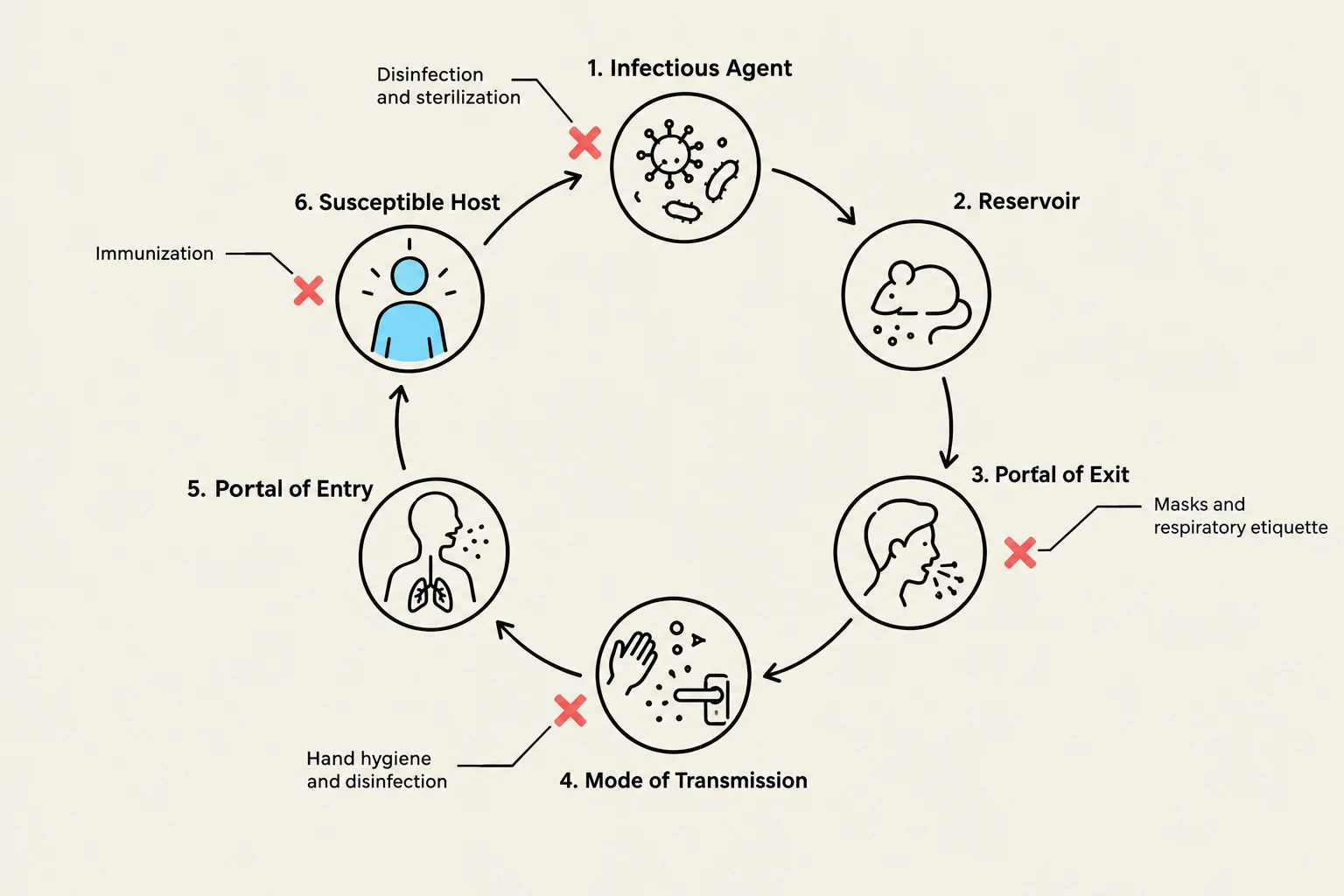
Diagram illustrating the chain of infection, including the infectious agent, reservoir, portal of exit, mode of transmission, portal of entry, and susceptible host, along with preventative measures.
Infection occurs through a "chain of transmission" consisting of six links: the Infectious Agent, a Reservoir, a Portal of Exit, a Mode of Transmission, a Portal of Entry, and a Susceptible Host. To prevent infection, we must "break" one of these links:
Agent/Reservoir: Can be broken by disinfection, sterilization, or water treatment.
Portal of Exit/Entry: Can be blocked using Personal Protective Equipment (PPE) and practicing aseptic technique.
Mode of Transmission: Can be neutralized through hand hygiene and PPE.
Host: Can be made less susceptible through immunization and proper nutrition.
Laboratory Containment and Control
Laboratory safety is implemented through two types of controls: Engineering Controls (physical features) and Administrative Controls (operational practices).
Containment Levels
Similar to Risk Groups, laboratories are assigned Containment Levels (CL).
CL2 Labs: Often used in clinical settings, these require non-absorbent, cleanable surfaces (no carpet or wood) and biosafety cabinets for certain tasks.
CL3/CL4 Labs: These require advanced air handling systems. In CL3 and CL4, airflow is "inwards only," meaning air is pulled into the lab and can only exit through HEPA filters. In a CL4 lab, the air system is completely separate from the rest of the facility.
The Biological Safety Cabinet (BSC)
A critical engineering control is the Biological Safety Cabinet (BSC). BSCs use air currents to prevent the escape of aerosols (tiny droplets containing infectious particles) and filter the air through High-Efficiency Particulate Air (HEPA) filters.
Safety Protocol: Biohazard Spills
If a spill occurs in a BSC, follow these steps:
Notify others in the lab and don appropriate PPE.
Leave the BSC blower on to ensure contaminated air is filtered through the HEPA filter.
Place disinfectant wipes over the spill and allow them to sit for 30 minutes.
Dispose of all contaminated materials, including your gloves, in a biohazardous waste container.
Keep reading for free.
Create an account to finish this reading and make it part of your study routine.