Biological Organization and Linnaean Classification
Explore the hierarchical levels of biological organization, from macromolecules to organisms, and understand the principles of Linnaean classification and taxonomy.
Life is characterized by an extraordinary level of complexity, ranging from the microscopic interactions of molecules to the vast diversity of entire ecosystems. To study life effectively, scientists use two distinct but complementary hierarchical frameworks: biological organization, which describes how matter is structured within a single living thing, and Linnaean classification (taxonomy), which describes how different living things are related to one another.
The Hierarchy of Biological Organization
Biological organization follows a structured, ascending hierarchy where each level builds upon the previous one, increasing in complexity. This hierarchy allows us to understand how tiny chemical processes eventually culminate in the complex functions of a complete organism.
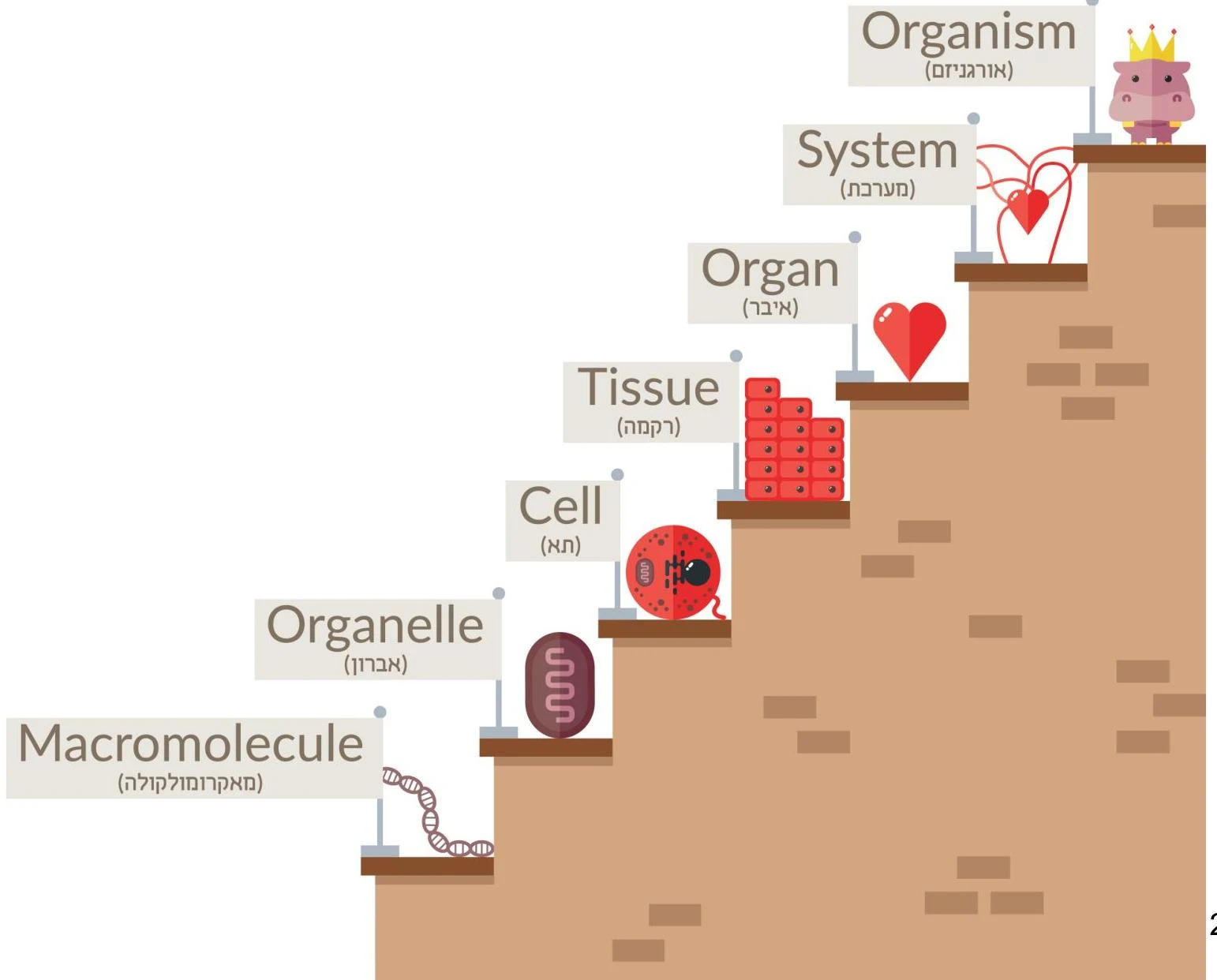
This diagram illustrates the hierarchical organization of biological systems, from macromolecules to a complete organism.
The levels of organization can be broken down as follows:
1. Macromolecules
At the most fundamental chemical level are macromolecules. These are large, complex molecules that perform specific chemical functions essential for life. For example, the enzyme peptidase is a macromolecule responsible for cutting peptide bonds in proteins found in food, a necessary step for digestion.
2. Organelles
Macromolecules organize into organelles, which are specialized structures within a cell. Think of organelles as the "organs" of the cell. A prime example is the Golgi apparatus, which functions by shuttling enzymes and other materials out of the cell.
3. Cells
The cell is the fundamental unit of life. While organelles perform specific tasks, the cell is the smallest level of organization that can be considered "alive." An example is an epithelial secretory cell, which is specialized to synthesize specific substances, such as digestive enzymes.
4. Tissues
When groups of similar cells work together to perform a specific function, they form a tissue. For instance, the epithelium of the stomach consists of cells working in unison to line the stomach lumen and secrete digestive enzymes.
5. Organs
An organ is a structure composed of different types of tissues working together to perform a complex task. The stomach is a classic example; it utilizes various tissues to break down food items into usable components for the body.
6. Systems and Organisms
Organs do not work in isolation. They are grouped into systems, such as the digestive system, which coordinates multiple organs to provide essential functions like nourishment. Finally, all these systems integrate to form the organism, the complete living individual.
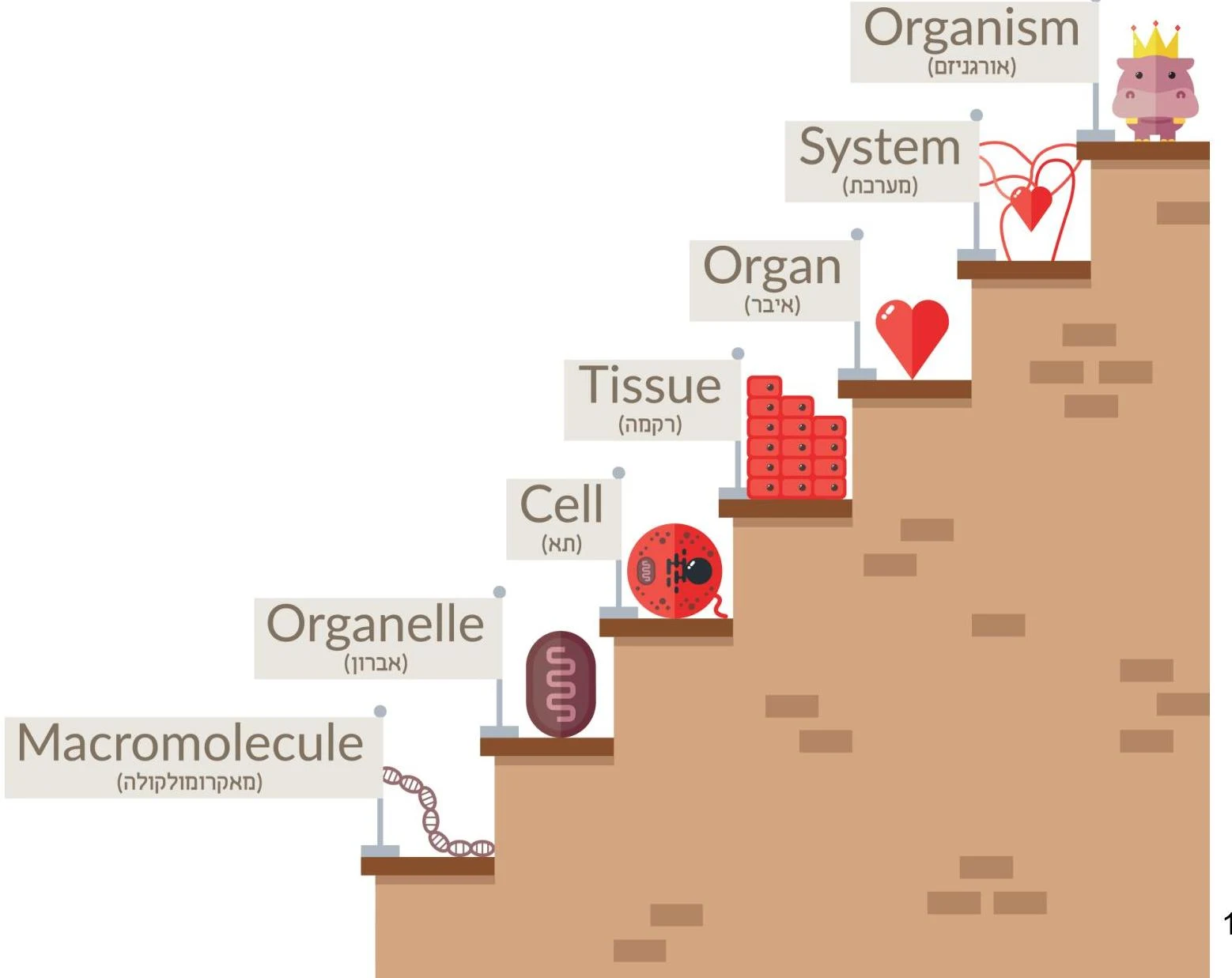
This diagram illustrates the hierarchical organization of biological systems, from macromolecules to organisms.
Study Tip: When studying these levels, always look for the "functional unit." If the question asks for the smallest unit of life, the answer is the cell. If it asks for the smallest unit of chemical function, it is the macromolecule.
Linnaean Classification and Taxonomy
While biological organization looks inward at the structure of an organism, taxonomy looks outward at the relationships between different organisms. Linnaean classification is the hierarchical system used to categorize all living things based on shared characteristics.
The Taxonomic Hierarchy
The system moves from broad, inclusive categories to increasingly specific ones. As you move down the hierarchy, the number of organisms in the group decreases, but the degree of biological similarity between them increases.
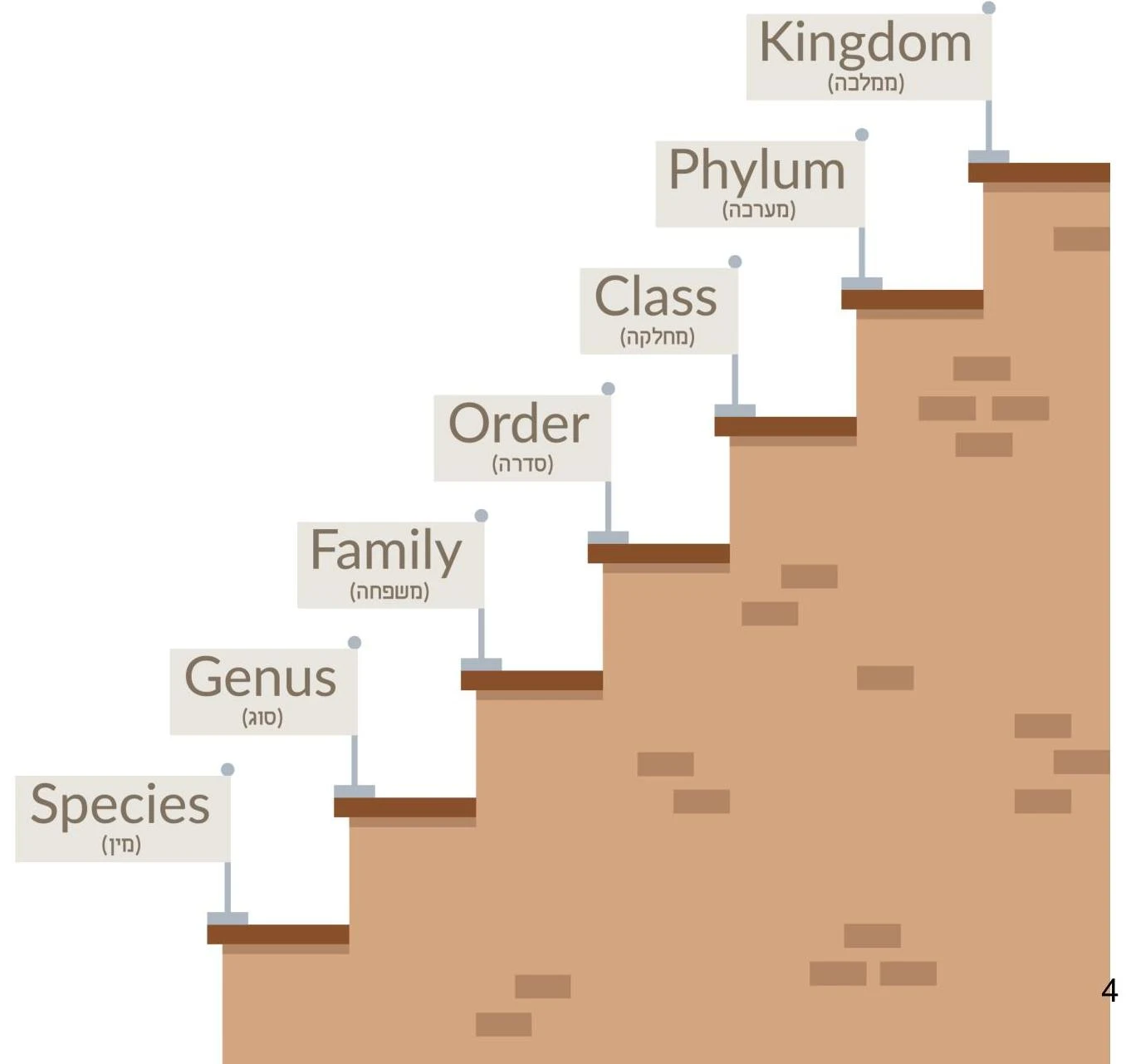
The standard ranks, from most general to most specific, are:
Kingdom (e.g., Animalia)
Phylum (e.g., Chordata or Arthropoda)
Class (e.g., Mammalia or Insecta)
Order (e.g., Carnivora or Hemiptera)
Family (e.g., Felidae or Lygaeidae)
Genus (e.g., Felis or Oncopeltus)
Species (e.g., Felis domesticus)
A diagram illustrating the hierarchical classification of organisms in biology, from Species to Kingdom, with labels in English and Hebrew.
Worked Examples
To understand how this works in practice, let's look at two very different animals:
Example 1: The Domestic Cat
Kingdom: Animalia
Phylum: Chordata
Class: Mammalia
Order: Carnivora
Family: Felidae
Genus:Felis
Species:F. domesticus
Example 2: The Large Milkweed Bug (Oncopeltus fasciatus)
Kingdom: Animalia
Phylum: Arthropoda
Class: Insecta
Order: Hemiptera
Family: Lygaeidae
Genus:Oncopeltus
Species:Oncopeltus fasciatus
Defining the Species and Evolution
At the base of the Linnaean hierarchy is the species. However, defining exactly what a "species" is can be complex, and scientists use different concepts to approach the problem:
Biological Species Concept: A population that can interbreed actually or potentially.
Phylogenetic Species Concept: A group where all members share a common ancestor.
Morphospecies Concept: Species defined by specific physical (morphological) characteristics.
Evolution of Body Plans and Natural Selection
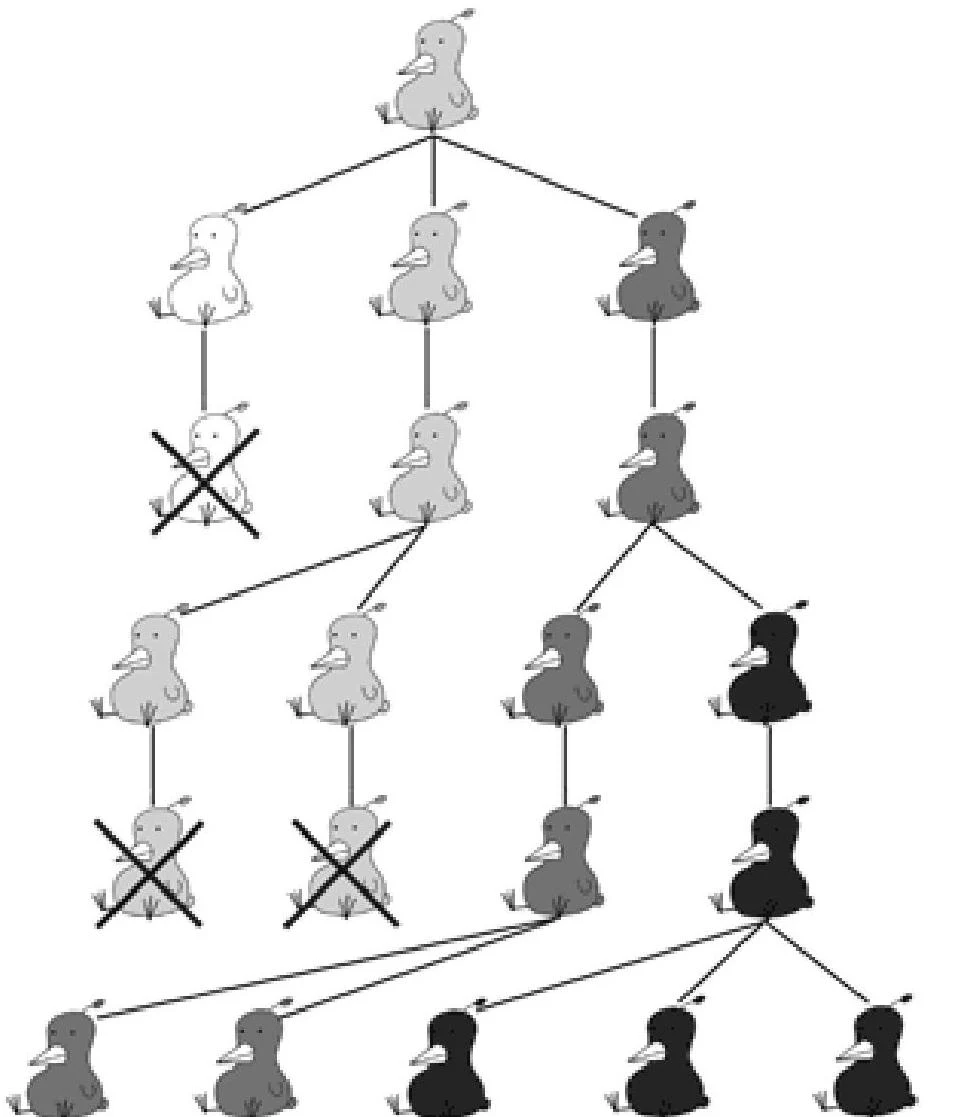
The diversity we see in classification today is the result of millions of years of evolution. As organisms evolve, their "body plans" change, leading to the branching patterns seen in taxonomic trees. This process is driven by natural selection, which relies on three observations:
Organisms within a population are variable.
This variability is heritable (passed to offspring).
Certain variants provide a survival or reproductive advantage.
A pedigree chart illustrating the inheritance of a trait, possibly represented by the color of the ducks, with some individuals marked with an 'X' indicating they are not included in further analysis or have been removed.
Over vast periods of time, these small changes accumulate, leading to the emergence of new species and the vast taxonomic tree we use to organize the millions of species on Earth.
A series of illustrations depicting snail shells of varying sizes and spiral patterns.
Keep reading for free.
Create an account to finish this reading and make it part of your study routine.