


The human mind and the brain are fundamentally one. While the brain is a complex network of approximately 100 billion neurons, it is organized into distinct structures that allow us to integrate sensory information, regulate our bodies, and manage complex mental processes. To understand how we think, feel, and remember, we must look at the hierarchy of the nervous system, moving from the "older" survival-based structures to the highly advanced prefrontal cortex.
The Foundation: Brainstem and Cerebellum
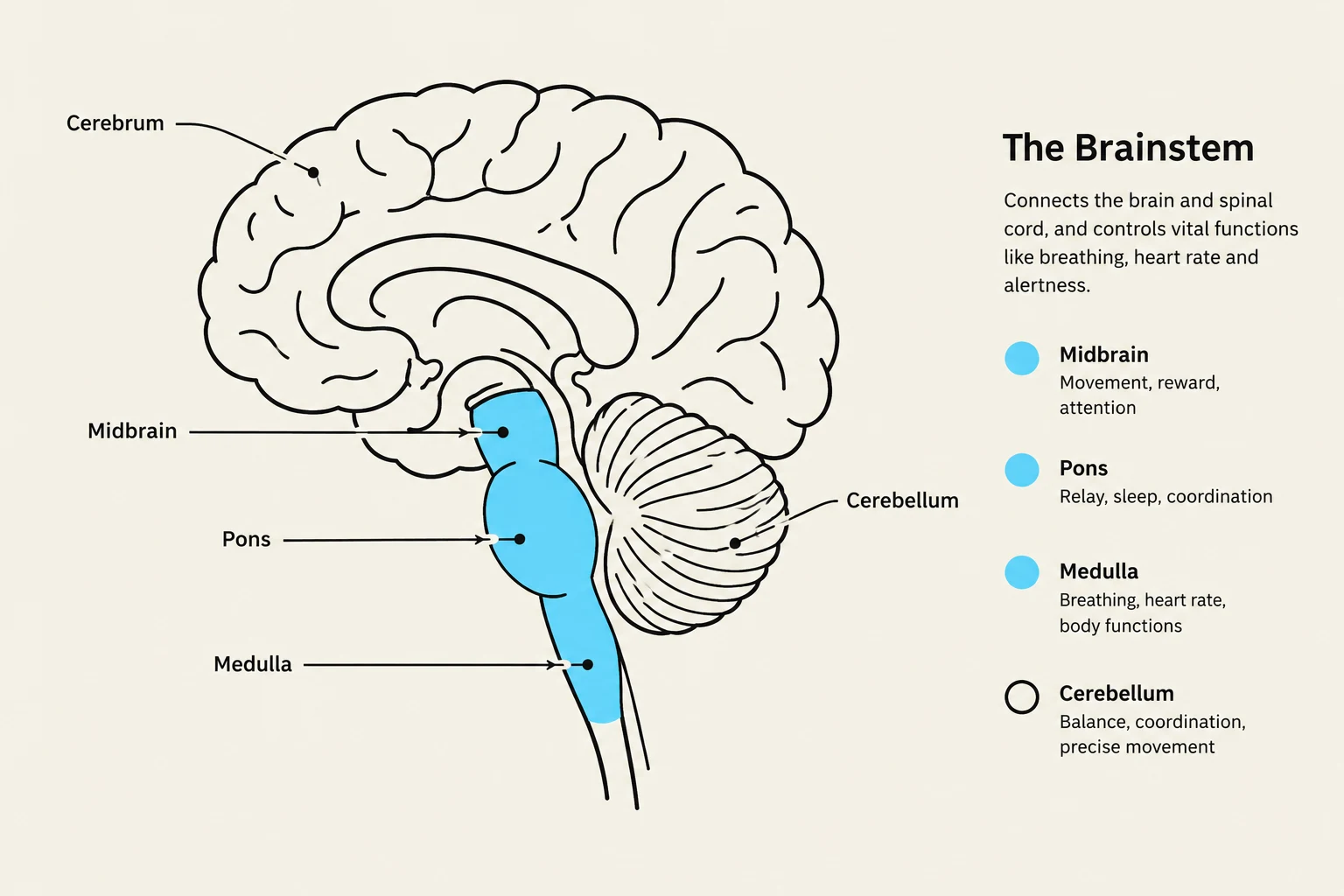
At the base of the brain lies the brainstem, which contains the most primitive and essential structures for survival. Within the brainstem, the medulla acts as the control center for "life-sustaining" functions, such as breathing and heart rate. Just above the medulla is the pons, which helps coordinate unconscious movements and plays a vital role in regulating sleep, specifically REM sleep.
The midbrain serves as a hub for movement and reflexes, particularly those triggered by sound or the tracking of visual stimuli. Spread throughout the brainstem is the reticular formation, a collection of neural networks that regulates arousal and consciousness. This structure acts as a filter, helping the brain discriminate between relevant and irrelevant sensory information.
While the brainstem manages survival, the cerebellum—often called "the little brain"—is located at the back of the brainstem and is fundamental to the coordination of voluntary movement and balance.
Keep reading for free.
Create an account to finish this reading and make it part of your study routine.
Continue reading freeAlready have an account? Log in
Updated