Biological and Psychological Theories of Criminality
An exploration of the biological and psychological factors that contribute to criminal behavior, including genetics, brain chemistry, hormones, and psychological frameworks.
Why do some individuals commit crimes while others, facing similar social pressures, do not? To answer this, criminologists look beyond simple choice and examine the complex interplay between the mind and the body. Understanding criminality requires a multi-faceted approach that explores both biological drivers—such as genetics and brain chemistry—and psychological frameworks that interpret how these internal states manifest as behavior.
Biological Perspectives and Biosocial Criminology
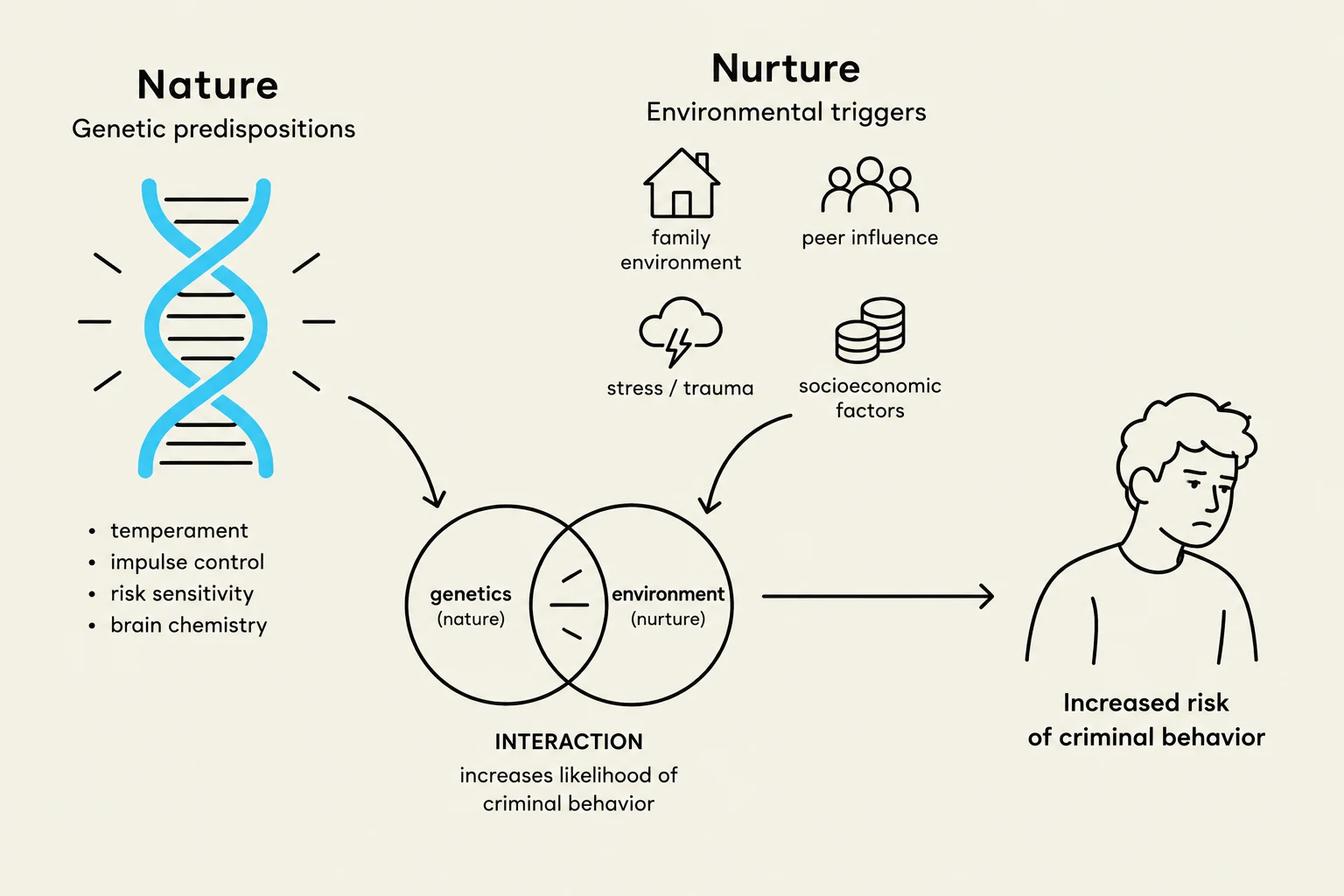
Historically, some theories suggested that criminals were "born," implying a predetermined destiny based on physical traits. Modern science has moved away from these simplistic views, focusing instead on biosocial criminology. This perspective does not claim that biology is the sole cause of crime; rather, it investigates how biological predispositions interact with environmental and social factors.
A key concept in this field is genetic inheritability. This suggests that certain traits, such as temperament or impulsivity, may be passed down through generations. However, the modern consensus is that genetics provide a "baseline" or a set of predispositions, while the environment determines whether those traits are expressed in criminal ways.
This diagram illustrates the interaction between genetic predispositions (nature) and environmental triggers (nurture) in increasing the likelihood of criminal behavior.
Exam Tip: When discussing biosocial criminology, always emphasize the interaction. It is rarely "just biology" or "just environment"; it is the combination of a biological vulnerability and a social trigger.
The Chemistry of Behavior: Hormones and Neurotransmitters
One of the most significant areas of biological study involves hormonal influences and the chemical messengers in our brain. Researchers have identified specific patterns in the chemical makeup of individuals who exhibit violent or aggressive tendencies.
The Role of Serotonin
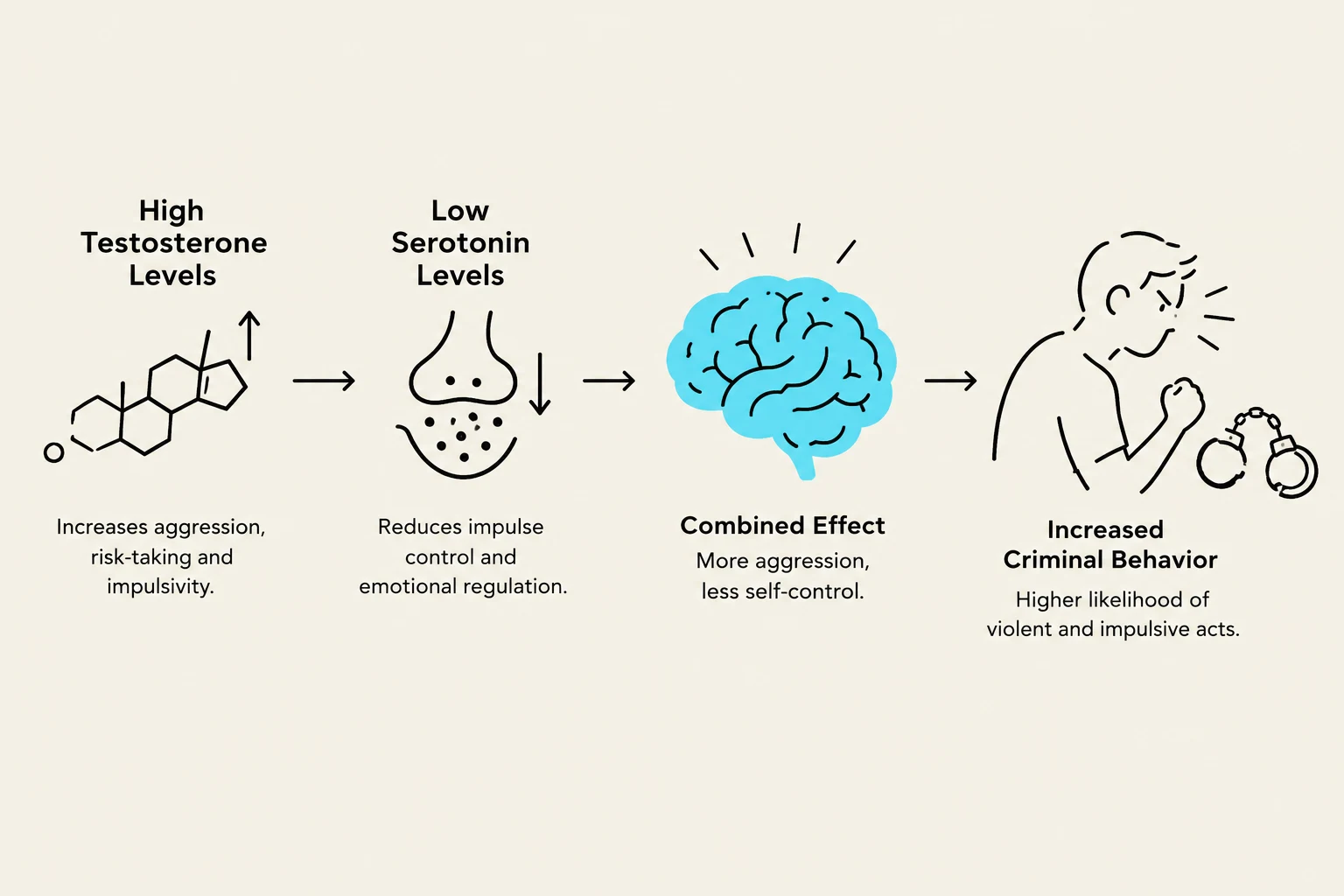
A primary focus in neurobiology is the neurotransmitter serotonin. Serotonin is crucial for regulating mood, impulse control, and emotional stability. Scientific observations suggest that low serotonin levels are often linked to increased aggression and a decreased ability to remain calm.
This relationship is often complicated by enzymes like MAOA (Monoamine oxidase A). MAOA acts as an enzyme that "eats" or breaks down neurotransmitters like serotonin. If an individual has an overabundance of certain enzymes, it can lead to a deficiency in serotonin, potentially driving aggressive behavior.
Hormonal Surges: Testosterone
Hormones like testosterone also play a role in the biological profile of criminality. Research indicates that high levels of testosterone are often correlated with increased criminal activity. Interestingly, there is a connection between hormones and neurotransmitters: high testosterone levels are frequently found in conjunction with low serotonin levels. This "chemical cocktail" may reduce an individual's ability to inhibit violent impulses.
This diagram illustrates the potential link between high testosterone levels, low serotonin levels, and increased criminal behavior, suggesting that the combined effect can lead to more aggression and less self-control.
Brain Dysfunction and Neuroplasticity
Beyond chemistry, the physical structure and function of the brain are vital to understanding criminal conduct. Brain dysfunction, particularly in the prefrontal cortex, is a major area of interest.
The prefrontal cortex is responsible for "executive functions," which include:
Impulse control
Decision-making
Judgment
Emotional regulation
Damage to this area, or a lack of development in this region (common in adolescents), can lead to heightened impulsivity and an inability to consider the consequences of one's actions. For example, individuals with ADHD often struggle with executive functions, which can be managed through stimulants that help "wake up" the brain's activity levels.
While brain damage or dysfunction can contribute to criminality, the concept of neuroplasticity offers a more hopeful perspective. Neuroplasticity is the brain's ability to alter its structure and pathways in response to new experiences, training, or injury. This suggests that while biological disadvantages may exist, they are not necessarily permanent or unchangeable.
Body Chemistry and Environmental Factors
The body chemistry theory explores how various substances—ranging from vitamins to environmental toxins—affect behavior. While some early discussions focused on simple vitamin deficiencies, modern interpretations look at more complex issues:
Nutrition and the Gut Biome: Emerging research suggests that the bacteria in our gut (the microbiome) may influence our mental state and, by extension, our behavior.
Environmental Toxins: Exposure to pollution, heavy metals, or certain chemicals can impact brain development and function.
Parasites: Some theories suggest that biological parasites can affect brain matter and alter a person's temperament.
Psychological Theories of Criminality
While biological theories focus on the "hardware" of the human machine, psychological theories focus on the "software"—the mental processes, personality traits, and emotional states that drive behavior.
Psychological perspectives often overlap with biological ones, particularly when discussing mental health disorders. Conditions such as depression, bipolar disorder, and schizophrenia are frequently studied in relation to criminal behavior. It is important to note that mental illness does not inherently make a person dangerous; however, the chemical imbalances associated with these disorders can influence how an individual processes emotions and reacts to stress.
In summary, criminality is rarely the result of a single factor. It is a complex tapestry woven from genetic threads, hormonal surges, brain structure, and the psychological ways we interpret the world around us.
Keep reading for free.
Create an account to finish this reading and make it part of your study routine.