


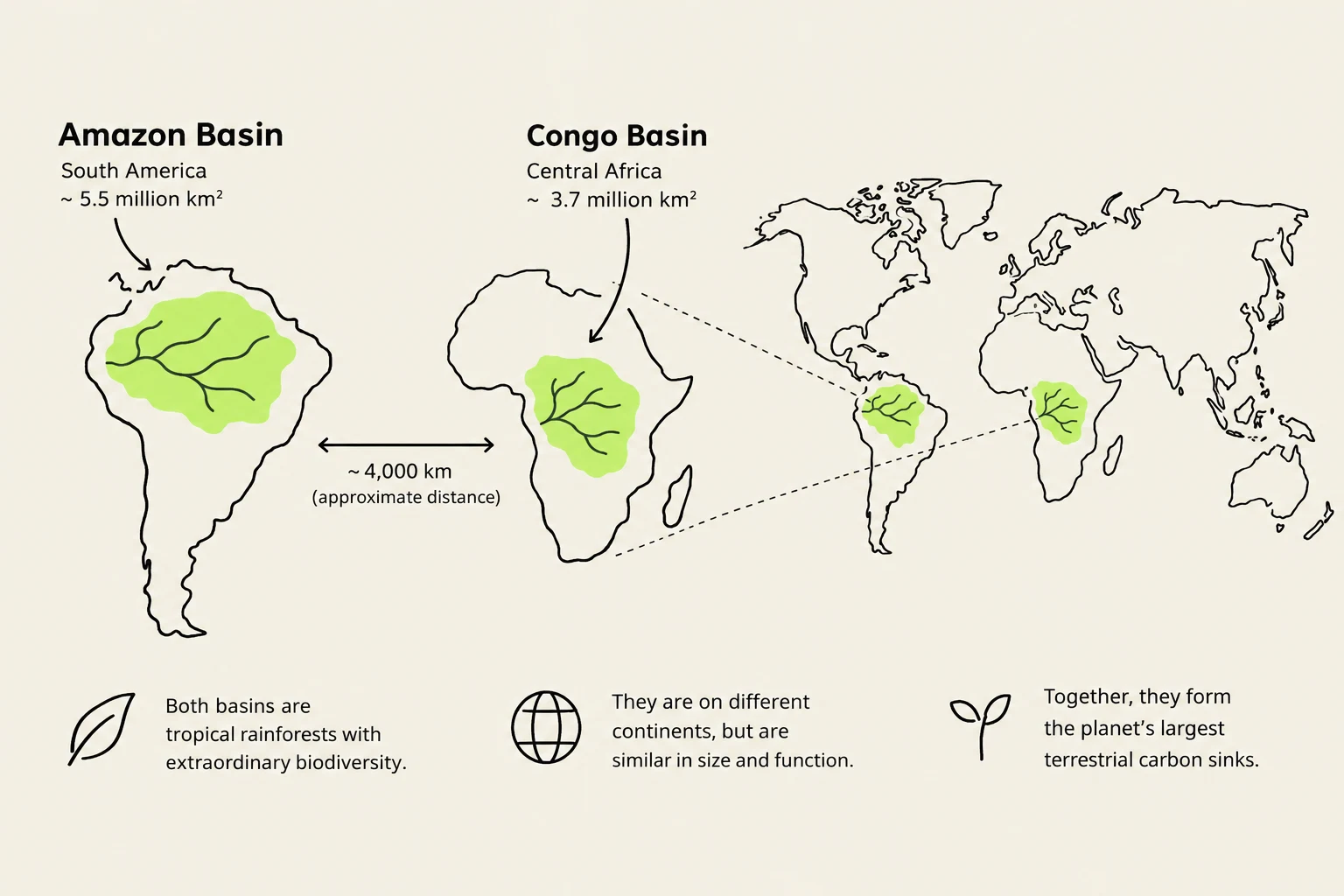
Earth is not uniform in its biological wealth. While some regions host a vast array of life forms, others are relatively sparse. Scientists refer to areas of exceptional species richness and high endemism—species found nowhere else on Earth—as "biodiversity hotspots." Understanding why certain regions, such as the Amazon and Congo Basins, act as these biological engines is central to conservation biology and our understanding of how climate shapes the living world.
The Drivers of Species Richness
Why do some areas produce more species than others? The distribution of biodiversity is not random; it is deeply intertwined with the physical environment, specifically climate and geography.
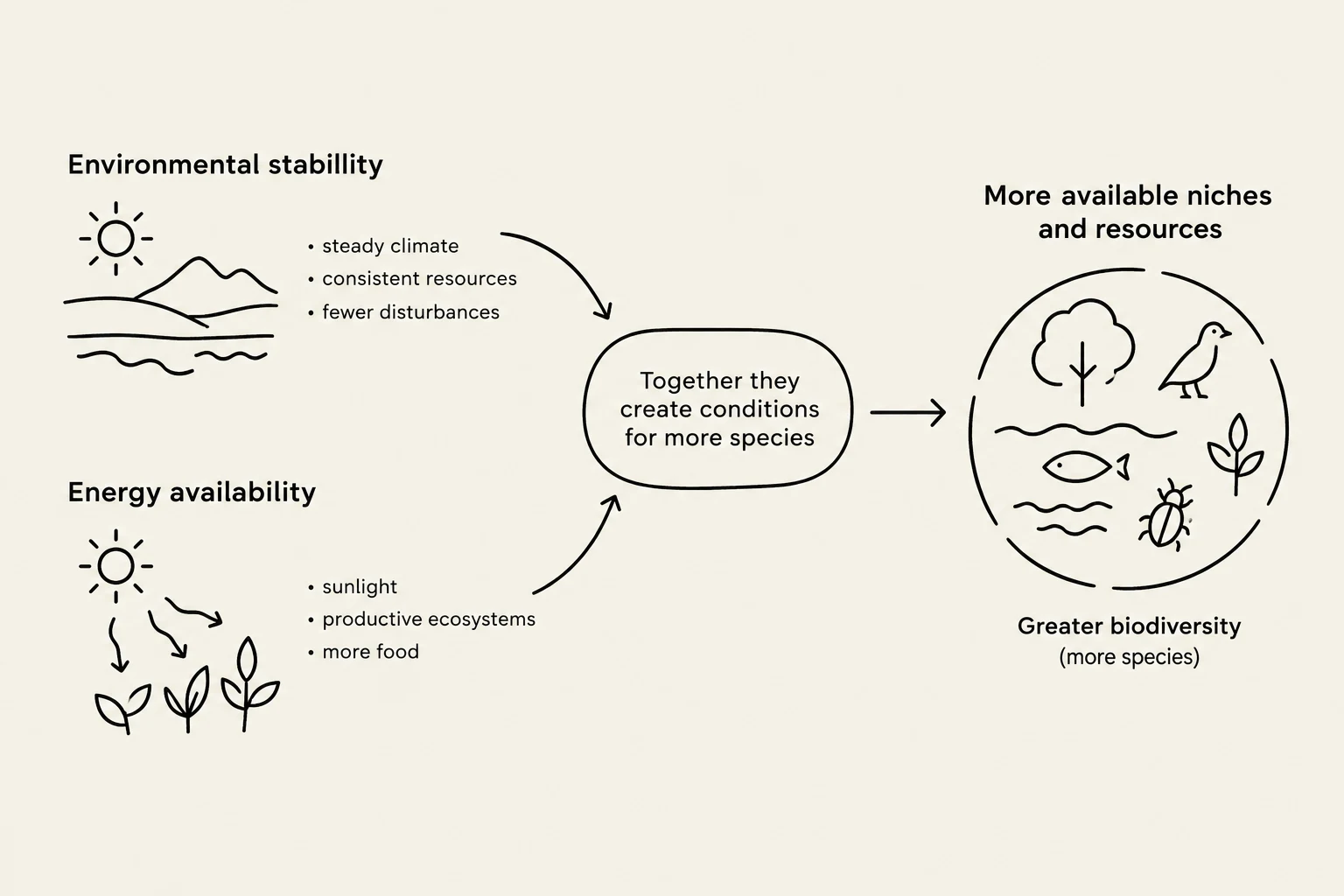
One of the primary drivers is energy availability. In tropical regions, high levels of solar radiation and consistent warmth provide a steady stream of energy that fuels primary productivity (the rate at which plants produce organic compounds). This abundant energy supports complex food webs and allows for more specialized ecological niches.
Another critical factor is moisture availability. Water is the fundamental solvent for life. Regions with high, consistent rainfall, such as tropical rainforests, prevent the physiological stresses associated with drought, allowing a wider variety of species to thrive without the need for extreme water-saving adaptations.

Exam Tip: When analyzing biodiversity, remember that "richness" refers to the number of species, while "endemism" refers to how unique those species are to a specific location. A hotspot must ideally possess both.
Keep reading for free.
Create an account to finish this reading and make it part of your study routine.
Continue reading freeAlready have an account? Log in
Updated