The history of the Beothuk people of Newfoundland is a complex narrative of sophisticated land management, strategic trade, and a tragic collision with European expansion. Often misrepresented through colonial lenses, the Beothuk were not merely passive inhabitants of a "wilderness," but a highly organized society deeply attuned to the seasonal rhythms of their environment. Understanding their history requires looking past the myths of the "vanishing race" to examine the socio-economic realities of Indigenous life before and during European contact.
Origins and Indigenous Land Management
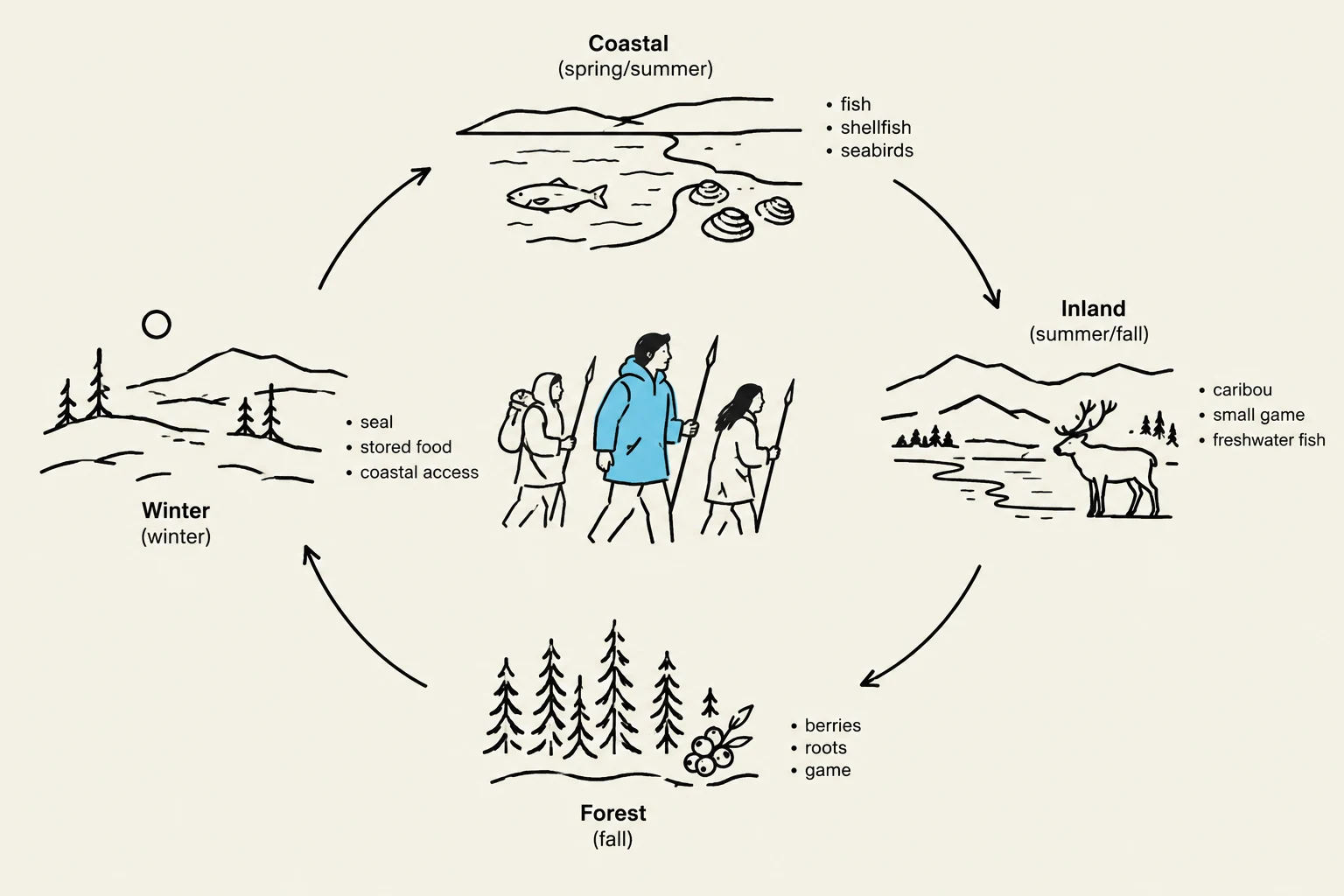
The presence of humans in the Americas is often linked to the concept of the Bering land bridge, where early populations followed migrating animals across ice bridges over long periods. For the Beothuk, their existence was defined by a deep connection to the Newfoundland landscape. Unlike the sedentary agricultural models of some other Indigenous groups, the Beothuk were highly mobile, utilizing a system of seasonal movement to maximize the resources available in different parts of their territory.
This mobility was not aimless wandering; it was a calculated strategy. As weather patterns changed and resources became available in different zones, the Beothuk would enter new cycles of movement. They functioned as hunter-gatherers, a social structure where those who successfully produced food were held in high esteem and often wielded significant political power. Their social units were typically close-knit family systems of approximately twelve people, designed to facilitate collective harvesting and mutual survival.
This diagram illustrates a seasonal cycle of resource gathering and movement, depicting activities in coastal, inland, forest, and winter environments, along with the associated food sources and human figures.
Trade and Interaction
Before the establishment of permanent European settlements, the Beothuk were part of a broader network of Indigenous interaction. They maintained trade relationships with neighboring groups, such as the Mi'kmaq. For example, historical records indicate trade occurring in areas like Trinity Bay as early as 1612.
The Beothuk were masters of their territory, building massive food stores and utilizing extensive fences to dry animals, ensuring they had a stable food supply even during periods of movement. This level of infrastructure demonstrates that they were not just following food, but actively managing and preparing the landscape for long-term survival.
The Impact of European Contact
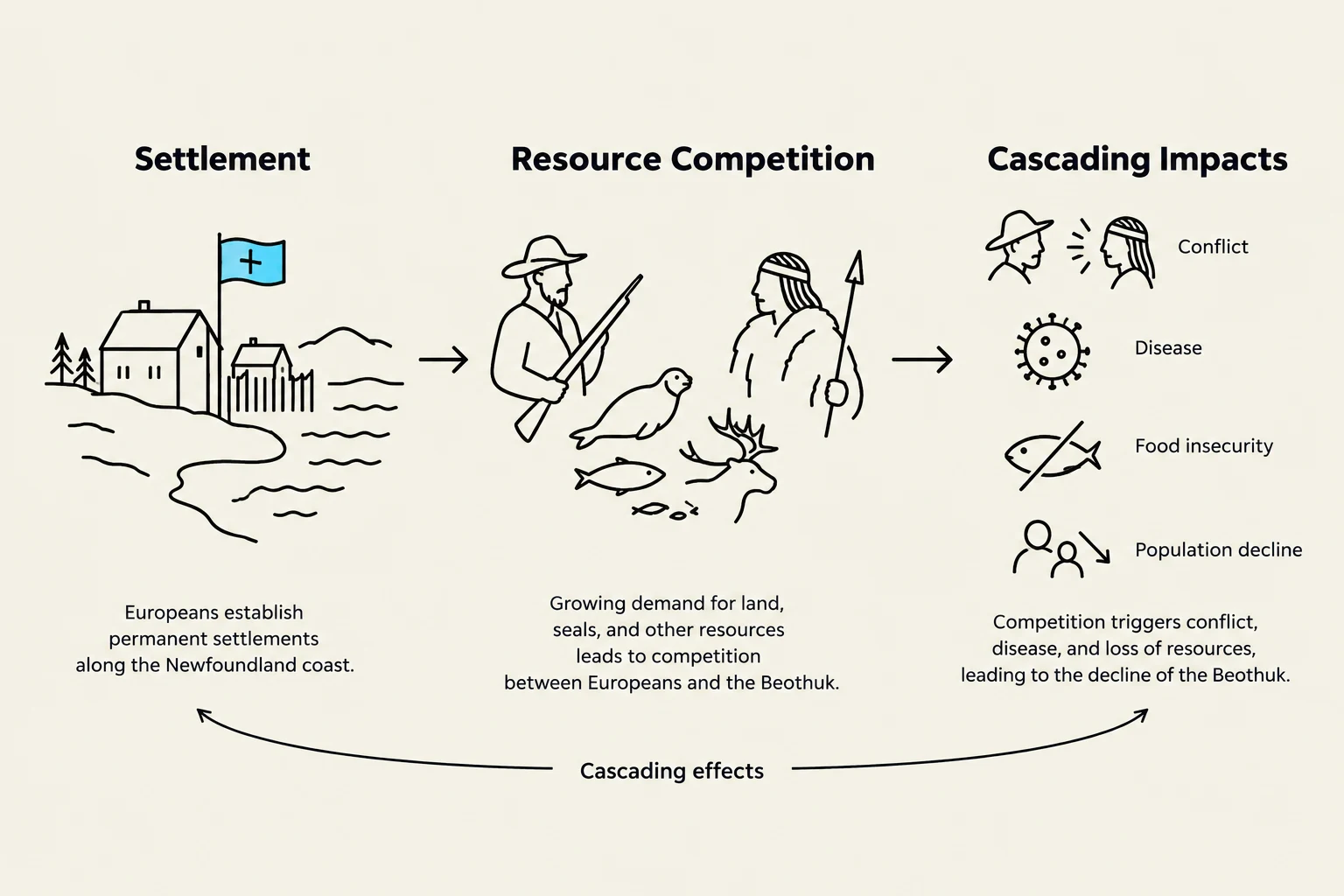
The arrival of Europeans fundamentally altered the Beothuk way of life through two primary mechanisms: competition for resources and biological catastrophe.
European Settlements and Resource Competition
Initially, European interest in the region was focused on fishing. However, as the 18th and 19th centuries progressed, Europeans began establishing permanent settlements. These settlements were often placed in areas highly valued for specific resources, which directly interfered with the traditional seasonal movement of the Beothuk. As settlers occupied more land, the Beothuk faced increasing competition for the very resources they relied upon for survival.
Virgin Soil Epidemics
Perhaps more devastating than the loss of land was the introduction of "virgin soil epidemics". Because the Beothuk had been isolated from European populations, they had no prior exposure—and therefore no biological immunity—to many of the diseases brought by settlers. These diseases spread rapidly through Indigenous populations, causing massive declines in numbers and destabilizing social structures.
Exam Tip: When discussing "virgin soil epidemics," remember that the term refers to a population that has no previous immunity to a new pathogen, leading to much higher mortality rates than in populations with prior exposure.
This diagram illustrates the cascading effects of European settlement on the Beothuk people, leading to resource competition, conflict, disease, food insecurity, and population decline.
The "Vanishing Race" Narrative
As the Beothuk population declined, a specific colonial narrative emerged: the idea of the "vanishing race". European observers often viewed the Beothuk as a "dying race" that was destined to disappear. This perspective was often used to justify European settlement; if the Indigenous people were seen as naturally fading away, the settlers felt no moral or legal responsibility to protect their rights or land.
This narrative was reinforced by attempts to "document" the Beothuk before they were gone. In some instances, Beothuk individuals were brought into settlements, shown European music and clothing, and then released in the hope they would return with more information. One notable figure, often cited as the "last Beothuk," was a woman who was taught English to serve as a translator. However, modern historical perspectives suggest that the Beothuk may not have simply "vanished" but may have integrated with other Indigenous groups, such as the Mi'kmaq, to survive.
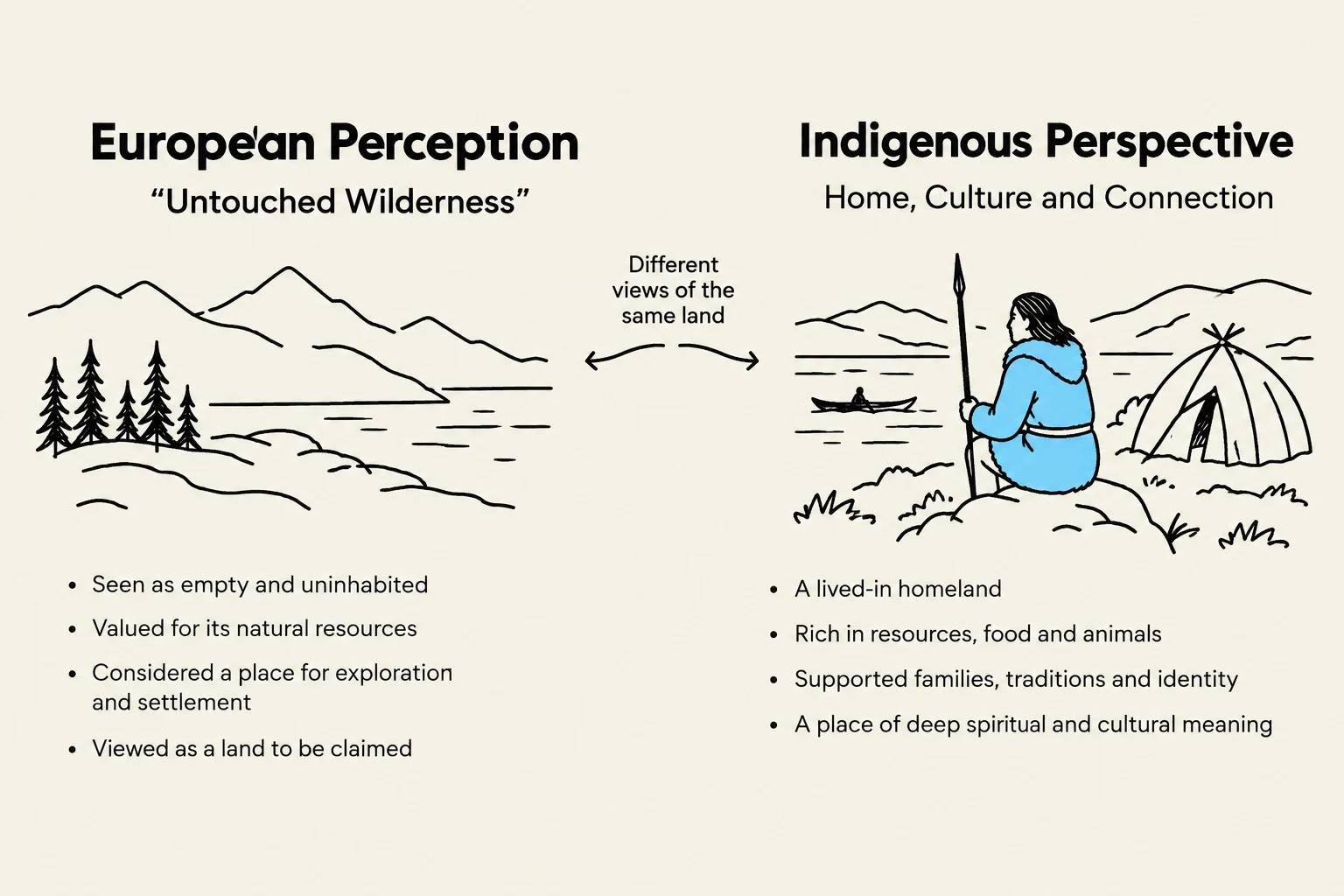
The myth of the "untouched wilderness" served to simplify complex Indigenous systems, making the land appear "empty" and available for European use, even though it had been carefully managed for millennia.
This illustration contrasts the European perception of land as an "untouched wilderness" with the Indigenous perspective of it as a "home, culture, and connection."
Summary of Key Concepts
Concept
Description
Seasonal Movement
The strategic relocation of groups to maximize resource availability.
Virgin Soil Epidemics
Rapid spread of new diseases in populations with no prior immunity.
Vanishing Race Narrative
A colonial myth used to justify land seizure by claiming Indigenous people were naturally dying out.
Keep reading for free.
Create an account to finish this reading and make it part of your study routine.