Behavioral Health Nursing: Disorders, Medications, and Therapies
A comprehensive guide to behavioral health nursing, covering anxiety disorders, mood disorders, medication management, toxicity, electroconvulsive therapy, and therapeutic communication techniques.
Behavioral health nursing requires a unique blend of clinical vigilance and therapeutic presence. Unlike many medical-surgical specialties where the primary focus is on physiological stability, the behavioral health nurse must prioritize safety and suicide assessment above all else. Once safety is established, the nurse must transition to monitoring for medication toxicity, electrolyte imbalances, and cardiovascular compromise.
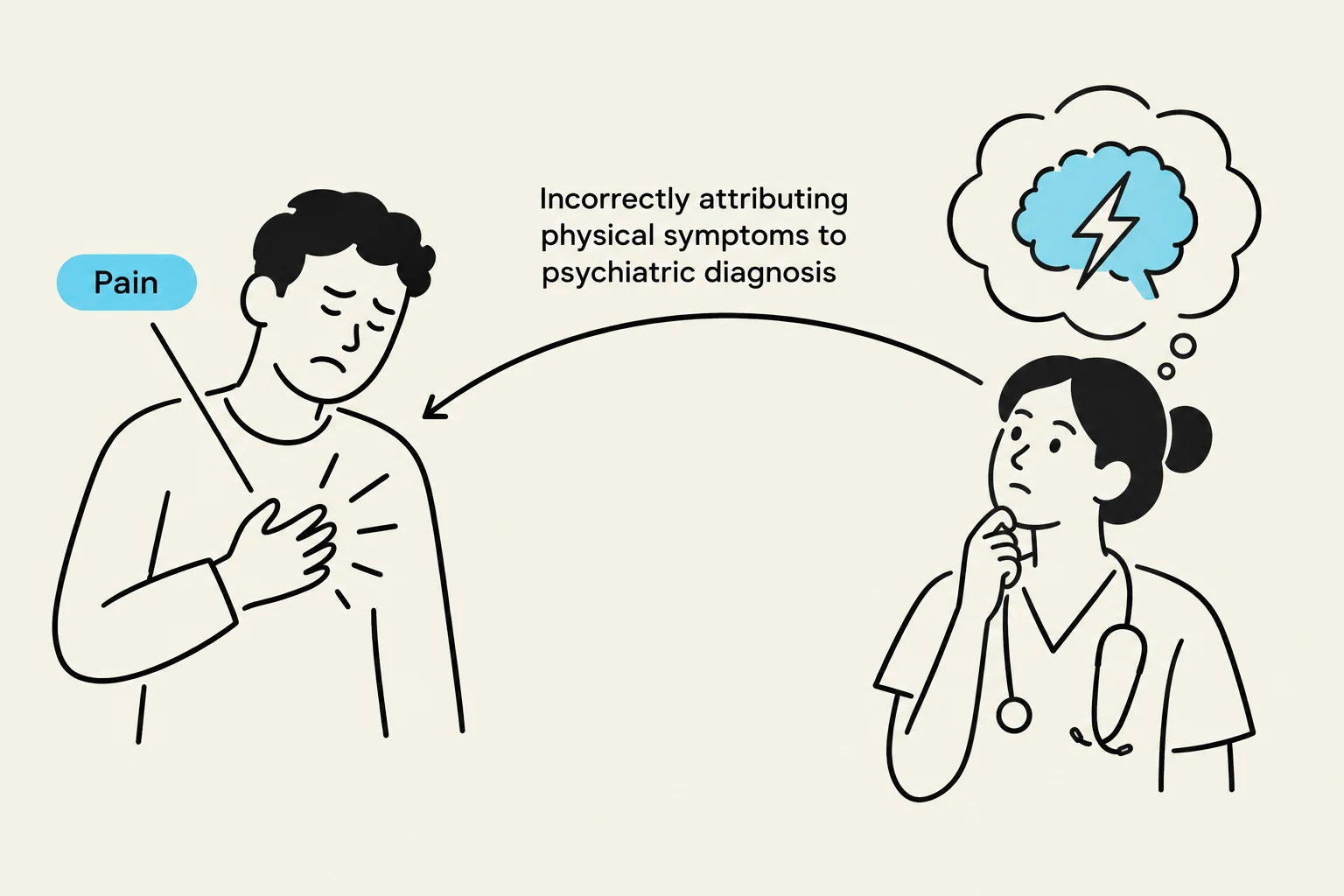
Illustration depicting the incorrect attribution of physical symptoms to a psychiatric diagnosis.
A critical concept for any nursing student is avoiding diagnostic overshadowing. This occurs when a nurse attributes physical symptoms (such as fatigue or pain) to a patient's psychiatric diagnosis, potentially masking an underlying medical emergency.
Anxiety-Related Disorders
Anxiety disorders are differentiated by their duration, triggers, and specific clinical manifestations. Understanding these distinctions is vital for accurate nursing care.
Generalized Anxiety Disorder (GAD)
GAD is characterized by persistent, excessive worry regarding multiple areas of life (e.g., work, health, finances) occurring for ≥6 months. Patients often present with restlessness, fatigue, muscle tension, and sleep disturbances. Treatment typically involves Cognitive Behavioral Therapy (CBT) and medications such as SSRIs, SNRIs, or buspirone.
Panic Disorder
Panic disorder involves recurrent, unexpected panic attacks. These are intense episodes of autonomic arousal, including palpitations, dyspnea (shortness of breath), chest discomfort, and trembling.
Exam Tip: Panic vs. Medical Emergency
When a patient presents with panic symptoms like chest pain or dyspnea, your first priority is to rule out urgent medical causes (such as a myocardial infarction) before assuming the symptoms are purely psychiatric.
Obsessive-Compulsive Disorder (OCD)
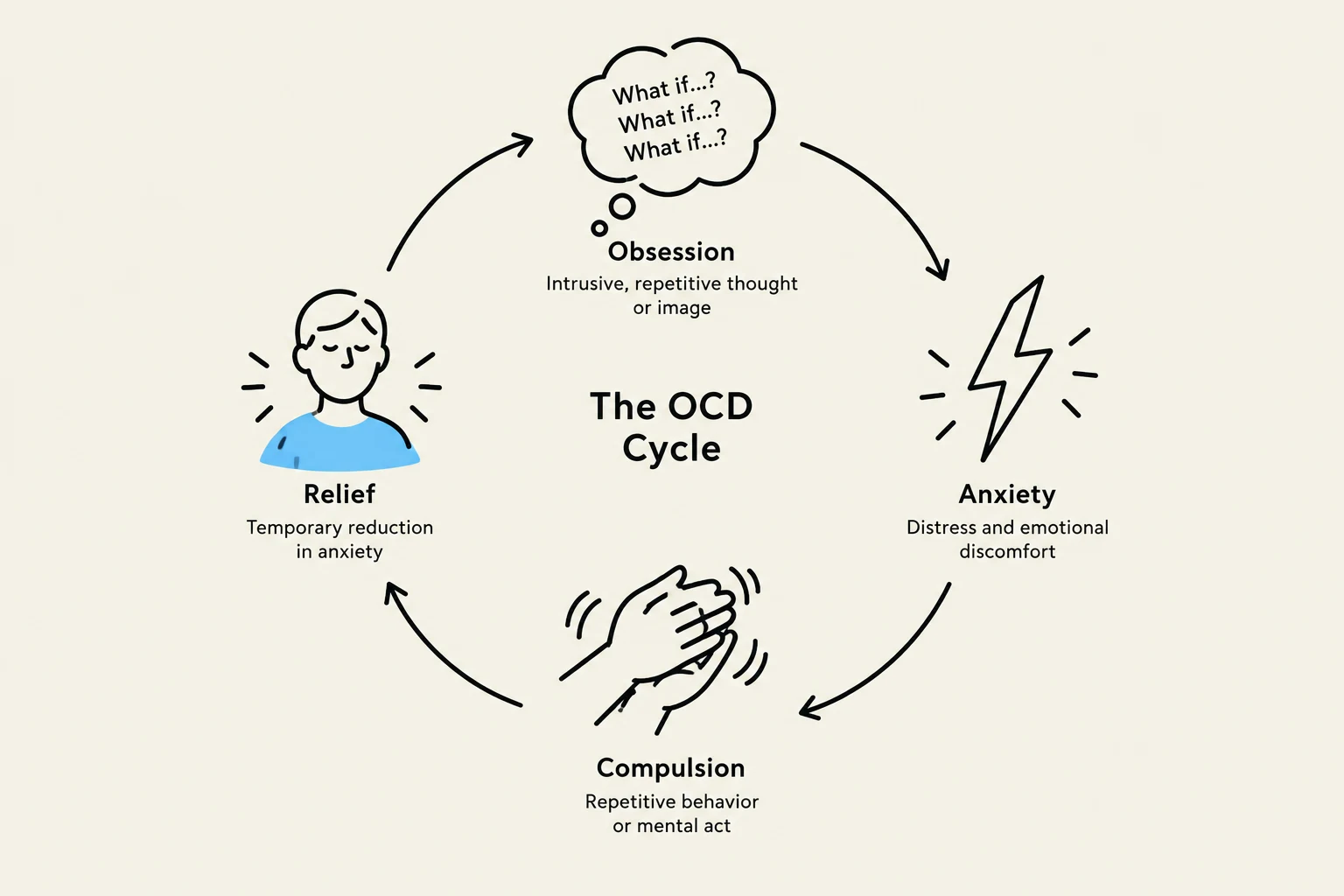
The OCD cycle illustrates the pattern of obsession, anxiety, compulsion, and relief experienced by individuals with Obsessive-Compulsive Disorder.
OCD is defined by two distinct components: obsessions (intrusive, unwanted thoughts or images) and compulsions (repetitive physical or mental rituals performed to reduce the distress caused by obsessions).
Nursing Care: Initially, allow the patient sufficient time to perform their rituals to prevent extreme anxiety. Gradually, work with the patient to reduce these rituals using exposure and response prevention.
Post-Traumatic Stress Disorder (PTSD) and Adjustment Disorder
PTSD: Results from exposure to trauma and involves re-experiencing the event, avoidance of triggers, and hyperarousal. Care should focus on trauma-informed safety and grounding techniques.
Adjustment Disorder: An emotional or behavioral response to an identifiable stressor that occurs within 3 months of the event.
Mood Disorders and Bipolarity
Mood refers to a patient's subjective emotional state, while affect is the nurse's observation of their outward expression (e.g., flat, labile, or incongruent).
Depression
Major Depressive Disorder requires at least 2 weeks of depressed mood or loss of interest (anhedonia). Nurses must monitor for suicidal ideation, which is the highest priority in the acute phase of treatment.
Bipolar Disorders
The primary distinction between Bipolar I and Bipolar II lies in the severity of the "up" periods:
Bipolar I: Requires at least one manic episode, which may involve psychosis and marked impairment requiring hospitalization.
Bipolar II: Characterized by hypomanic episodes and major depressive episodes, but never a full manic episode.
Nursing Care for Mania:
During an acute manic episode, prioritize the patient's physical needs. Provide a low-stimulation environment, offer portable high-calorie/high-protein finger foods, ensure hydration, and maintain consistent, calm boundaries to avoid power struggles.
Medication Management and Toxicity
Pharmacological interventions are cornerstones of behavioral health, but they carry significant risks that require diligent monitoring.
Antidepressants
Class
Examples
Key Nursing Considerations
SSRIs
Sertraline, Fluoxetine
First-line; watch for delayed benefit (2–6 weeks) and increased suicide risk early in treatment.
SNRIs
Duloxetine, Venlafaxine
Monitor Blood Pressure, especially with venlafaxine.
TCAs
Amitriptyline
High risk for anticholinergic effects and lethality in overdose.
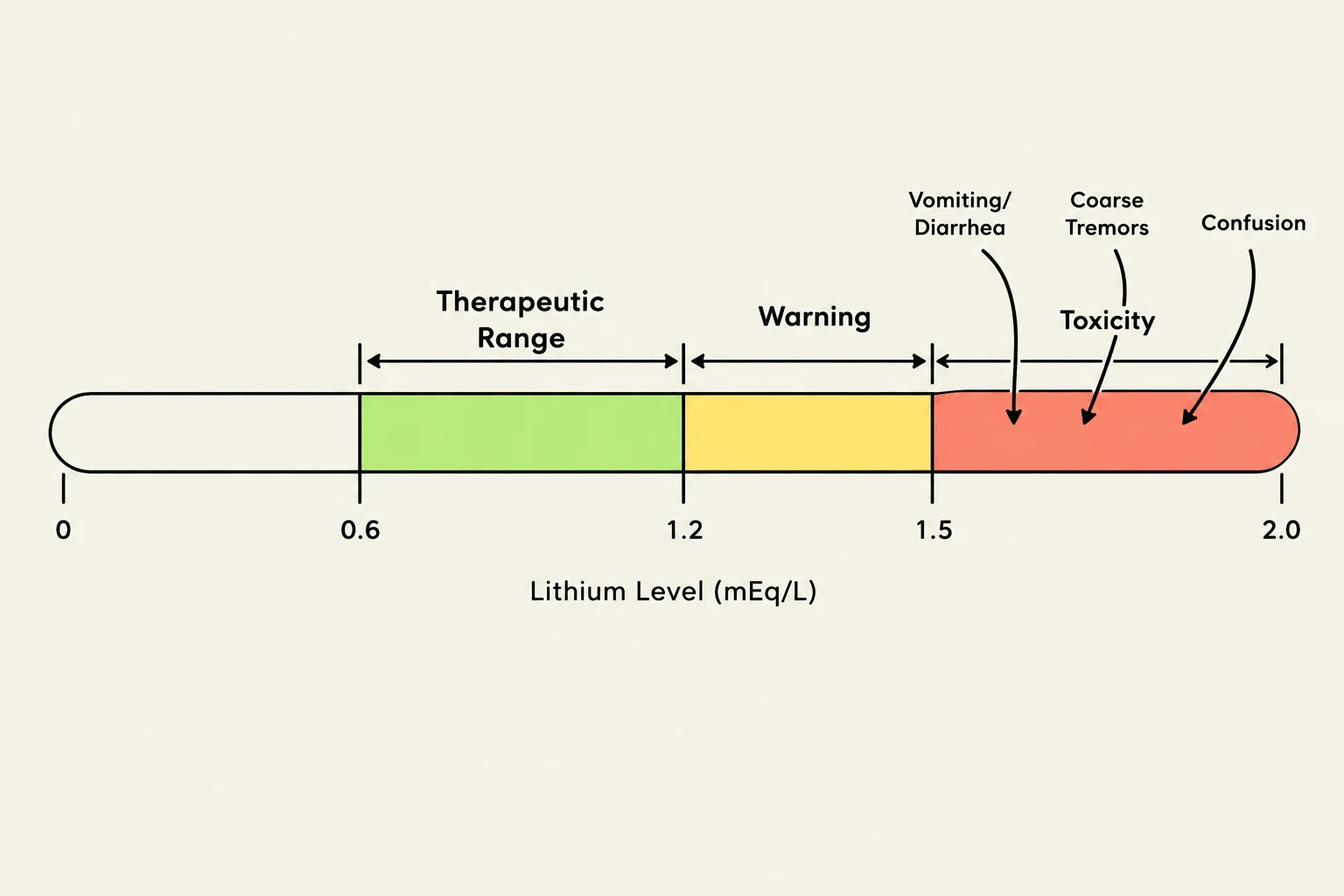
This graph illustrates the therapeutic range, warning zone, and toxicity levels of lithium in the blood, measured in mEq/L. Symptoms such as vomiting, diarrhea, tremors, and confusion are associated with higher lithium levels.
Lithium is used for acute mania and maintenance of bipolar disorder.
Therapeutic Range:0.6−1.2 mEq/L (may be higher for acute mania).
Toxicity: Symptoms include vomiting, diarrhea, coarse tremors, ataxia, and confusion.
Safety: Maintain consistent sodium intake and adequate hydration. Avoid NSAIDs and diuretics, as these can increase lithium levels.
Other Critical Medications
Lamotrigine: Monitor for Stevens-Johnson Syndrome (SJS), characterized by a new rash or blistering lesions.
Bupropion: Can lower the seizure threshold; avoid in patients with seizure disorders.
Trazodone: Monitor for the rare but urgent side effect of priapism.
Electroconvulsive Therapy (ECT)
ECT is used for treatment-resistant depression, severe mania, or catatonia. It involves inducing a brief seizure under general anesthesia.
Nursing Care Phases
Pre-treatment: Verify informed consent (the patient can withdraw at any time), ensure NPO status, and remove jewelry/dentures.
During: Ensure airway support, administer oxygen to prevent hypoxia, and use a bite block.
Post-treatment: Monitor airway and vital signs first. Expect temporary confusion, memory loss, headache, or nausea.
Therapeutic Communication and Holistic Care
Effective nursing integrates psychological, cultural, and spiritual dimensions.
Cognitive Behavioral Therapy (CBT)
CBT is a central tool used to help patients identify, test, and reframe automatic thoughts that negatively influence their feelings and behaviors.
Cultural and Spiritual Integration
Nurses must recognize six cultural phenomena to provide competent care: communication, space, social organization, time, environmental control, and biological variations. Additionally, addressing spiritual needs—such as meaning, purpose, love, forgiveness, hope, and faith—is essential for holistic healing.
De-escalation and Grief
De-escalation: Intervene early when observing pacing, clenched fists, or a raised voice. Use concise language, maintain personal space, and offer choices.
Grief: Recognize that grief is non-linear. It may include denial, anger, bargaining, depression, and acceptance.
Final Priority Check:
If a patient expresses a plan and intent to die, your immediate priority is safety. Do not leave the patient alone, implement suicide precautions, and do not rely on a "no-suicide contract" as a substitute for direct supervision.
Keep reading for free.
Create an account to finish this reading and make it part of your study routine.