


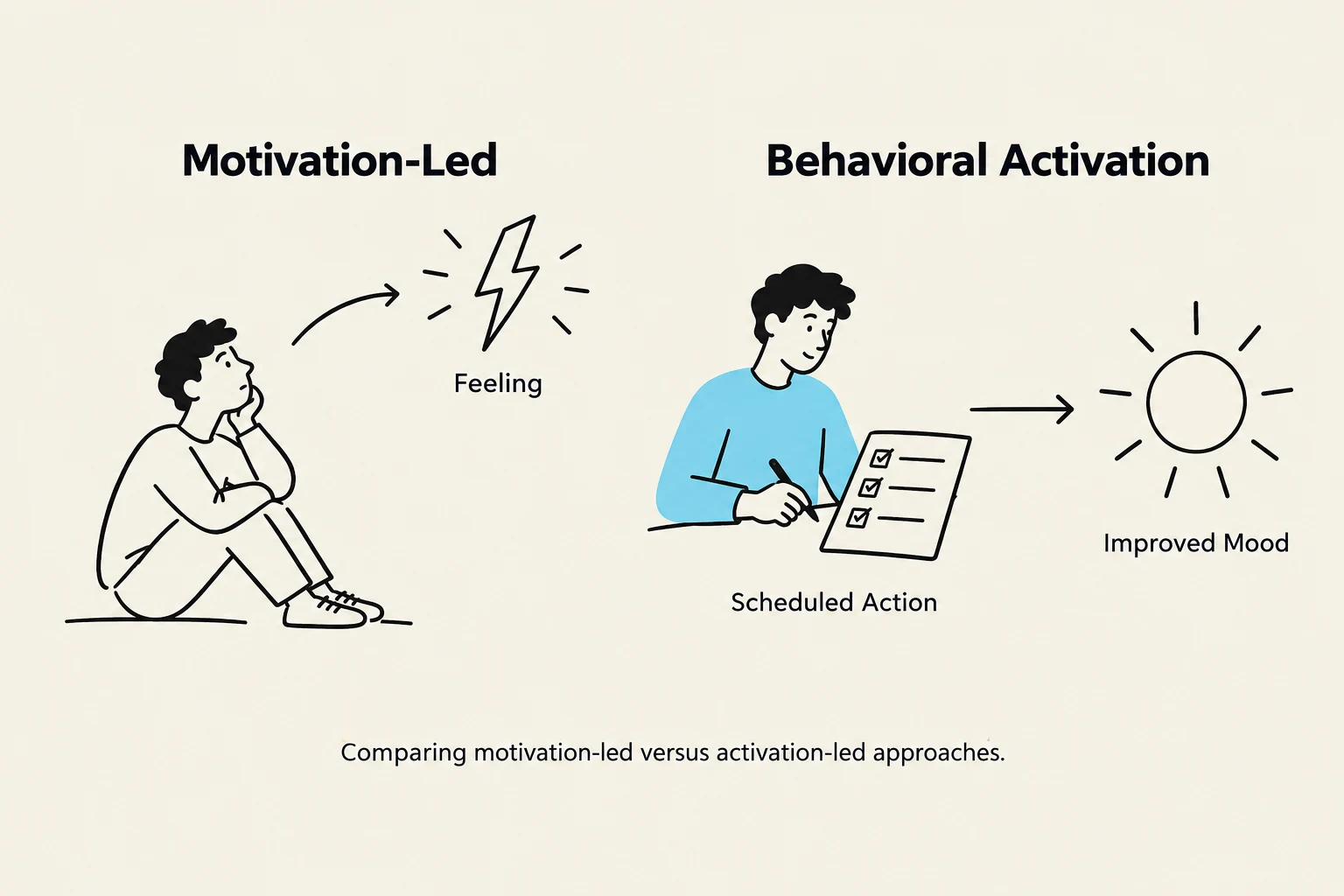
Depression is often characterized by a profound sense of lethargy, loss of interest, and a withdrawal from the world. While it may feel intuitive to wait until one "feels better" before engaging in activities, this approach often inadvertently fuels the depressive state. Behavioral Activation (BA) is a therapeutic principle designed to disrupt this cycle by focusing on action rather than emotion. Instead of waiting for motivation to strike, BA encourages individuals to reintroduce meaningful activities to rebuild a sense of connection and reward.
The Downward Spiral of Depression

This withdrawal creates a feedback loop:
- Depressive Mood: Low energy and sadness lead to inactivity.
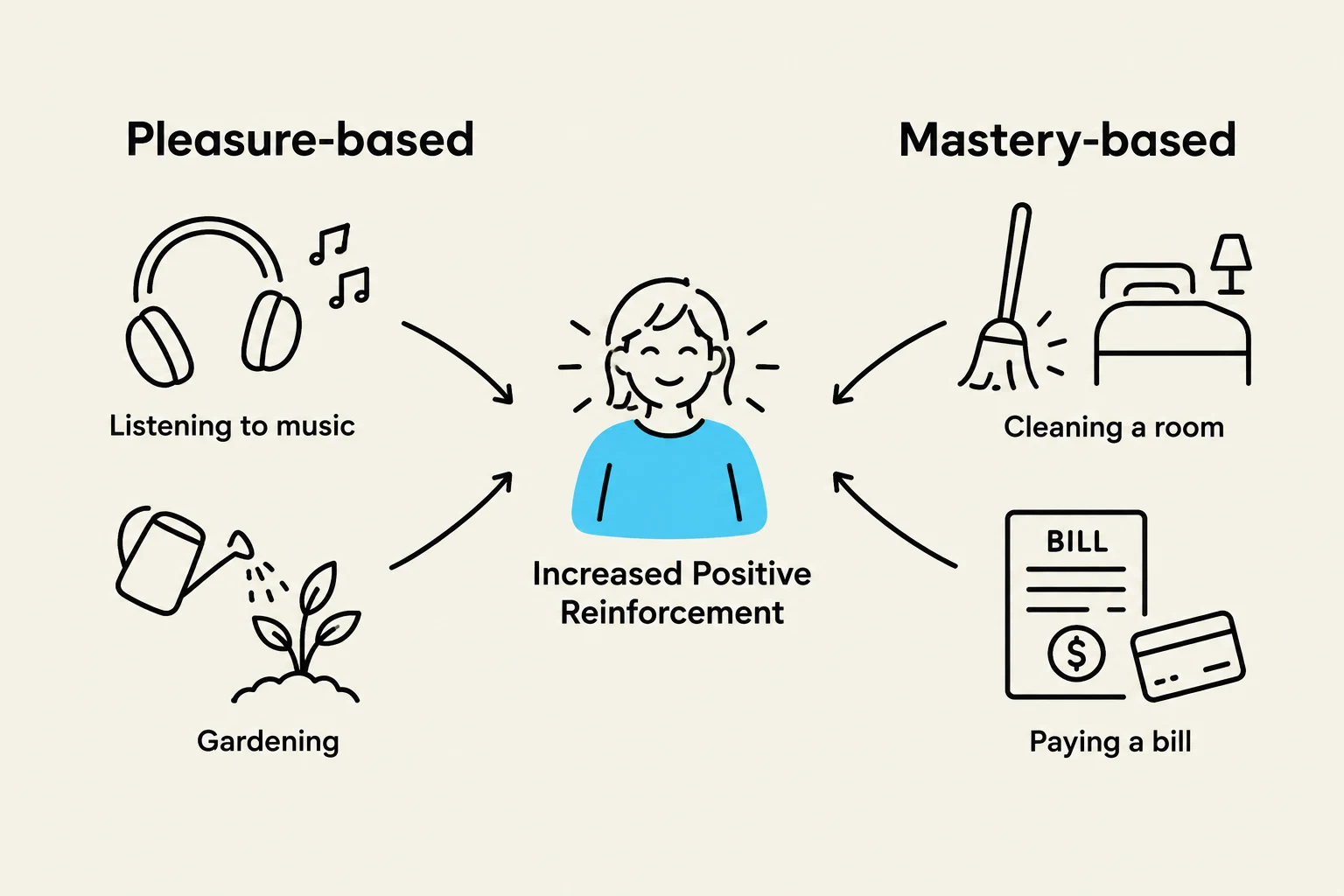
- Reduced Reinforcement: By withdrawing, the individual misses out on "positive reinforcers"—the natural rewards provided by social interaction, accomplishment, or pleasure.
- Increased Isolation: The lack of reward leads to even lower moods and further withdrawal.
This cycle creates a downward spiral where the lack of activity becomes both a symptom and a cause of the depression.
Study Tip: When analyzing depression in a clinical context, distinguish between internal states (feelings) and external behaviors (actions). Behavioral Activation targets the external behaviors to influence the internal states.
Core Principles of Behavioral Activation
Behavioral Activation operates on the principle that changing what we do can eventually change how we feel. It shifts the focus from "why do I feel this way?" to "what can I do right now to change my environment?"
Keep reading for free.
Create an account to finish this reading and make it part of your study routine.
Continue reading freeAlready have an account? Log in
Updated