


In a healthcare environment, the bed is more than just a piece of furniture; it is a primary site of care, recovery, and potential risk. Proper bed making is a fundamental nursing skill that extends far beyond simple housekeeping. It is a clinical intervention designed to promote healing and prevent complications.
The Purposes of Bed Making
The primary goal of bed making is to provide a safe, clean, and therapeutic environment for the client. Effective bed making serves several critical functions:
- Comfort and Hygiene: A clean, dry, and fresh bed improves the client's sense of well-being and dignity. It also helps control odors and reduces the presence of pathogens in the client's immediate environment.
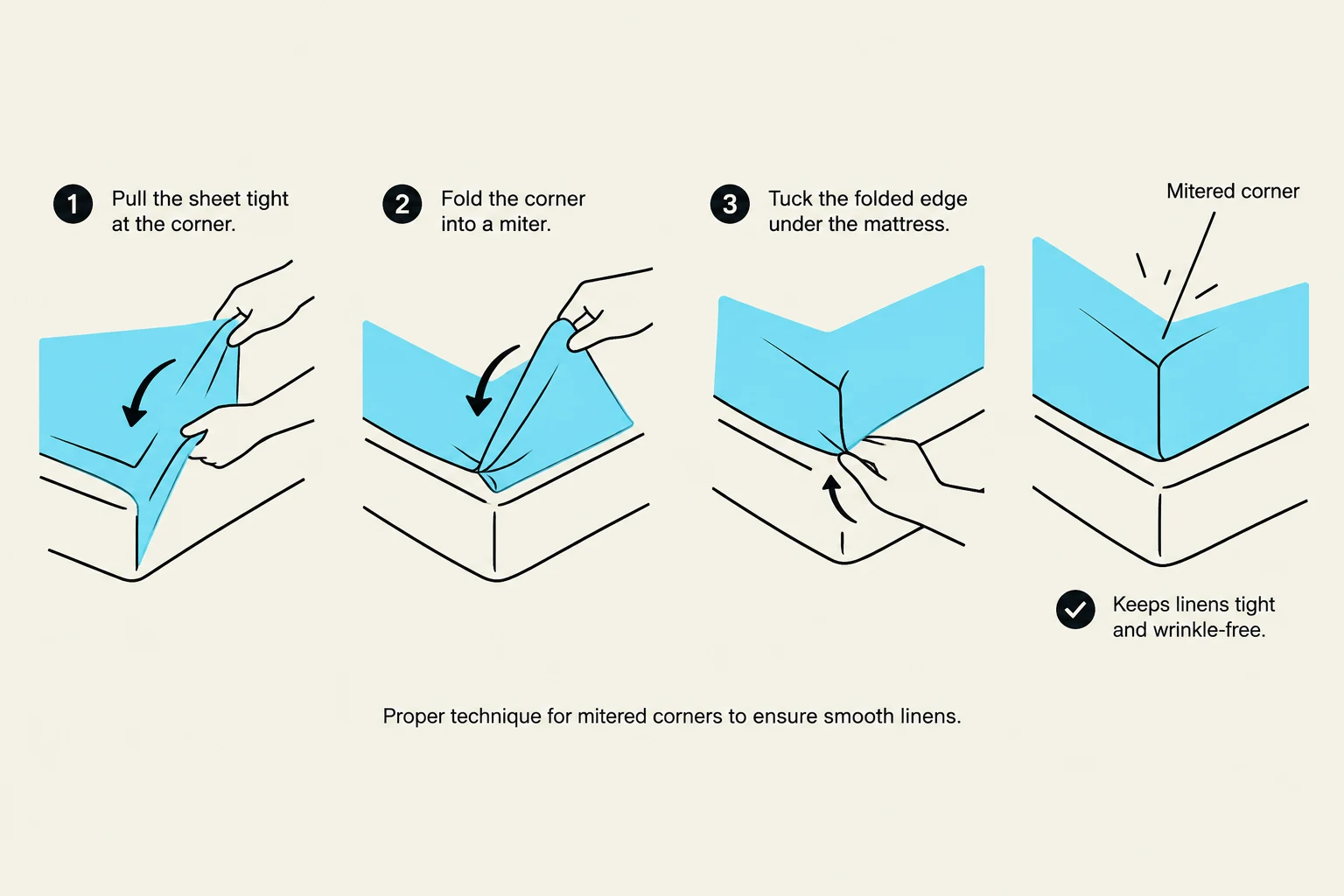
- Skin Integrity: One of the most vital clinical reasons for meticulous bed making is the prevention of skin breakdown. Wrinkles in the linens can create friction and pressure points, leading to skin irritation or pressure injuries.
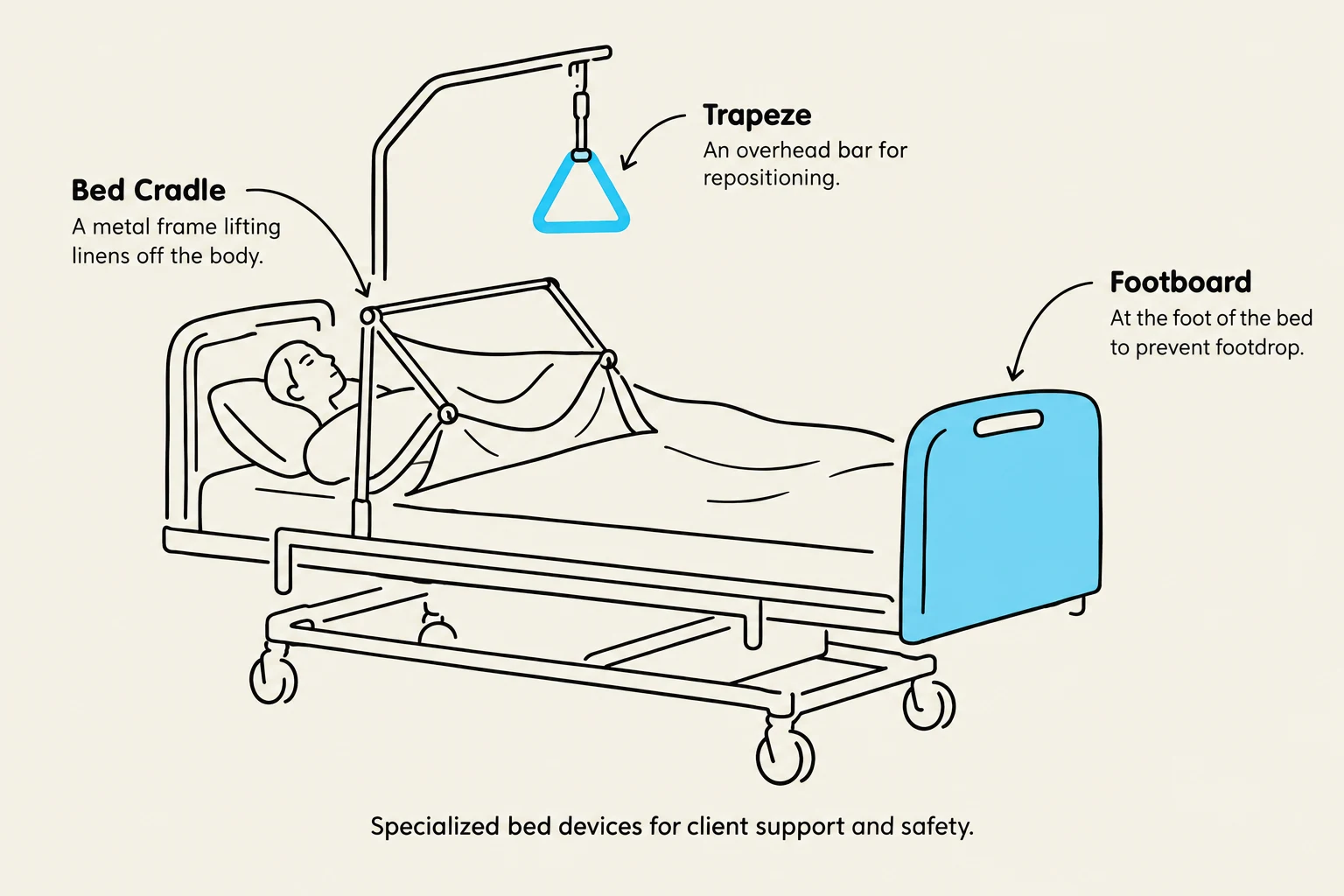
- Correct Posture: Proper use of bed positioning and specialized equipment helps maintain correct body alignment, which is essential for respiratory function and musculoskeletal health.
- Safety: A well-made bed, combined with proper equipment, reduces the risk of falls and injuries during client movement.
Types of Hospital Beds
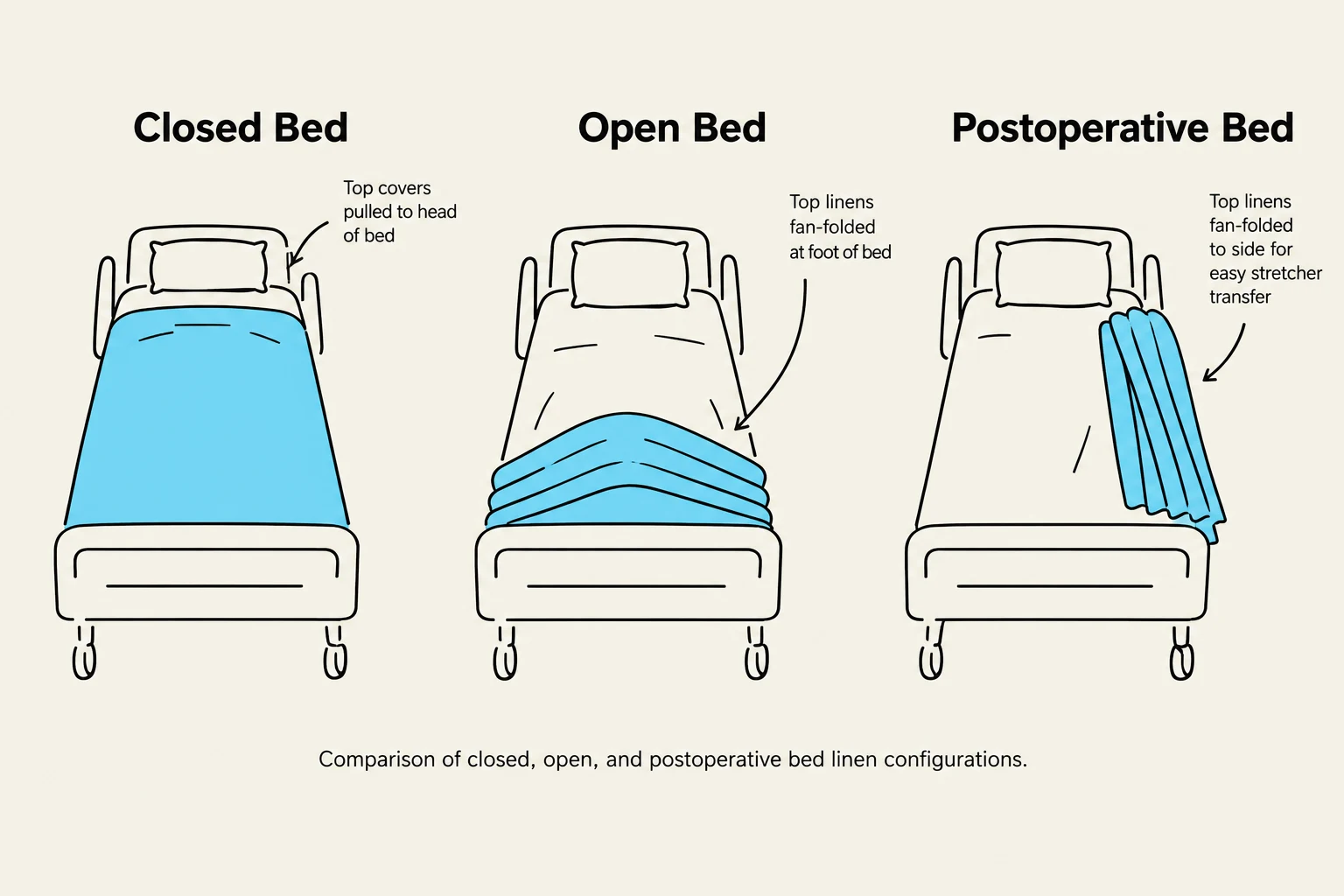
Unoccupied Beds
An unoccupied bed is one that is empty at the time it is being made. There are two main categories:
- Closed Bed: This is prepared for a new client. The top covers are pulled all the way up to the head of the bed to keep the linens clean and protected until the client arrives.
- Open Bed: This is a bed assigned to a client who is currently out of bed (for example, in physical therapy). The top linens are fan-folded to the foot of the bed, making it easy for the client to get back into bed.
Keep reading for free.
Create an account to finish this reading and make it part of your study routine.
Continue reading freeAlready have an account? Log in
Updated