


In the clinical setting, the way a nurse manages a patient's environment is directly linked to patient safety, comfort, and the nurse's own long-term health. Bed making is far more than a housekeeping task; it is a critical nursing intervention that provides an opportunity for assessment, infection control, and the promotion of skin integrity. However, performing these tasks requires a mastery of body mechanics to prevent injury. This article explores the integration of safe handling techniques, efficient bed-making methods, and environmental assessment.
The Importance of Body Mechanics
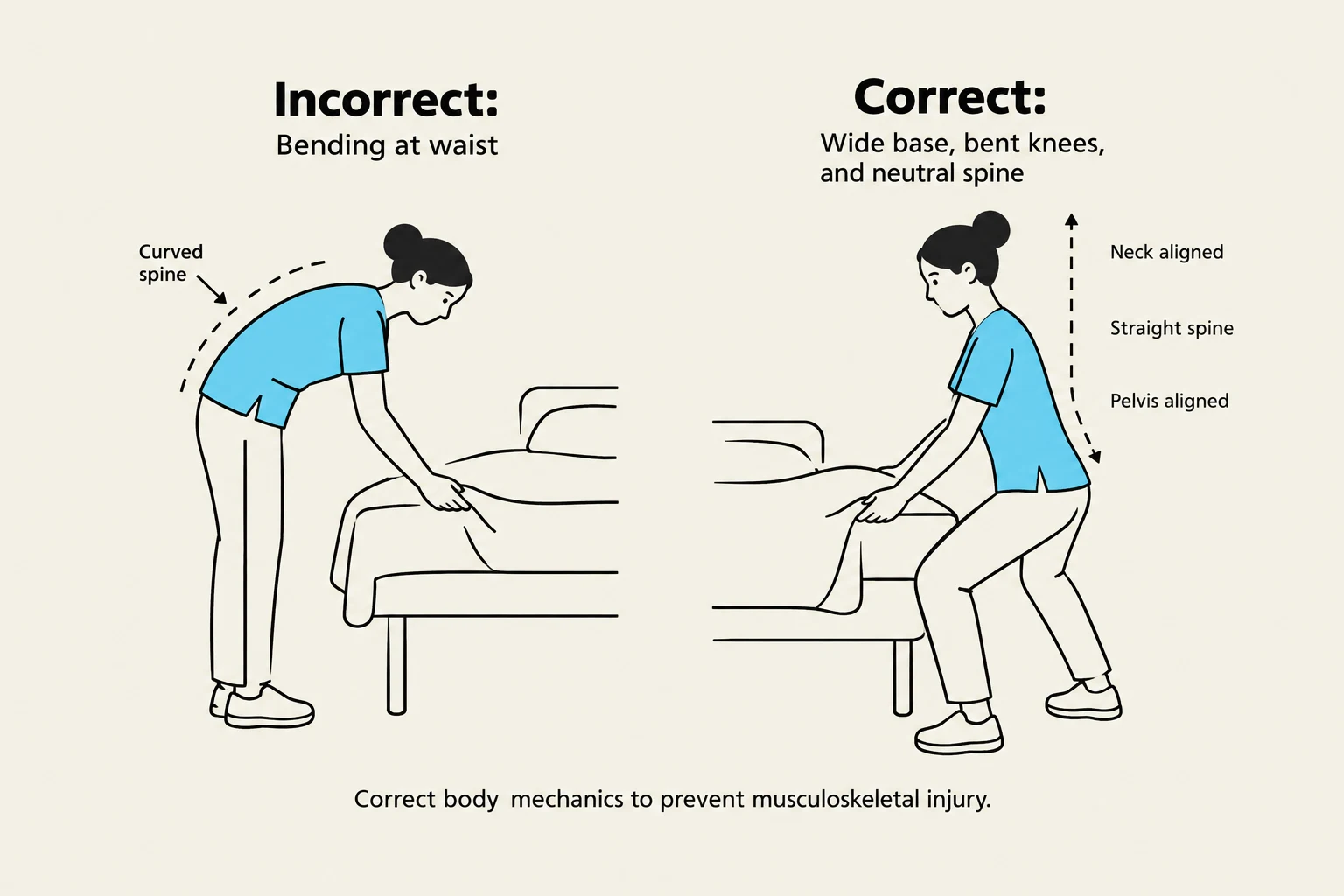
To understand the scale of this risk, consider the physical workload of a full-time nurse. Research suggests that an average nurse may handle patients approximately 72 times during a 12-hour shift.
Math Spotlight: Calculating Annual Physical Demand
If a nurse works full-time, they may work approximately 162.5 shifts per year (based on 1,950 hours per year at 12 hours per shift). If they perform 72 lifts per shift, the annual total is:
To mitigate the risk of MSDs, nurses must consistently apply safe handling techniques and principles of body mechanics:
- Maintain a wide stance: This provides a stable base of support.
- Bend at the knees: Never bend at the waist; use your legs to power movement.
- Alignment: Keep your back, neck, pelvis, and feet in a straight line.
- Core stability: Tighten your stomach muscles to support your spine.
- Proximity: Keep the weight or the patient as close to your body as possible.
- Direction: Always face the direction of movement.
Keep reading for free.
Create an account to finish this reading and make it part of your study routine.
Continue reading freeAlready have an account? Log in
Updated