


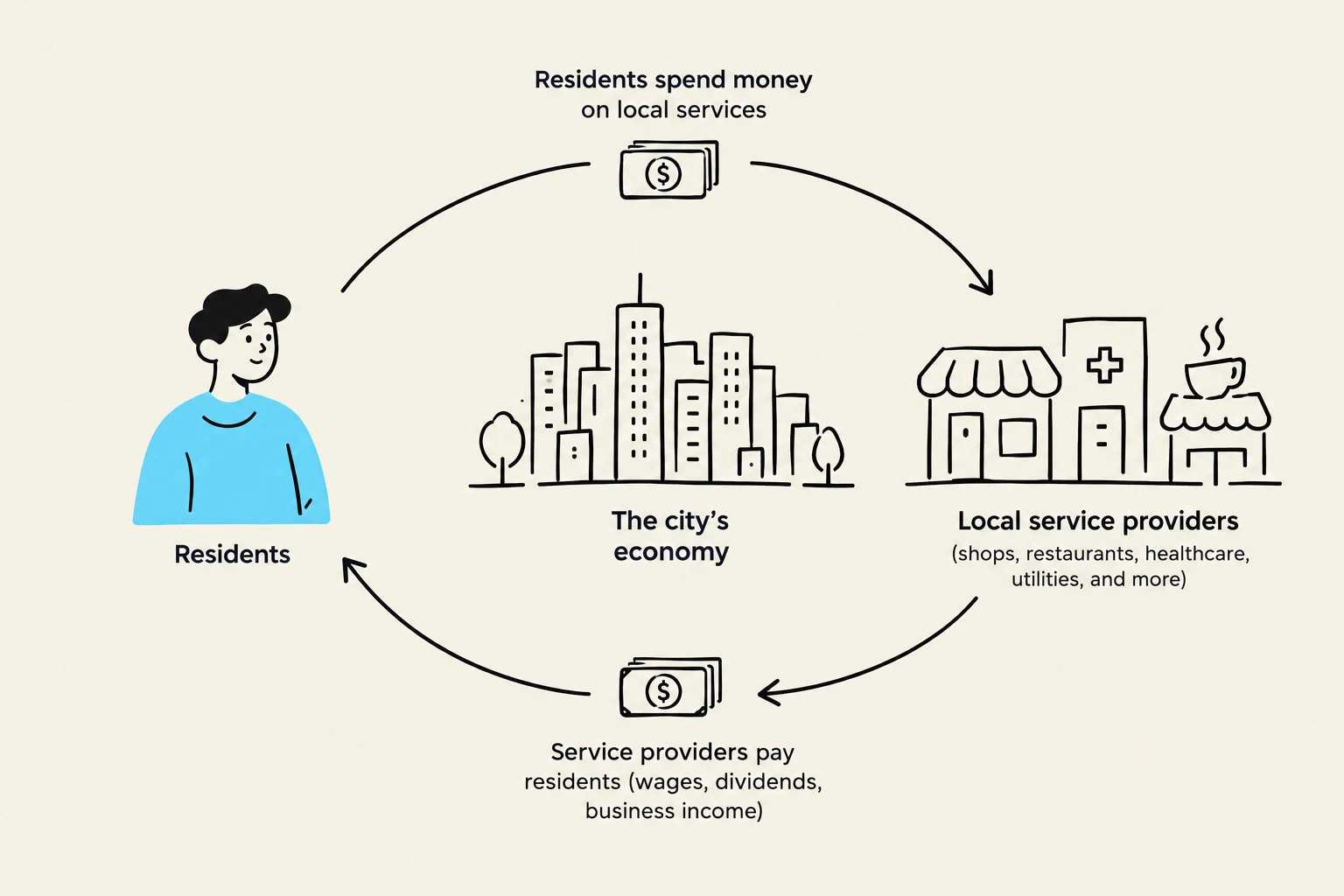
When we look at a bustling city, it is easy to see a chaotic mix of businesses: coffee shops, high-rise office buildings, construction sites, and grocery stores. However, to an urban economist, this "urban pie" is not a uniform mixture. Instead, it is divided into two distinct functional categories based on how money flows in and out of the local economy: Basic and Non-Basic sectors.
Understanding this distinction is crucial for urban planning, economic development, and understanding why some cities thrive while others stagnate. The difference lies not in what the business does, but in who its customers are and where their money comes from.
The Basic Sector: The Engine of Growth
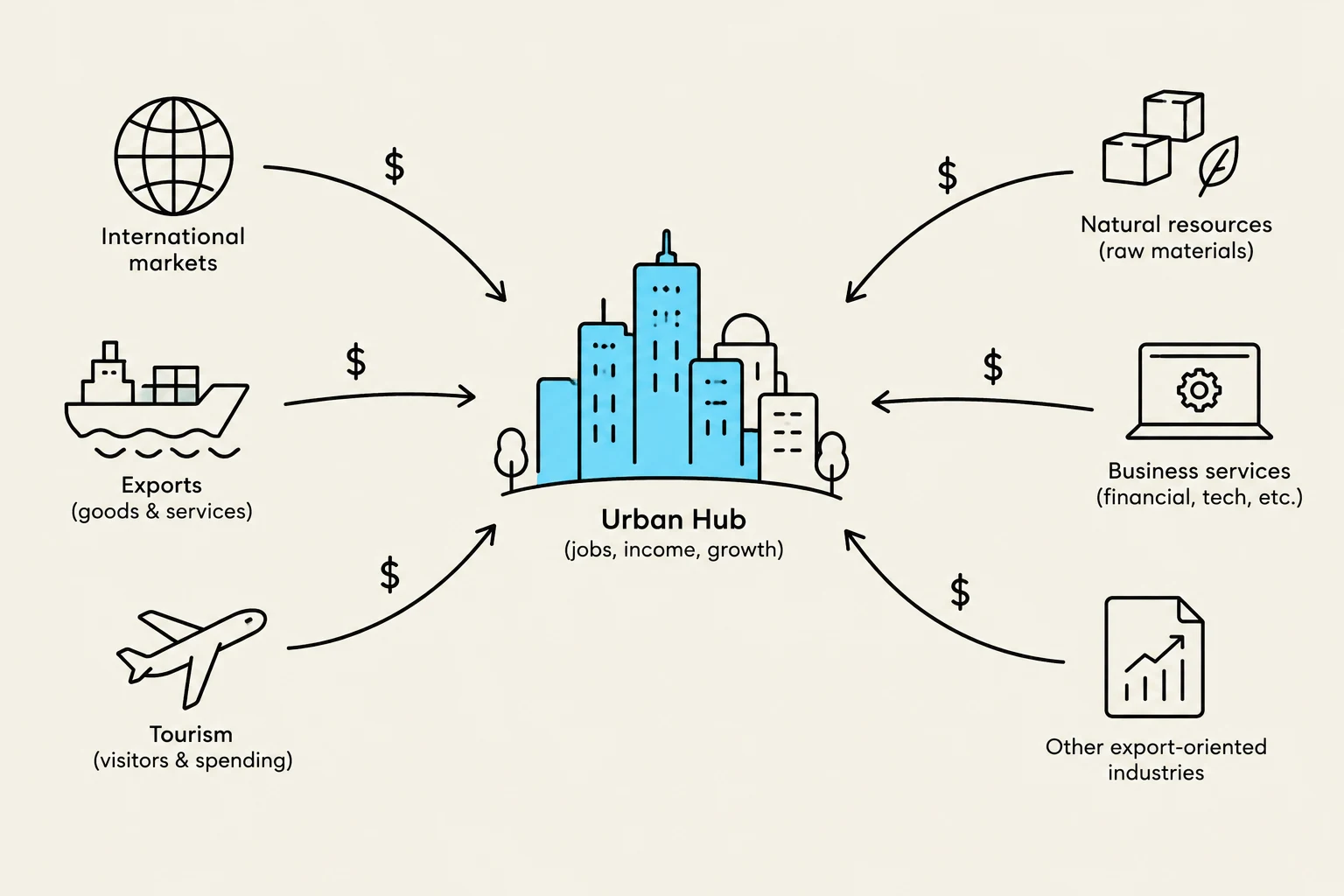
The basic sector consists of industries that produce goods or services for consumption outside of the local area. These are often referred to as "export-oriented" activities. Because these businesses sell to people in other cities, states, or even countries, they act as the primary mechanism for bringing "new" money into the local economy.
Examples of basic sector activities include:
- Manufacturing: A factory that builds automobiles to be shipped across the country.
- Specialized Services: A high-tech software firm that sells licenses to global clients.
- Tourism: A major resort that attracts visitors from other regions, bringing their spending power into the local community.
- Agriculture: A large-scale farm that exports grain to international markets.
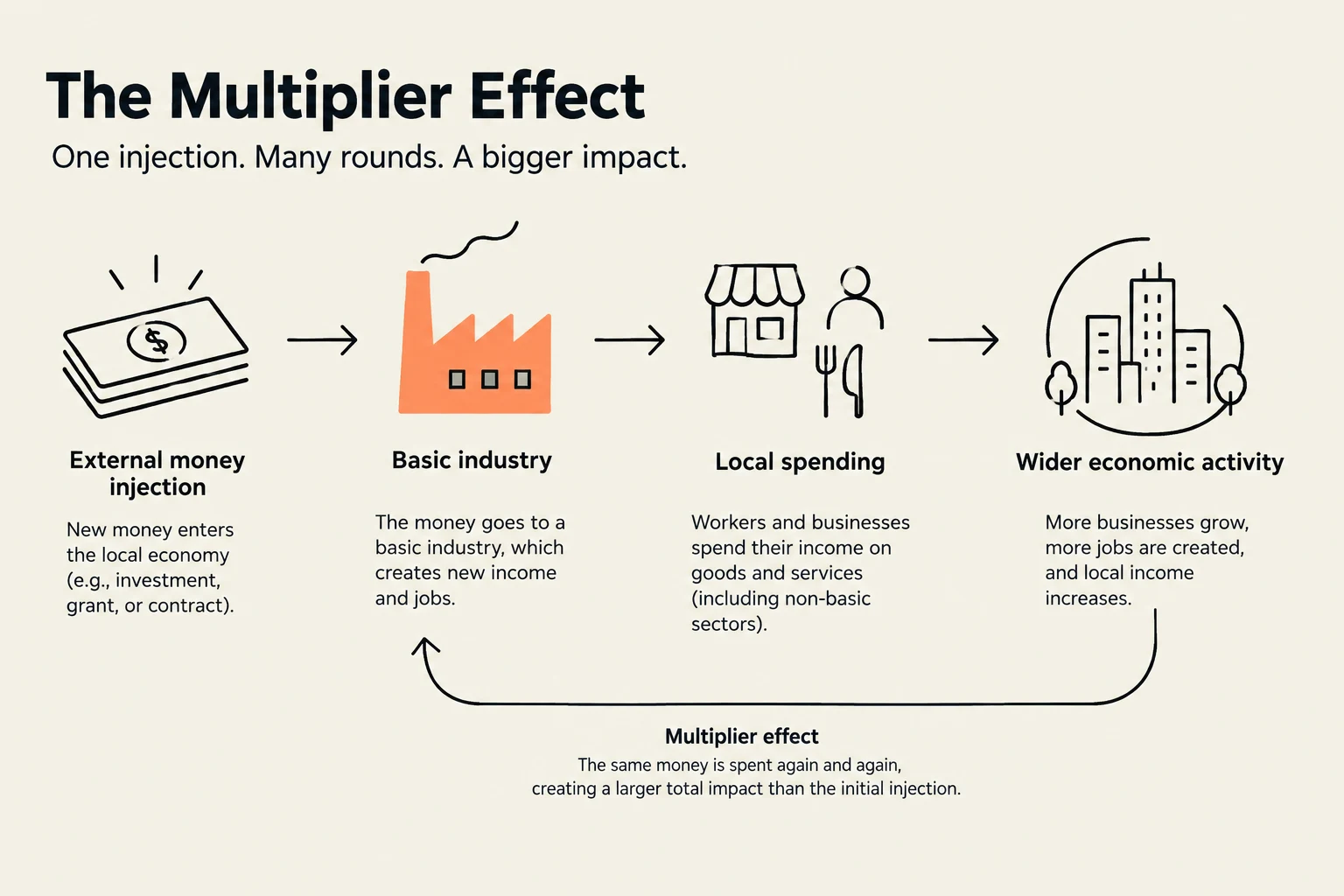
Without a strong basic sector, a city cannot grow. It is the basic sector that provides the initial injection of capital required to sustain all other local activities.
Keep reading for free.
Create an account to finish this reading and make it part of your study routine.
Continue reading freeAlready have an account? Log in
Updated