Bacterial Transformation and Transduction Mechanisms
This content explains horizontal gene transfer (HGT) in bacteria, focusing on transformation (uptake of extracellular DNA) and transduction (DNA transfer via bacteriophages). It details the processes, regulation, and evolutionary significance of these mechanisms, including generalized and specialized transduction, and
In the microbial world, evolution is driven not just by slow, vertical inheritance from parent to offspring, but also by the rapid acquisition of new genetic material through horizontal gene transfer (HGT). While mutations provide small, heritable changes in the genome, HGT allows bacteria to exchange entire genes or even large chromosomal segments, fueling metabolic diversity and the rapid spread of traits like antibiotic resistance. Two of the most significant mechanisms for this exchange are transformation and transduction.
Bacterial Transformation
Transformation is the process by which a bacterium takes up free, extracellular DNA from its surrounding environment and incorporates it into its own genome. This DNA often originates from neighboring cells that have undergone lysis (bursting).
The Process of Uptake and Integration
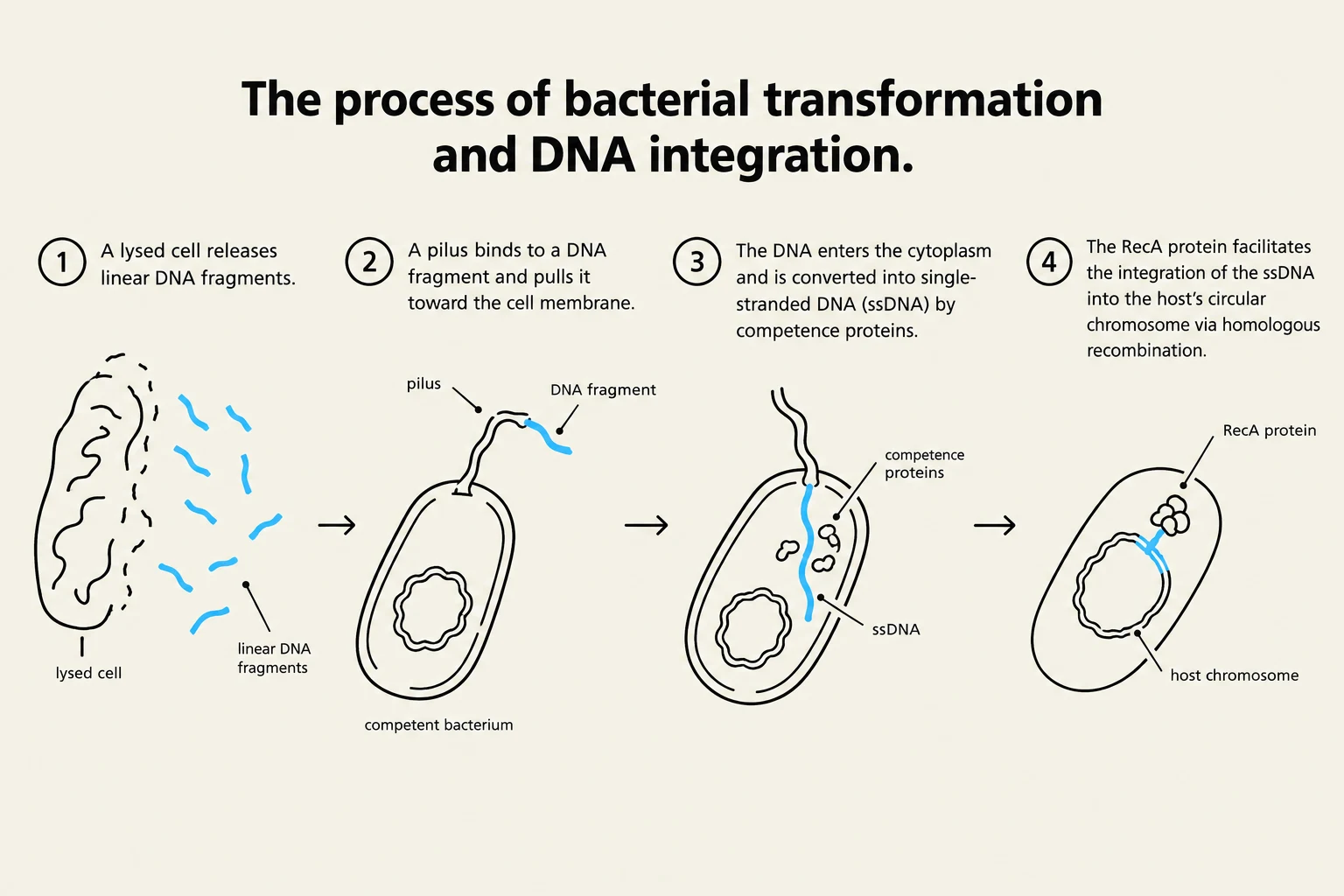
Diagram illustrating the four steps of bacterial transformation and DNA integration, from DNA release by a lysed cell to integration into the host chromosome via homologous recombination.
For a bacterium to successfully undergo transformation, it must enter a physiological state known as competence. The mechanism varies slightly between different types of bacteria:
Gram-negative bacteria: Often use proteins within a pilus to recognize and bind extracellular DNA, using pilus retraction to pull the DNA into the cell.
Gram-positive bacteria: Utilize pili or type II secretion system homologs to bind and bring DNA into the cell.
Once the DNA enters the cell, it undergoes a critical transformation. Linear DNA fragments are processed by competence proteins, which degrade the complementary strand and convert the DNA into single-stranded DNA (ssDNA). A competence-specific protein then binds to and protects this ssDNA. To become a permanent part of the cell, the ssDNA must be integrated into the host chromosome through homologous recombination, a process facilitated by the RecA protein.
Note on Plasmids: While chromosomal DNA is integrated as ssDNA, plasmid DNA must remain double-stranded (dsDNA) and circular to replicate successfully. Because of this requirement, naturally competent bacteria transform poorly with plasmids compared to linear chromosomal fragments.
Regulation of Competence
Competence is not a constant state; it is a highly regulated physiological condition. Bacteria often trigger competence in response to specific environmental cues:
Quorum Sensing: In Bacillus subtilis, competence is controlled by cell density via quorum sensing.
Environmental Sensing: In Vibrio cholerae, competence is influenced by the sensing of chitin and catabolite repression.
From an evolutionary perspective, natural transformation provides a nutritional advantage. DNA is a rich source of essential elements: Carbon (C), Nitrogen (N), and Phosphorus (P). However, high-efficiency natural transformation is relatively rare in the bacterial world.
Bacterial Transduction
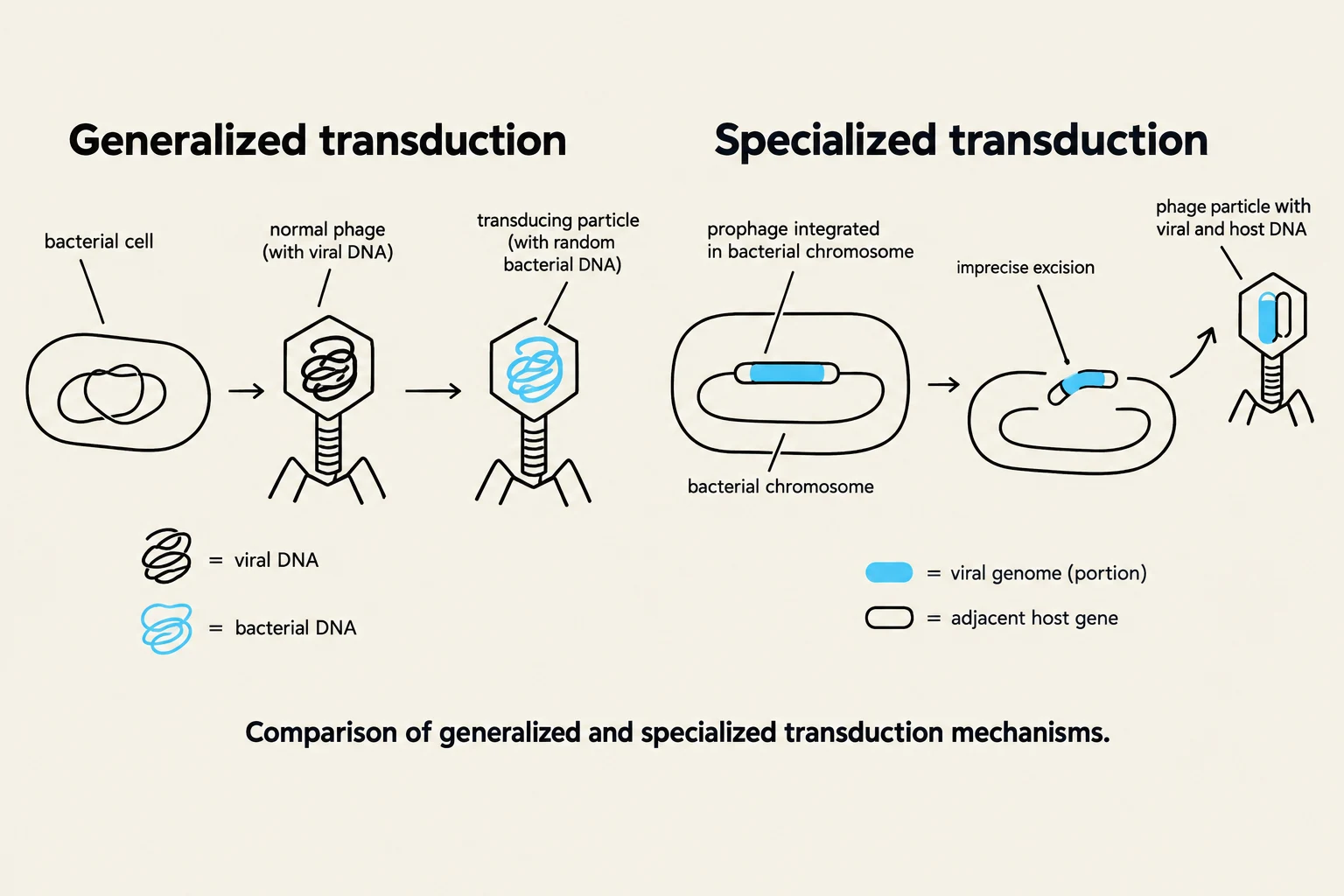
Comparison of generalized and specialized transduction mechanisms.
Transduction is the transfer of DNA from one bacterial cell to another mediated by a bacteriophage (a virus that infects bacteria). This mechanism is categorized into two distinct modes: generalized and specialized transduction.
Generalized Transduction
Generalized transduction is essentially a "packaging error" during the viral life cycle. During the assembly of new viruses, the bacteriophage accidentally packages random fragments of the host's bacterial genome into a viral head instead of the viral genome. This resulting particle is known as a transducing particle.
Because the transducing particle contains bacterial DNA rather than viral DNA, it is defective; it can no longer initiate a lytic infection in the next host. Furthermore, because these donor genes are not part of a replicating viral genome, they cannot replicate independently and will be lost unless they undergo recombination with the recipient's chromosome. Due to the randomness of this event, it is highly inefficient, occurring in only one in 106 to 108 cells.
Specialized Transduction
In contrast to the random nature of generalized transduction, specialized transduction is an extremely efficient and selective process. This occurs when a prophage (a phage genome integrated into the host chromosome during the lysogenic cycle) undergoes imprecise excision during induction.
When the prophage separates from the host chromosome, it may not excise perfectly. Instead, it takes adjacent host genes with it, typically replacing some of the viral genes in the new genome. Because the phage is taking specific genes from a specific location, only certain regions of the bacterial chromosome are transferred. While there is a limit to how much host DNA can replace viral DNA, a helper phage can assist in these mixed infections by providing the necessary viral components.
Lysogeny and Phage Conversion
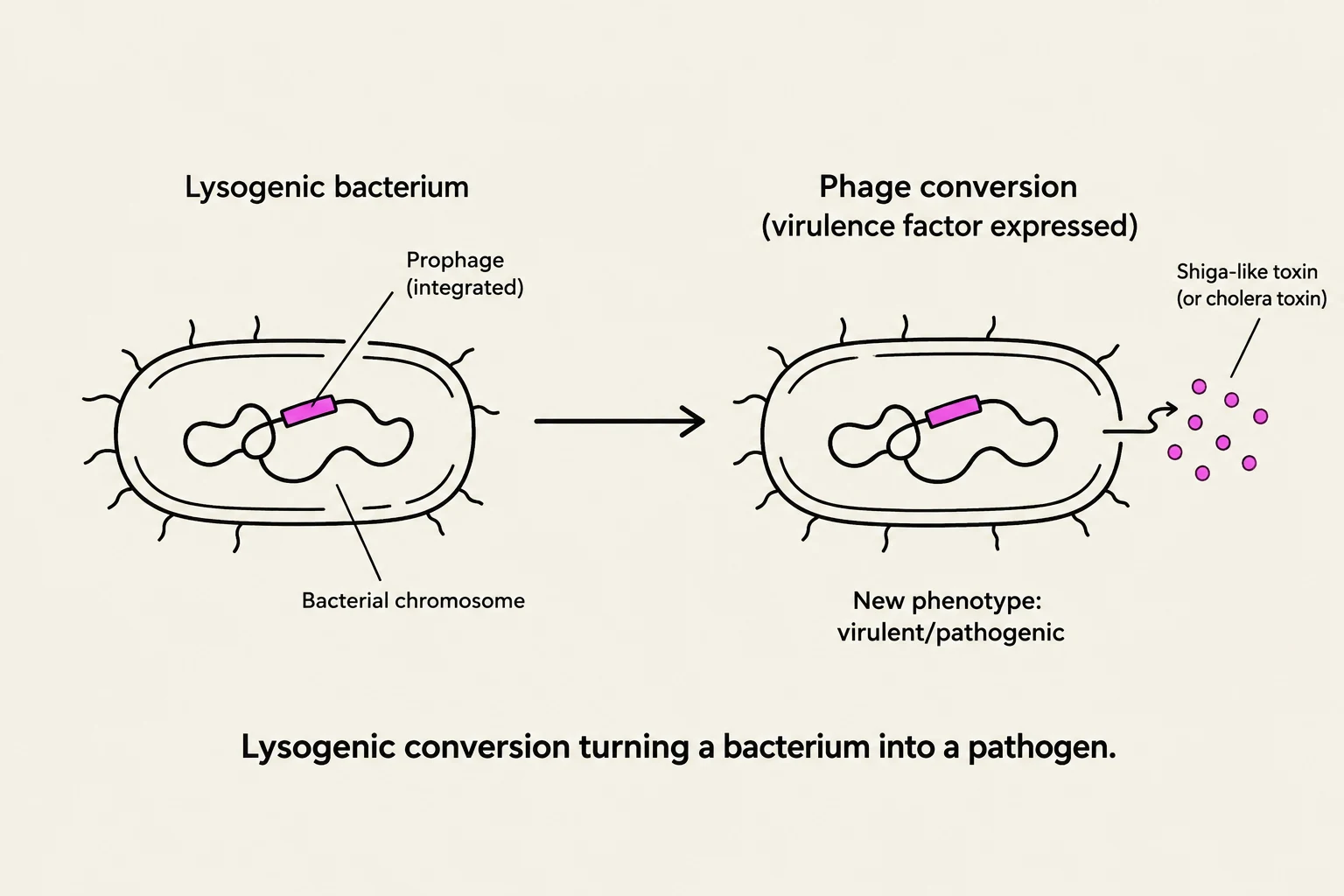
This diagram illustrates lysogenic conversion, where a bacteriophage integrates its genetic material (prophage) into a bacterium's chromosome, altering the bacterium's phenotype to become virulent or pathogenic by expressing toxins like Shiga-like toxin.
When a bacteriophage infects a cell and integrates its genome into the host chromosome rather than immediately killing the cell, the bacterium is said to be in a state of lysogeny. The integrated viral DNA is called a prophage.
This process can lead to phage conversion (or lysogenic conversion), where the presence of the prophage alters the phenotype of the host cell. This often provides a selective advantage to the bacterium, such as immunity to further infection by the same type of phage. More significantly, phage conversion can turn harmless bacteria into pathogens by introducing new traits, including:
Shiga-like toxins in Escherichia coli.
Multiple-antibiotic-resistance genes in Salmonella.
Photosynthetic genes in cyanobacteria.
Virulence factors (such as the CTXϕ phage) that transform Vibrio cholerae into a pathogen.
Exam Tip: Remember the distinction in efficiency and specificity. Generalized transduction is random and inefficient (any gene can move), whereas specialized transduction is selective and efficient (only specific genes near the integration site move).
Summary Table: Comparison of DNA Transfer Mechanisms
Feature
Transformation
Transduction
Mediator
Extracellular DNA / Competence proteins
Bacteriophage (Virus)
DNA State
Single-stranded (ssDNA) during integration
Double-stranded (within phage)
Requirement
Cellular competence
Phage infection/induction
Specificity
Depends on homology (RecA)
Generalized (random) or Specialized (site-specific)
Keep reading for free.
Create an account to finish this reading and make it part of your study routine.