Bacterial Plant Pathogens and Infection Mechanisms
This content explains how bacterial plant pathogens infect plants, detailing their entry mechanisms through natural openings or wounds, colonization strategies, and dissemination methods. It also covers management strategies for bacterial diseases.
Bacterial plant pathogens are a diverse group of unicellular prokaryotes that can cause devastating damage to agricultural crops and natural ecosystems. Unlike many fungi that can penetrate plant surfaces using mechanical pressure, most bacteria are limited by the plant's protective barriers. To successfully infect a host, they must exploit specific entry points or take advantage of physical damage to the plant tissue. Once inside, they colonize various niches, from the intercellular spaces of leaves to the vital vascular transport systems, often leading to symptoms ranging from localized spots to systemic wilting and death.
Entry Mechanisms: Breaking the Barrier
Plants are equipped with several natural structures designed for gas exchange and water regulation. While these are essential for plant health, they serve as "open doors" for bacterial invaders.
Natural Openings
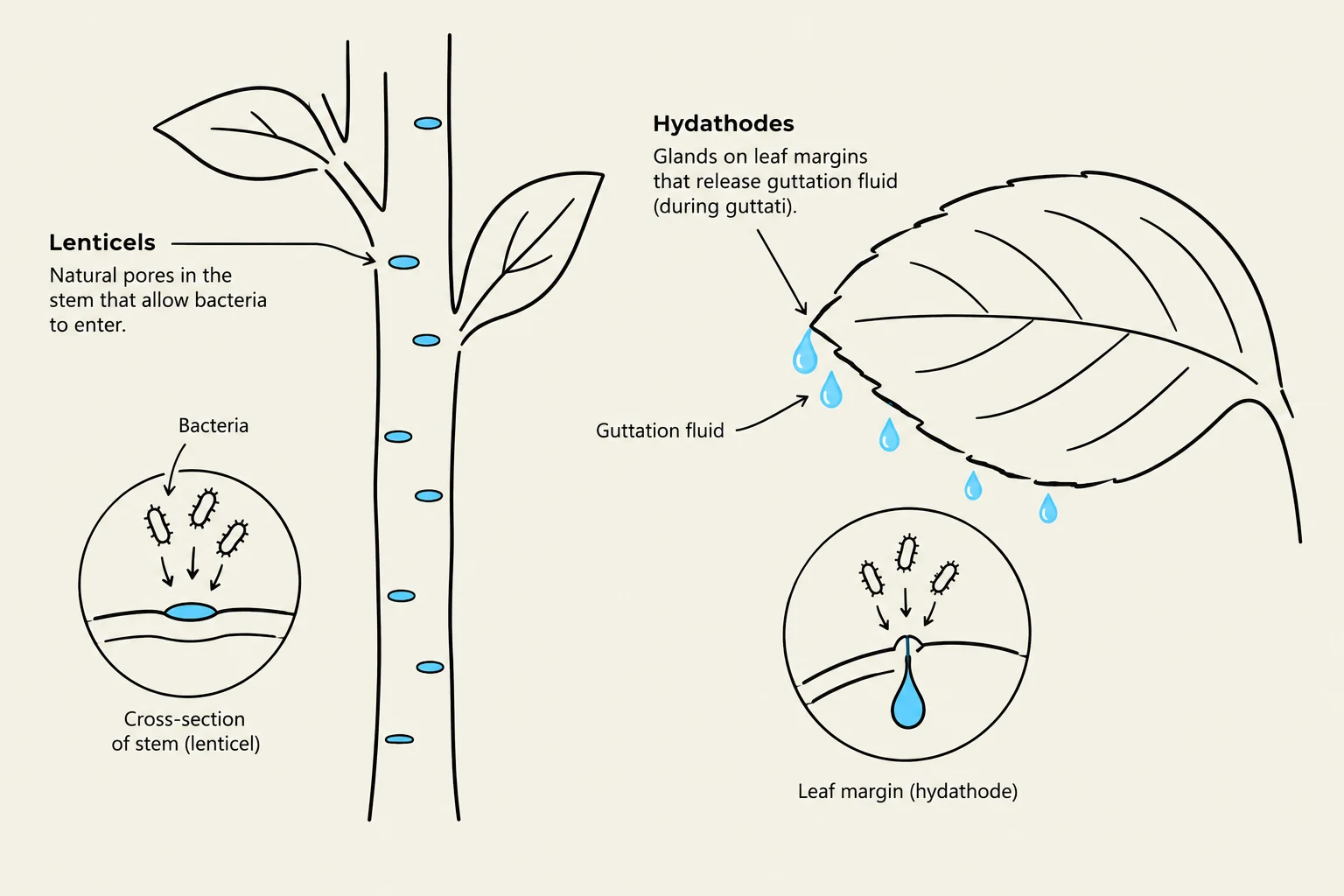
Bacteria frequently enter through lenticels, which are pores in the outer plant tissue that facilitate the direct exchange of gases between the internal tissues and the atmosphere. Another critical entry point is the hydathode. These are specialized structures used by plants for guttation—the process where plants exude excess water from their leaves. Because guttation creates a film of moisture on the leaf surface, it provides an ideal environment for bacteria to move toward and enter these openings.
Exam Tip: Remember that bacteria generally cannot penetrate the intact waxy cuticle of a leaf. They rely on "natural openings" (stomata, hydathodes, lenticels) or "wounds" (caused by insects, pruning, or weather) to gain access to the interior.
This illustration shows lenticels and hydathodes, which are structures in plants involved in gas exchange and water release.
Wounds and Physical Damage
In addition to natural openings, any breach in the plant's surface—such as a cut from pruning tools, damage from wind, or feeding sites left by insects—provides a direct pathway for bacterial colonization.
Colonization and Symptom Development
Once the bacteria have breached the surface, they begin to multiply and spread within the host tissue. This process is often facilitated by specialized structures and the secretion of harmful substances.
Movement and Multiplication
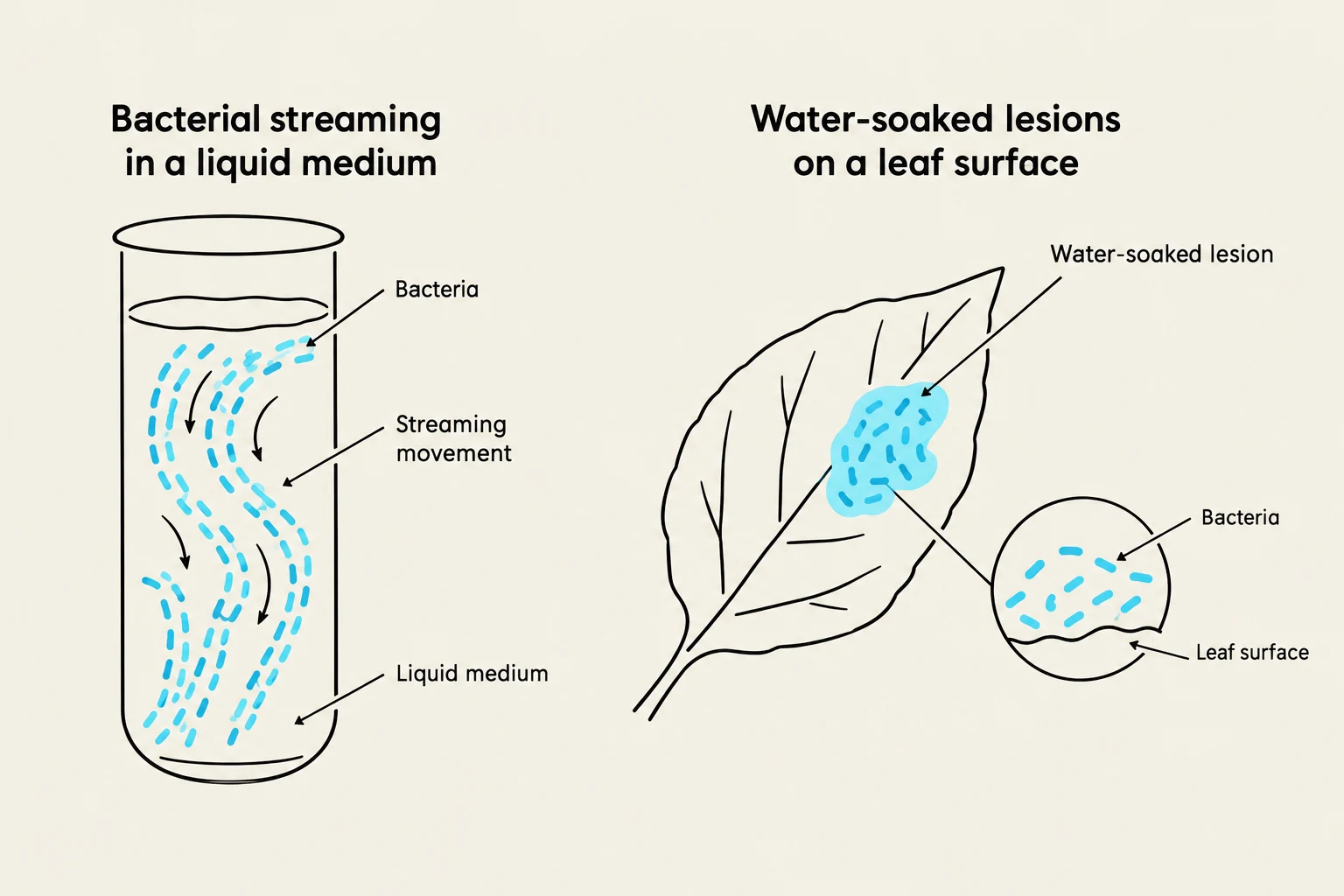
Many plant-pathogenic bacteria are rod-shaped and possess flagella, which are whip-like appendages that allow them to swim through moisture films in the intercellular spaces or within the xylem. As the bacteria multiply, they can cause significant physiological changes. One visible sign of infection is water-soaking (or hydrosis). This occurs when bacterial enzymes and toxins cause the plant cell membranes to leak, releasing water and nutrients into the intercellular spaces, giving the tissue a dark, wet appearance.
In some cases, if a diseased tissue is placed in water, one can observe bacterial streaming. This is a diagnostic sign where the mass of bacteria is seen flowing out of a cut piece of infected plant tissue.
Diagrams illustrating bacterial streaming in a liquid medium and water-soaked lesions on a leaf surface.
Systemic Infection: The Case of Xylella
While some bacteria remain localized (causing spots or scabs), others invade the plant's vascular system, specifically the xylem. A prime example is Xylella fastidiosa pv. pauca, the pathogen responsible for Olive Quick Decline Syndrome. This bacterium is transmitted by xylem-feeding insects and colonizes the water-conducting vessels of the plant. By clogging these vessels, the pathogen prevents water transport, leading to leaf scorch, wilting, stunting, and eventually the death of the tree. In Southern Italy, this pathogen has been responsible for the death of over 20 million olive trees since 2013.
Dissemination: How Diseases Spread
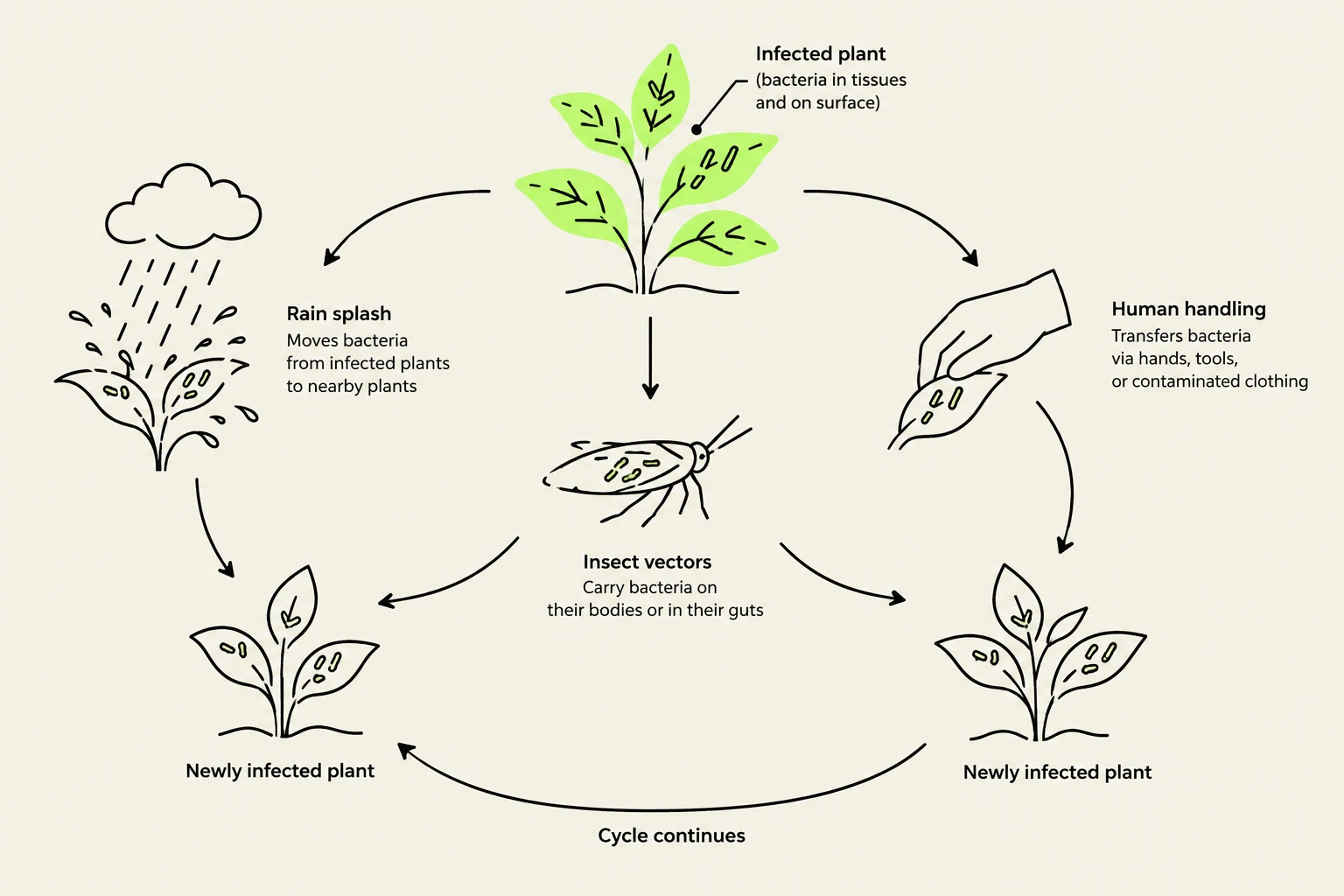
For a bacterial disease to persist in an environment, the pathogens must move from an infected host to a healthy one. This dissemination occurs through several primary vectors and environmental mechanisms:
Insects and Animals: Many bacteria, especially those that live in the vascular system (like Xylella or Mollicutes), rely on insects to carry them from plant to plant.
Rain Splash: Water droplets hitting an infected lesion can splash bacteria onto neighboring healthy plants.
Wind and Air: While less common than water-borne spread, wind can assist in the movement of pathogens or their insect vectors.
Human Activity: This is a major factor in modern agriculture. Contaminated tools (like unsterilized pruners), infected seeds, pollen, shoes, and even farm equipment can transport bacteria across large distances.
Diagram illustrating the transmission cycle of plant bacteria through rain splash, insect vectors, and human handling, leading to newly infected plants and continuing the cycle.
Management Strategies
Managing bacterial diseases is notoriously difficult because bacteria reproduce rapidly and can often survive in protected environments, such as within overwintering plant debris or inside the host's vascular system.
The most effective strategy is prevention:
Host Resistance: Planting cultivars that are naturally resistant to specific pathogens.
Sanitation: Disinfecting pruning tools, using disease-free seeds/transplants, and removing infected plant material.
Vector Control: Managing the insect populations that transmit vascular bacteria.
Cultural Practices: Minimizing leaf wetness and avoiding planting in overly wet or dry soils to reduce the window for infection.
While chemical controls like copper-based compounds or antibiotics (e.g., streptomycin) exist, they are not always effective "cures" and can sometimes lead to the development of bacterial resistance.
Keep reading for free.
Create an account to finish this reading and make it part of your study routine.