


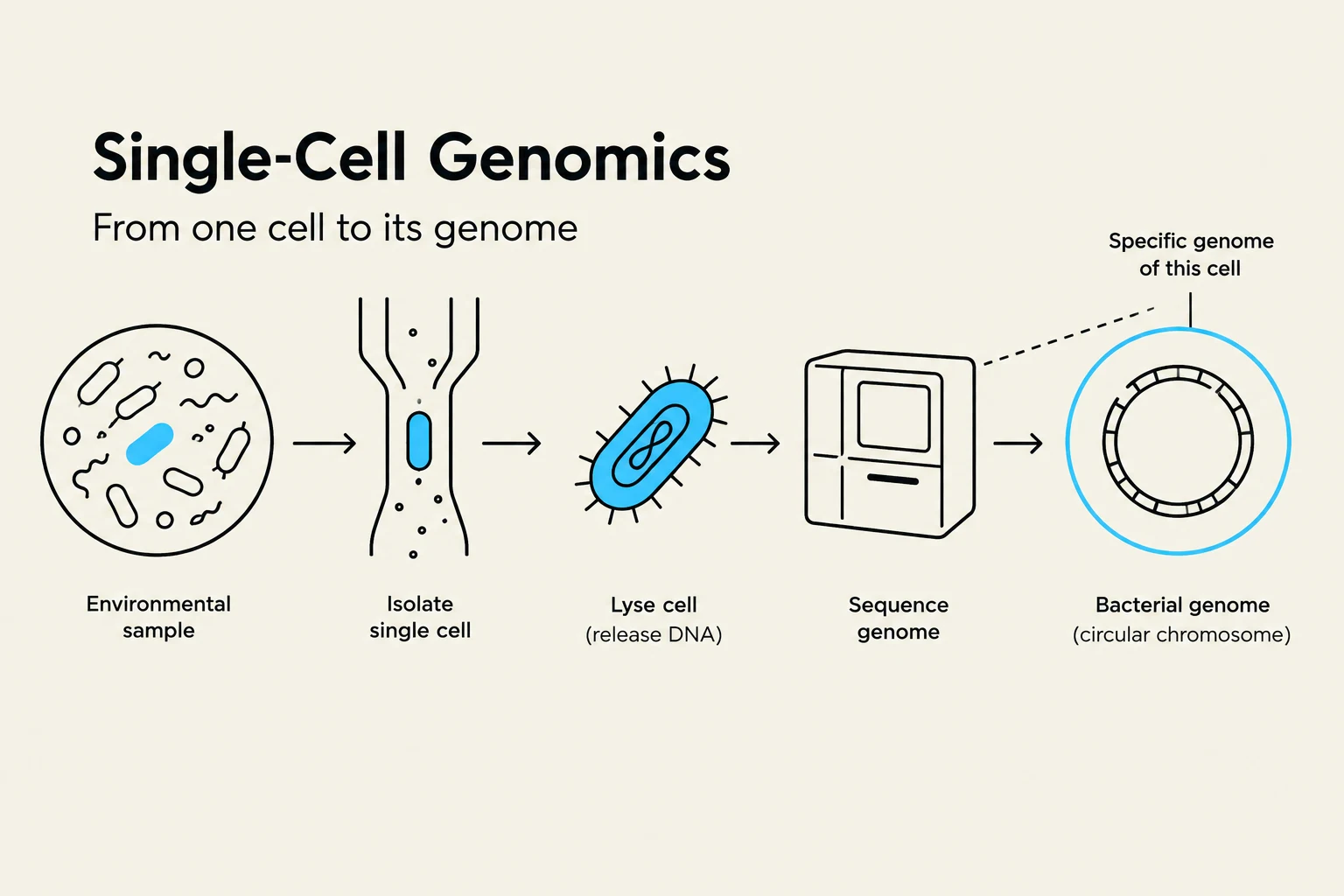
In the early 20th century, scientists knew that chromosomes contained genetic material, but they were still uncovering whether that material was protein or nucleic acid. Today, we understand that the genome—the sum total of all genetic information that defines an organism—is the blueprint for life. While we can easily study bacteria like E. coli in a laboratory setting, most microorganisms on Earth live in complex, interconnected communities called microbiomes. Because many of these microbes cannot be grown using traditional culture-based methods, scientists have developed powerful genomic tools to study them directly from their natural environments.
The Architecture of Prokaryotic Genomes
Bacterial and archaeal genomes differ significantly from eukaryotic genomes in both structure and efficiency. While eukaryotic genomes are typically linear and can be massive, bacterial genomes are generally circular and much smaller. For example, while the human genome contains approximately 3 billion base pairs (bp), a typical bacterial genome ranges from only 0.6 to 9.4 million bp.
One of the most striking differences lies in the amount of noncoding DNA. In many eukaryotes, noncoding regions can exceed 90% of the total genome. In contrast, bacterial and archaeal genomes are highly streamlined, with only about 15% of their DNA consisting of noncoding sequences.
Note: In prokaryotes, "noncoding" does not mean "useless." These regions are essential for the cell's survival and regulation.
Even though they occupy a small fraction of the genome, noncoding regions serve critical functional roles. They include:
- Regulatory sequences: Such as promoters, which act as "on/off" switches to control when genes are expressed.
- Small RNAs: Molecules that help regulate gene expression post-transcriptionally.
- Other elements: Such as pseudogenes or remnants of ancient viral genomes.
Keep reading for free.
Create an account to finish this reading and make it part of your study routine.
Continue reading freeAlready have an account? Log in
Updated