
Bacterial DNA Replication: Processes and Mechanisms

Explore the fundamental process of bacterial DNA replication, including its semiconservative and bidirectional nature, initiation, and key enzymes like DNA helicase and primase.

Save this reading to your study set

Sign up free

In the world of microbiology, the ability to reproduce is the most fundamental requirement for life. For bacteria, this involves a precise and highly regulated series of events to ensure that every new cell receives an exact copy of the genetic blueprint. Understanding how a single circular chromosome is duplicated is essential to understanding how life persists and evolves.

The Central Dogma: Replication, Transcription, and Translation
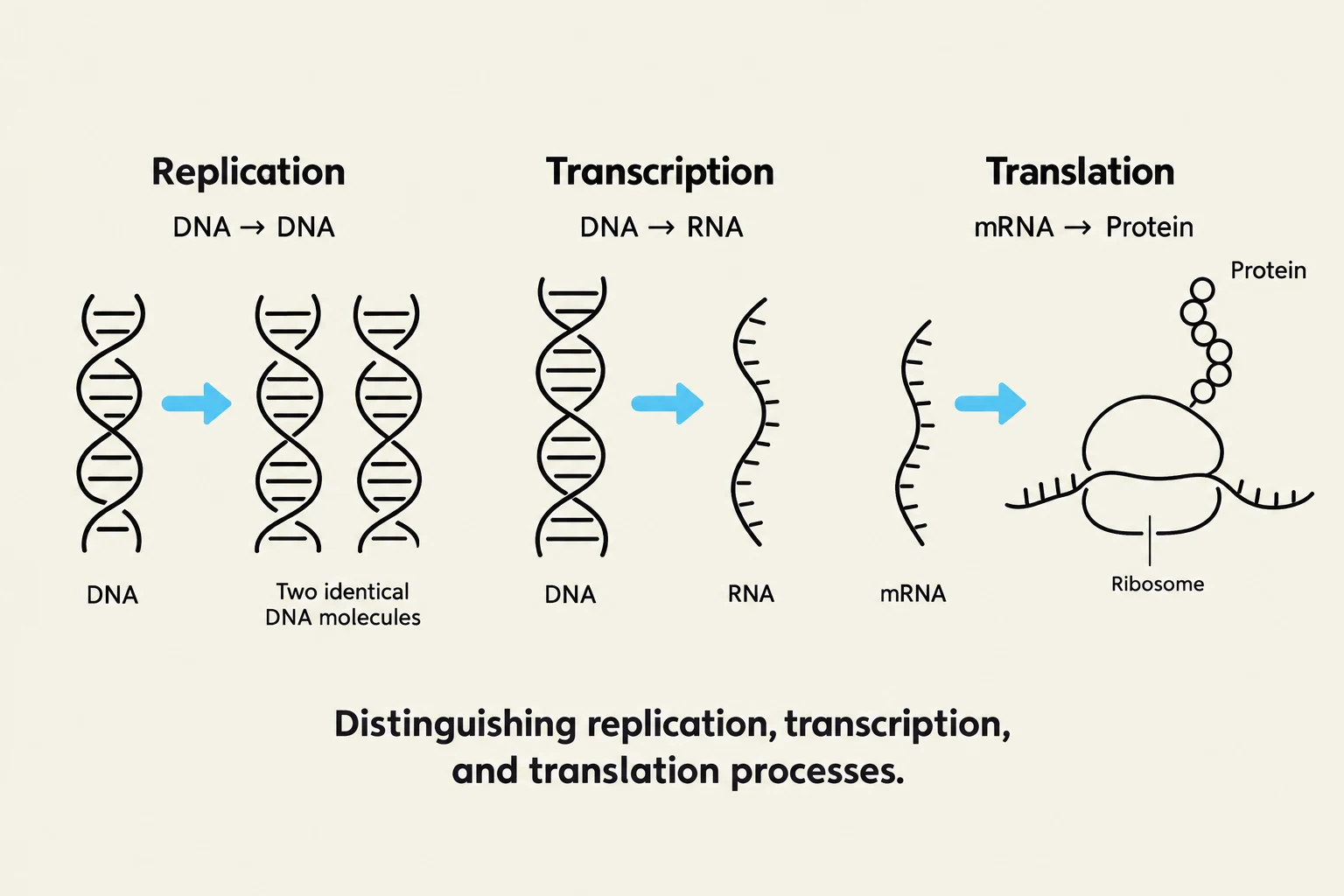
This diagram illustrates the biological processes of DNA replication, transcription, and translation.
Before diving into the mechanics of DNA duplication, it is important to distinguish replication from other vital genetic processes. While they all involve the manipulation of nucleic acids, they serve very different purposes:
  • Replication: The process of duplicating a DNA molecule to prepare for cell division.
  • Transcription: The process of copying the information encoded in DNA into RNA.
  • Translation: The process in which the information carried by mRNA is used to synthesize proteins.

In bacteria, the ultimate goal of replication is to facilitate binary fission, the method by which a single bacterial cell divides into two identical daughter cells.

The Nature of Replication: Semiconservative and Bidirectional
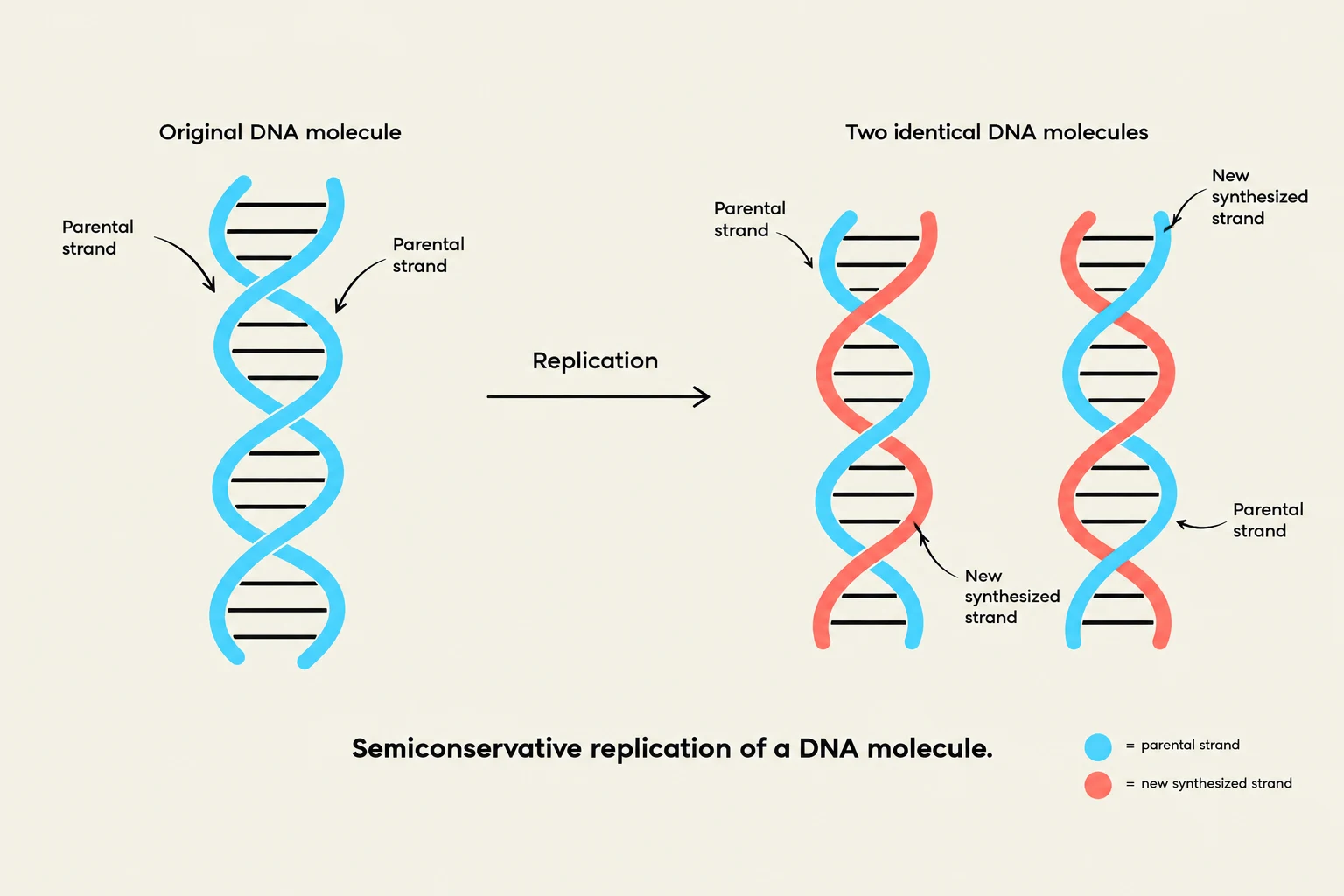
This diagram illustrates the process of semiconservative DNA replication, where an original DNA molecule divides into two identical daughter molecules, each containing one original strand and one newly synthesized strand.
Bacterial DNA replication is characterized by two key concepts: how the strands are distributed and the direction in which they are synthesized.

Semiconservative Replication

When a DNA molecule is replicated, the result is two complete double-stranded DNA molecules. However, these are not entirely "new" molecules. Instead, each resulting molecule consists of one original "parental" strand and one newly synthesized strand. Because one strand of the original molecule is conserved in each new molecule, the process is termed semiconservative.
Keep reading for free.

Create an account to finish this reading and make it part of your study routine.

Continue reading free

Already have an account? Log in

Updated

Study it your way.

Import this reading into your study set to get started with another study mode.

Make it your own.

Keep this reading in a new study set, or add it to one you already use.