


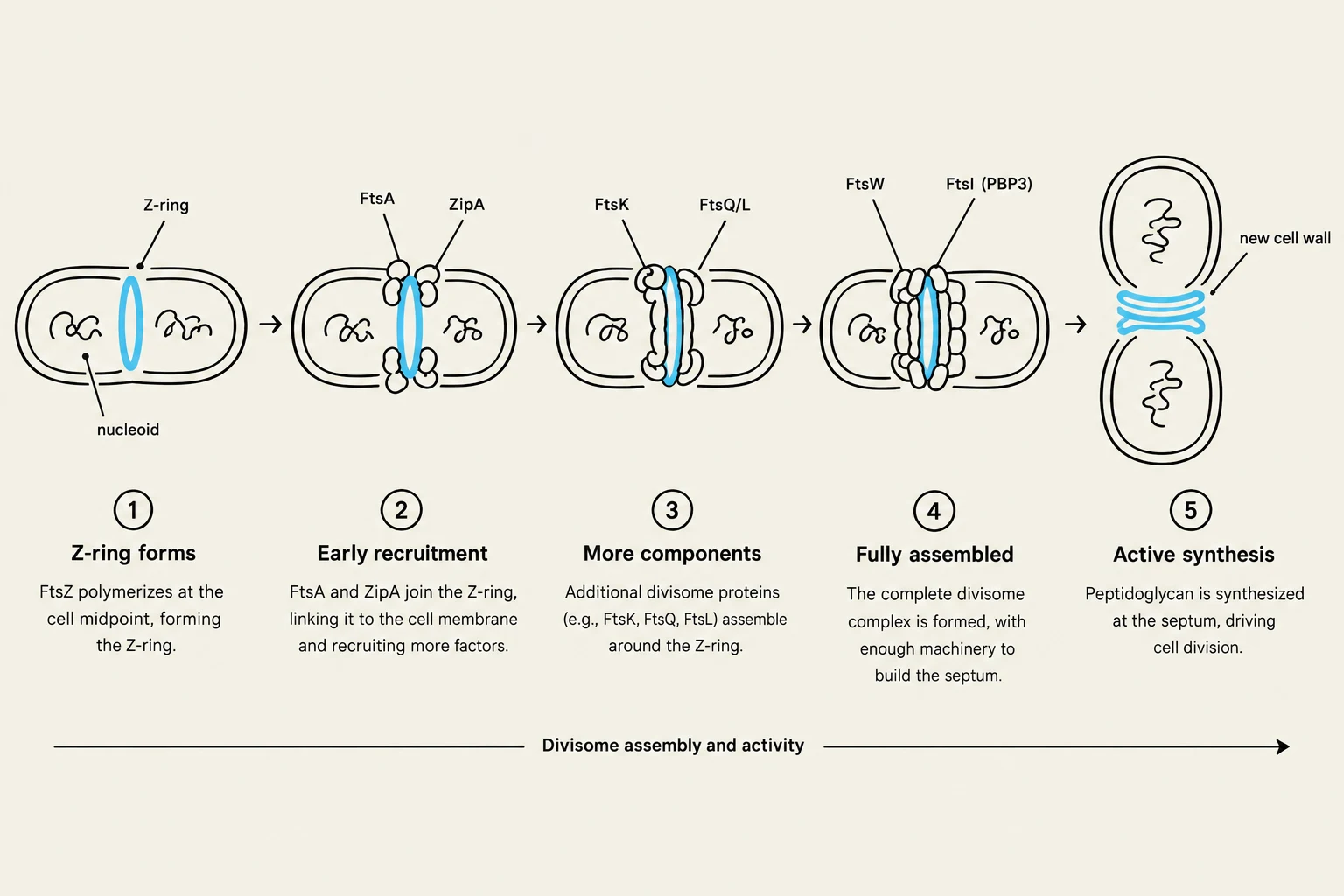
For a single-celled organism, the moment of division is a high-stakes engineering feat. To successfully reproduce, a bacterium must not only replicate its DNA but also physically partition its cytoplasm and construct a new cell wall (septum) to divide one cell into two. This complex assembly of proteins is known as the divisome. The divisome is a highly coordinated molecular machine that ensures the cell wall is built precisely at the mid-cell location, preventing lethal defects in the cell envelope.
The Foundation: FtsZ and the Z-Ring
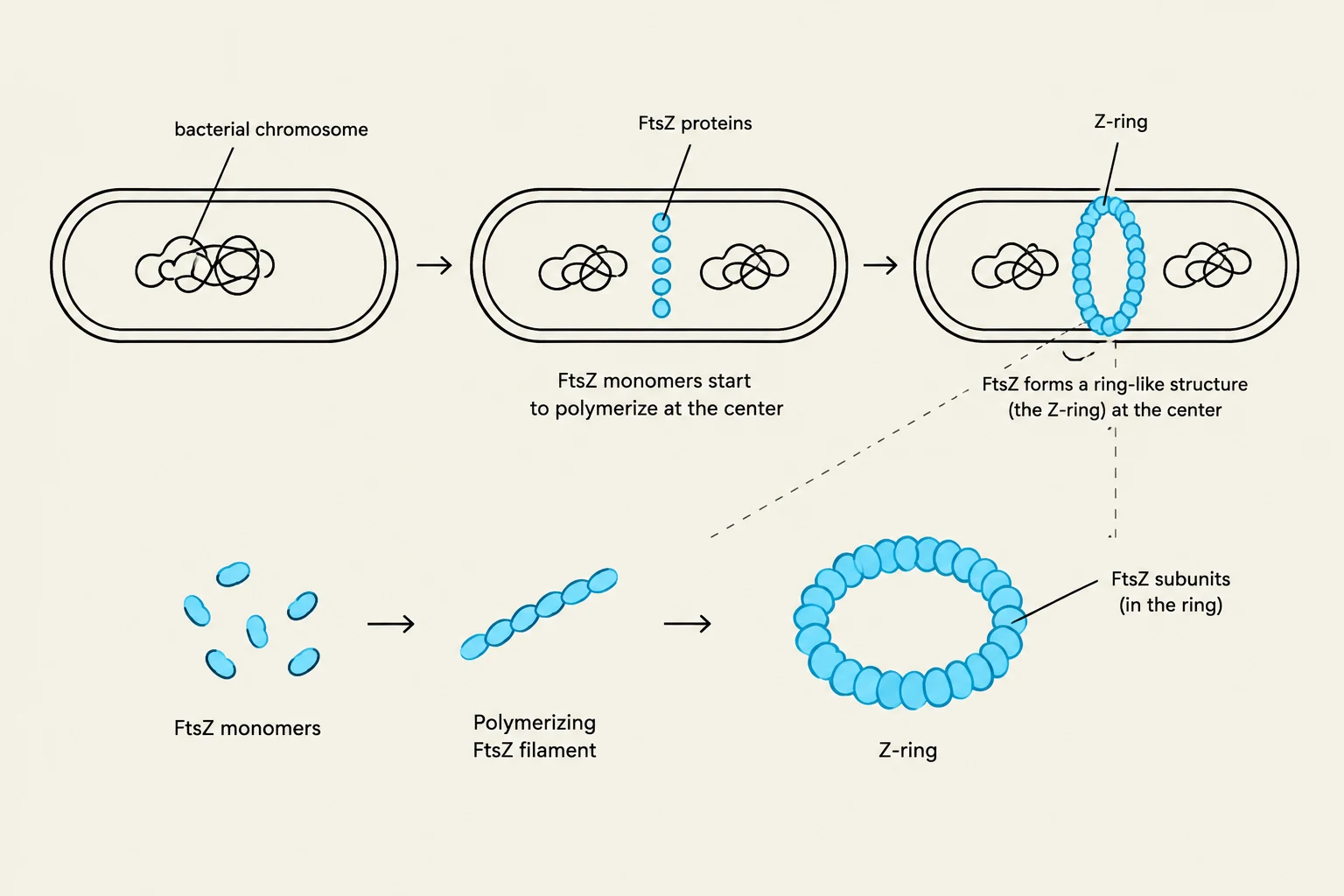
The assembly of the divisome begins with the formation of a scaffold at the mid-cell. The central player in this process is FtsZ, a tubulin-like protein that is essential for bacterial cytokinesis.
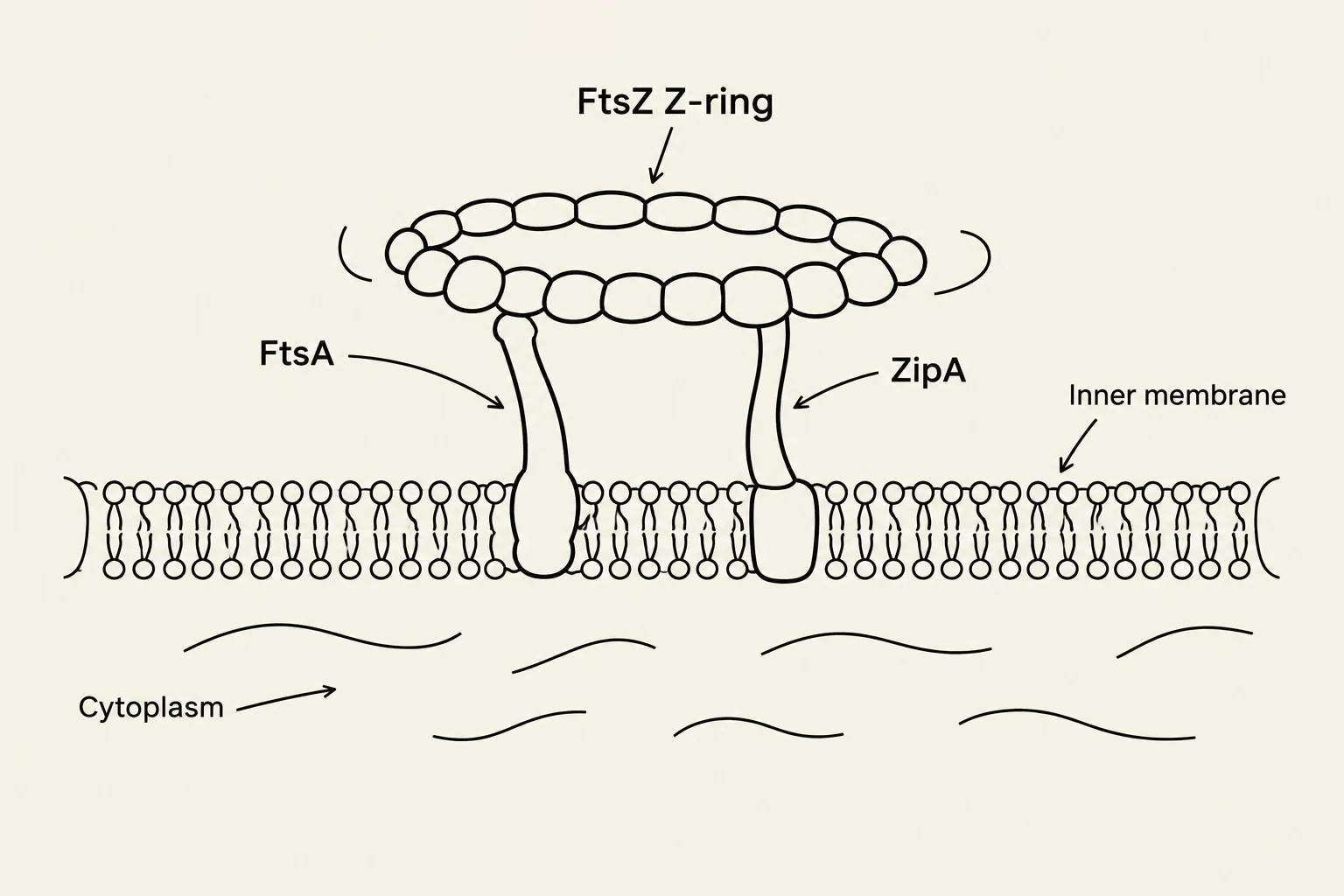
FtsZ molecules polymerize to form a structure known as the Z-ring. This ring acts as the primary spatial landmark, signaling to the rest of the cell where the division plane should be located. The Z-ring provides the mechanical foundation upon which other divisome proteins are recruited. Without a functional Z-ring, the cell cannot organize the subsequent machinery required to synthesize the septum.
Exam Tip: If you are asked which protein is the "master regulator" or the "scaffold" of the divisome, the answer is almost always FtsZ. It is the most conserved protein in this process across many bacterial species.
Keep reading for free.
Create an account to finish this reading and make it part of your study routine.
Continue reading freeAlready have an account? Log in
Updated