


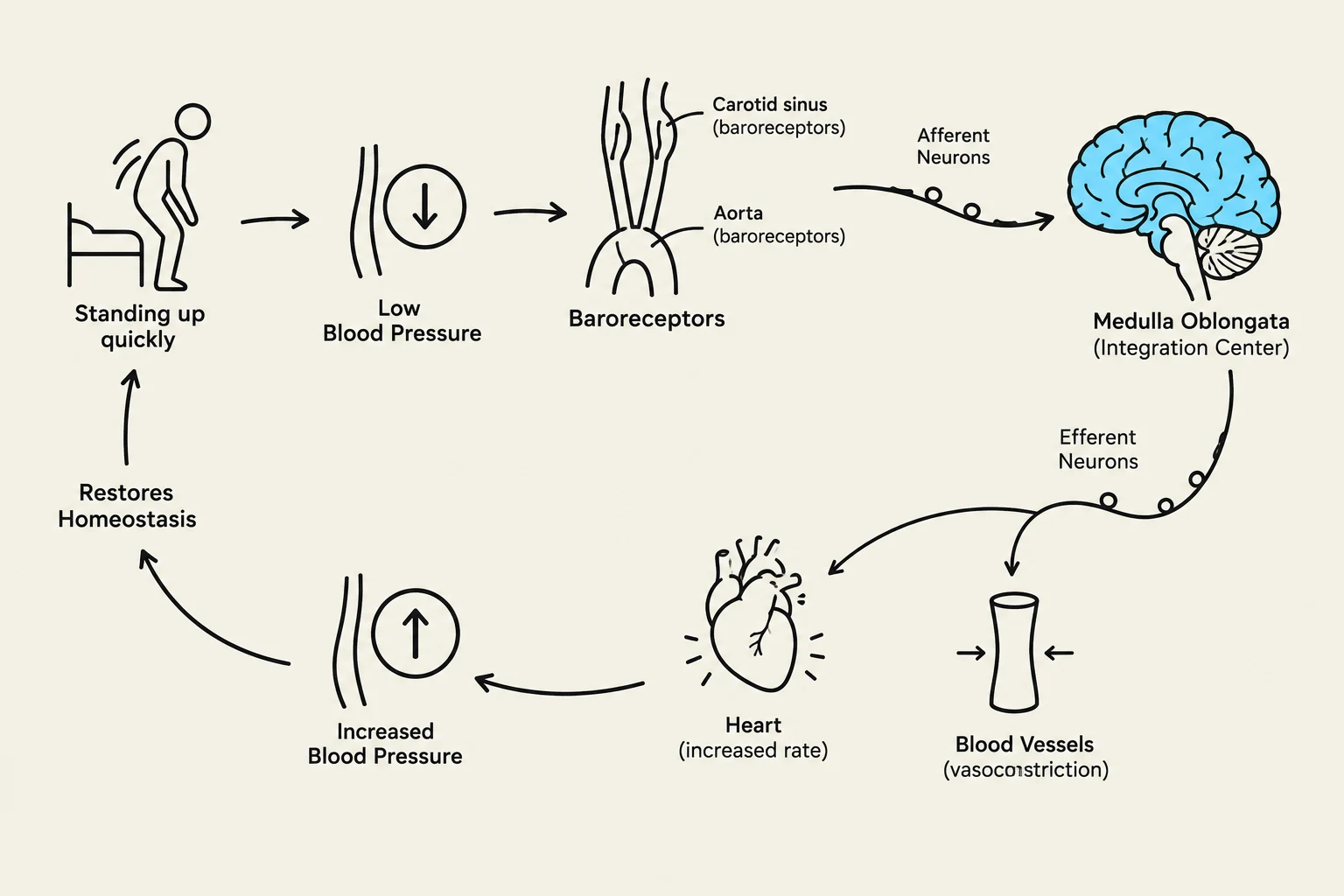
The human body is a masterpiece of constant adjustment. Whether you are sprinting for a bus or sleeping soundly in a cool room, your internal environment remains remarkably stable. This state of "dynamic equilibrium" is known as homeostasis. While many homeostatic processes are controlled by the conscious brain, the most critical life-sustaining functions—such as heart rate, blood pressure, and digestion—are managed by the Autonomic Nervous System (ANS) through a series of rapid, involuntary responses called visceral reflexes.
The Dual Pillars: Sympathetic vs. Parasympathetic

The Sympathetic Division (Fight or Flight)
The sympathetic division is activated during periods of stress, exercise, or emergency. Its primary goal is to mobilize energy and prepare the body for physical action. When this system dominates, you will observe:
- Increased heart rate and force of contraction.
- Dilation of the bronchioles (to increase oxygen intake).
- Dilation of the pupils (to improve visual field).
- Diversion of blood flow away from the digestive tract and toward skeletal muscles.
The Parasympathetic Division (Rest and Digest)
Conversely, the parasympathetic division is active during quiet, non-stressful periods. It focuses on energy conservation and "housekeeping" functions, such as:
- Decreased heart rate.
- Stimulation of digestive enzyme secretion and intestinal motility.
- Constriction of the pupils.
- Promotion of waste elimination (urination and defecation).
Exam Tip: Remember that these systems are not simply "on" or "off." Instead, they exist in a state of autonomic tone, where both systems are constantly active to some degree, and homeostasis is achieved by shifting the balance between them.

Keep reading for free.
Create an account to finish this reading and make it part of your study routine.
Continue reading freeAlready have an account? Log in
Updated