


Atherosclerosis is a chronic, progressive inflammatory disease that affects the large conduit arteries of the human body. While it begins as a silent process often starting in childhood or adolescence, it can evolve over decades into life-threatening conditions such as myocardial infarction, stroke, and peripheral arterial disease. Understanding the transition from healthy endothelial function to complex plaque formation is essential for grasping how systemic metabolic issues translate into localized vascular failure.
The Foundation: Endothelial Health and Injury
The endothelium is a single layer of cells lining the vessel's inner surface (the tunica intima) that serves as a critical gatekeeper for vascular health. In a healthy state, endothelial cells (ECs) maintain a smooth surface and produce vital biochemical mediators, most notably nitric oxide. Nitric oxide promotes vasodilation and inhibits platelet aggregation, ensuring the vessel remains patent and the blood flows smoothly.
However, various "damaging forces" can breach this barrier. These include:
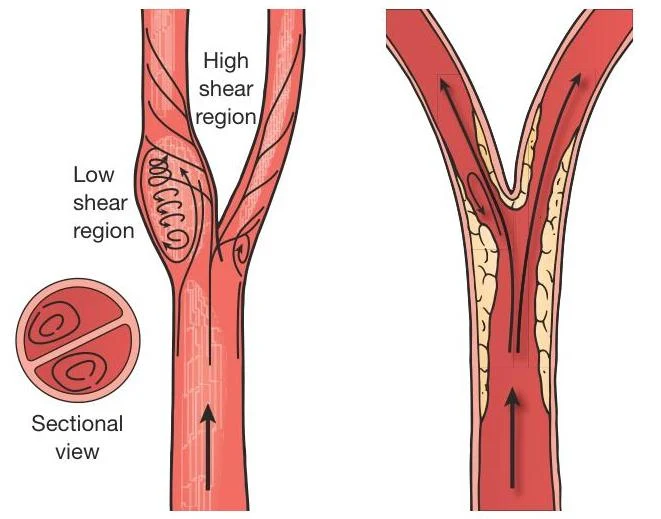
- Hypertension: Increased hydrostatic pressure and shear stress.
- Dyslipidemia: High levels of circulating lipids.
- Lifestyle Factors: Smoking and diabetes.
- Inflammation: Elevated systemic markers like C-reactive protein (CRP) and TNF-.
When the endothelium is injured, it becomes "activated" and more permeable. This allows low-density lipoprotein (LDL) cholesterol to migrate from the bloodstream into the subendothelial space (the intima).
The Pathogenesis of Plaque Formation
The progression of atherosclerosis follows a predictable, multi-stage inflammatory cascade:
1. Fatty Streak and Foam Cells
Once LDL is trapped in the intima, it undergoes oxidation due to reactive oxygen species. This modified LDL triggers an immune response. Endothelial cells express adhesion molecules that recruit monocytes from the blood into the vessel wall. Once inside the intima, these monocytes differentiate into macrophages. These macrophages attempt to clear the excess cholesterol by phagocytosing the oxidized LDL. As they become engorged with lipids, they transform into foam cells, creating the first visible lesion known as a fatty streak.
Keep reading for free.
Create an account to finish this reading and make it part of your study routine.
Continue reading freeAlready have an account? Log in
Updated