Asthma Pathophysiology and Pharmacological Interventions

An overview of asthma, including its pathophysiology, the allergic cascade, airway remodeling, and methods for assessing severity and function. It details stepwise treatment approaches and various pharmacological interventions.

Save this reading to your study set

Sign up free

Asthma is a chronic inflammatory disease of the airways that affects approximately 10% of the U.S. population. Characterized by airway hyperresponsiveness, bronchoconstriction, and airway remodeling, it represents a significant burden on the healthcare system, leading to hundreds of thousands of hospitalizations annually. Understanding the complex interplay between immune responses, physiological changes, and pharmacological interventions is essential for effective management.

Asthma Pathophysiology and the Allergic Cascade
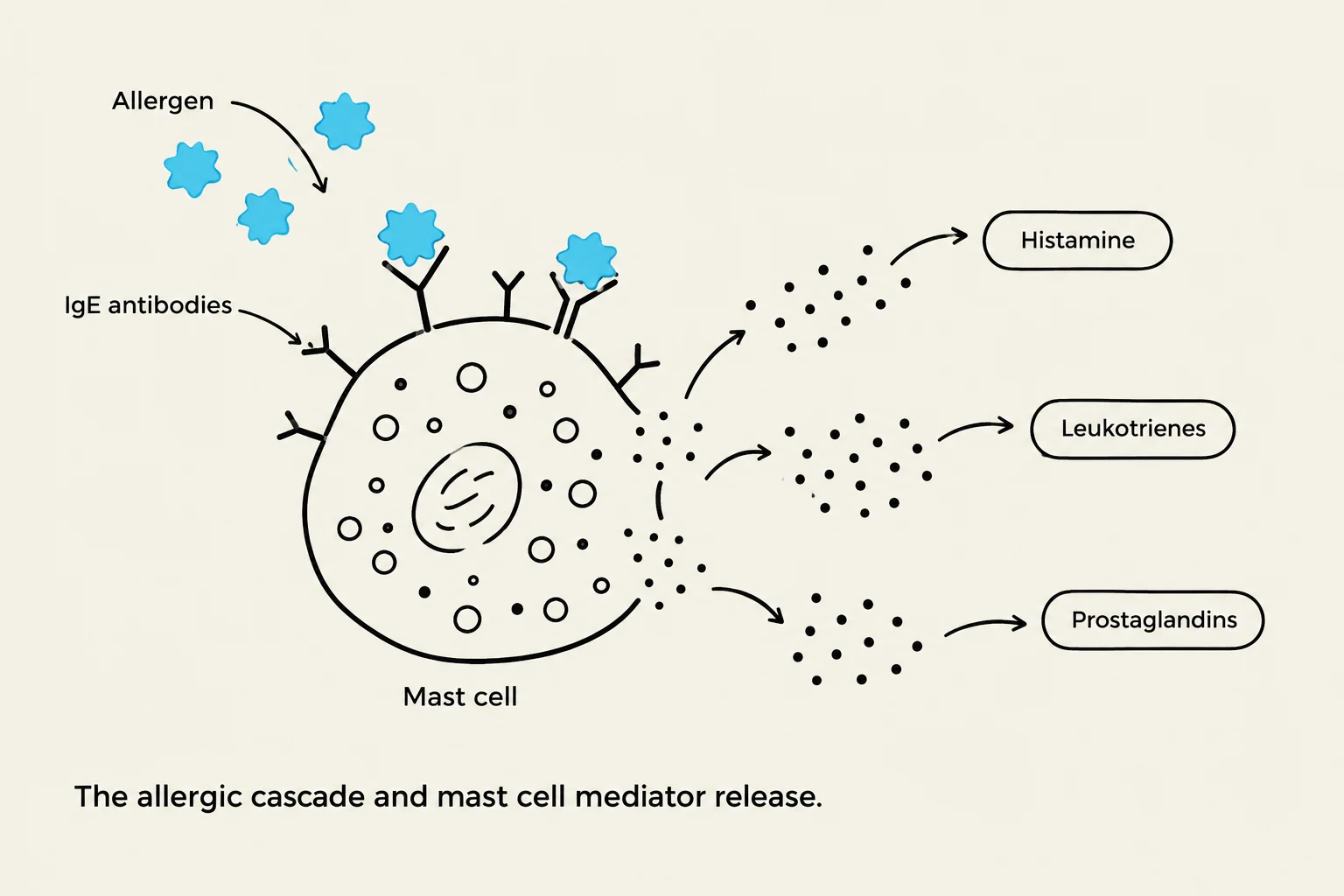
Diagram illustrating the allergic cascade, showing allergens binding to IgE antibodies on a mast cell, leading to the release of mediators like histamine, leukotrienes, and prostaglandins.
The hallmark of asthma is the intermittent nature of its symptoms, which are often exacerbated by triggers such as exercise, allergens, extreme temperatures, or viral infections. At its core, asthma involves a complex immune response. In allergic asthma, the role of Immunoglobulin E (IgE) is central; IgE is a type of antibody that binds to allergens and triggers the release of inflammatory substances from mast cells.

This process follows a specific "allergic cascade":

  1. Sensitization: Initial exposure to an allergen.
  2. Early-phase response: Occurs upon re-exposure to the allergen.
  3. Late-phase response: A second, often more severe reaction following the initial response.

During an attack, several mediators are released. Mast cell mediators include histamine, leukotrienes, prostaglandins, and interleukins. Additionally, inflammatory cell mediators such as eosinophils, leukocytes, and macrophages release cytokines and more leukotrienes, further driving the inflammatory process.

Airway Remodeling
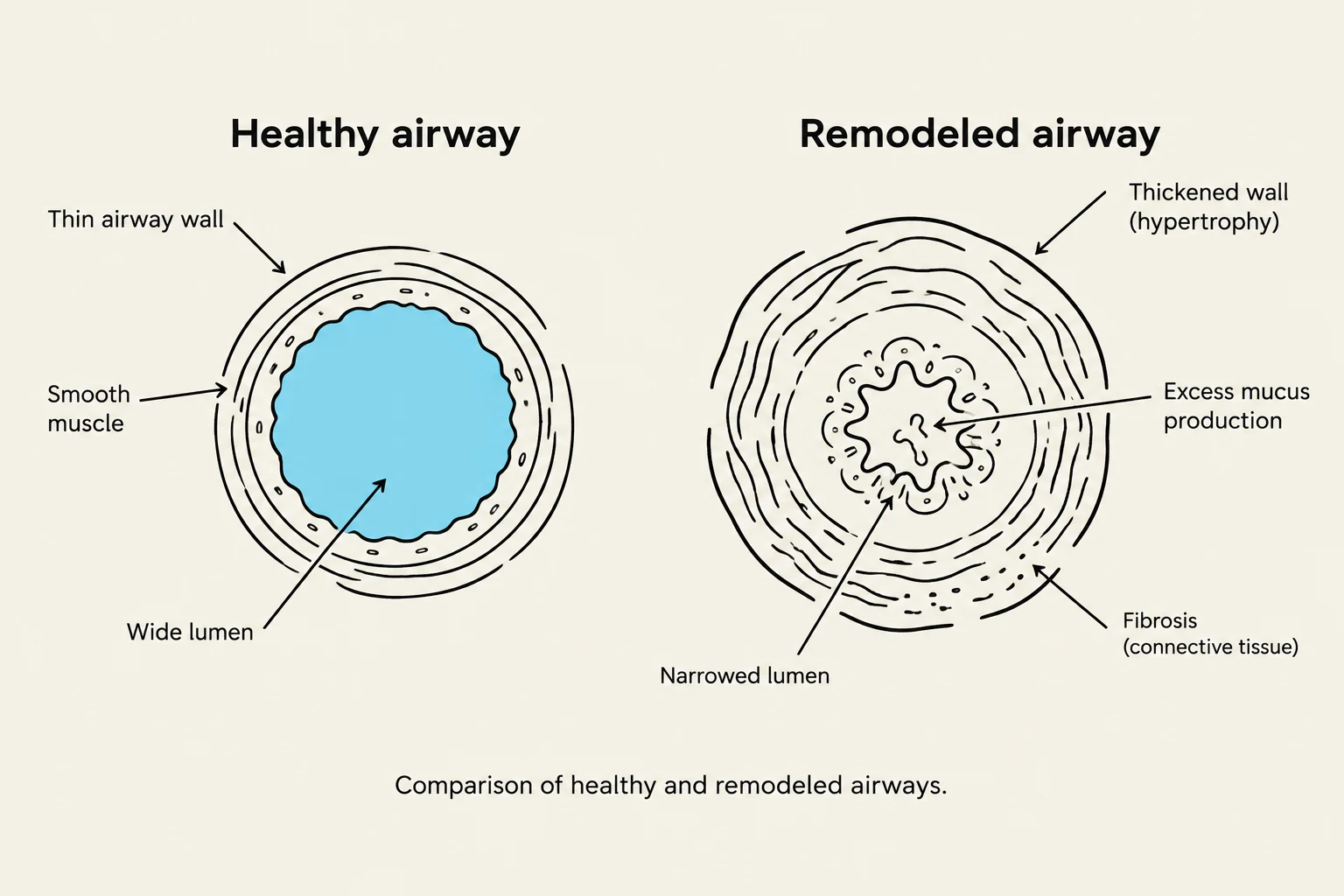
Comparison of healthy and remodeled airways, illustrating differences in wall thickness, lumen size, and mucus production.
Over time, chronic inflammation can lead to airway remodeling. This involves structural changes such as hypertrophy, fibrosis, and thickening of the airway walls. These changes can result in narrowed airways and limited airflow, potentially leading to irreversible lung changes.

Keep reading for free.

Create an account to finish this reading and make it part of your study routine.

Continue reading free

Already have an account? Log in

Updated

Study it your way.

Import this reading into your study set to get started with another study mode.

Make it your own.

Keep this reading in a new study set, or add it to one you already use.