


Asthma is a chronic inflammatory disorder of the airways characterized by bronchial hyperresponsiveness and reversible airflow obstruction. While many people associate asthma simply with "shortness of breath," the clinical presentation is a complex spectrum of physiological changes that can range from mild, intermittent discomfort to life-threatening respiratory failure. For healthcare students and clinicians, recognizing the subtle shifts in these manifestations is the difference between managing a routine flare-up and responding to a critical emergency.
The Pathophysiology of Symptoms
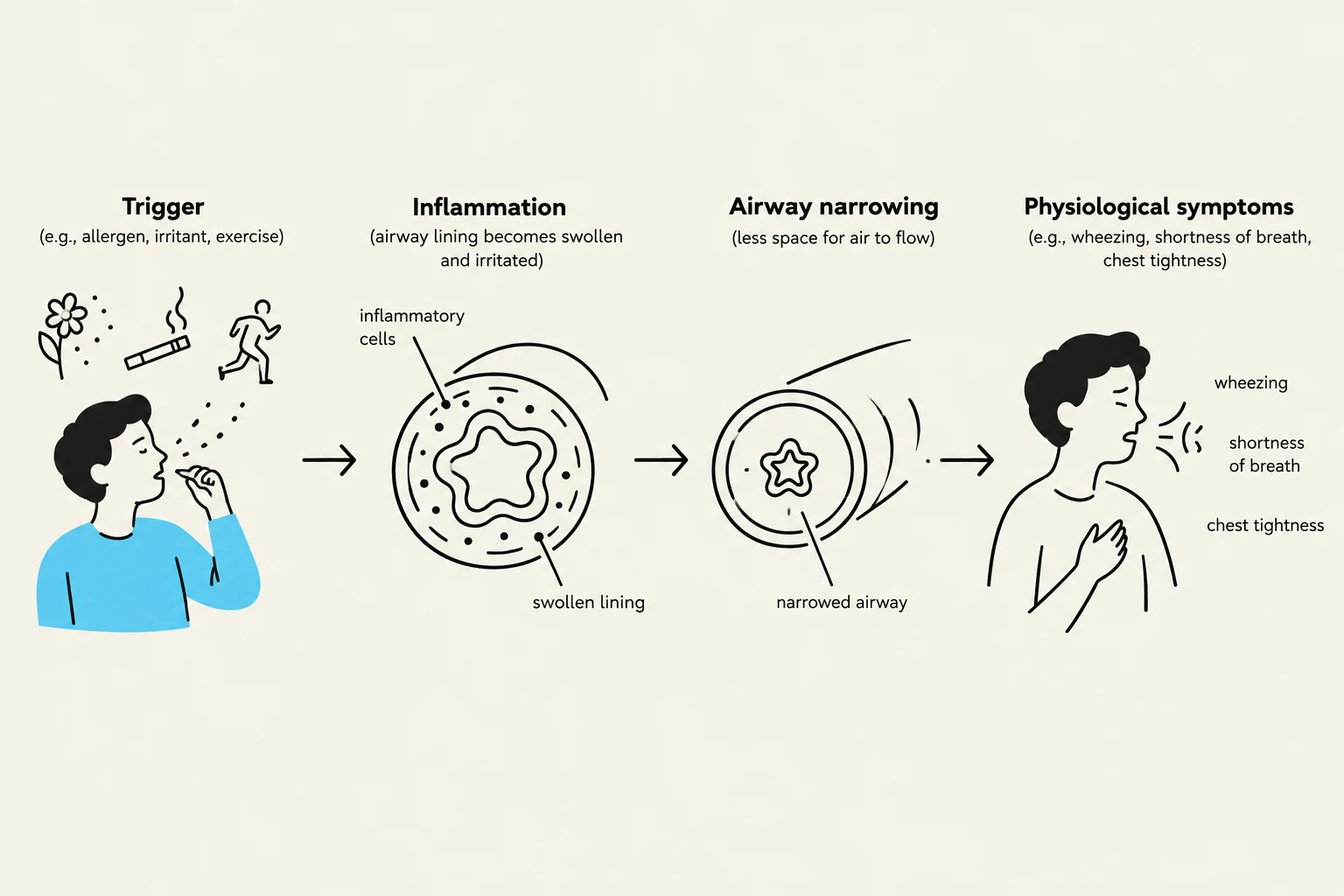
To understand why a patient presents with specific symptoms, one must first understand what is happening within the bronchioles. Asthma involves a "triad" of physiological responses: bronchoconstriction (tightening of the smooth muscles), airway inflammation (swelling of the mucosal lining), and mucus hypersecretion (clogging of the lumen).
When these three factors converge, the diameter of the airway decreases significantly. Because resistance to airflow is inversely proportional to the fourth power of the radius (), even a tiny reduction in airway diameter leads to a massive increase in the effort required to breathe.

Classic Clinical Manifestations
Wheezing: The Sound of Turbulence
Wheezing is perhaps the most iconic sign of asthma. It is a high-pitched, musical whistling sound heard primarily during expiration. This sound is produced by air being forced through narrowed, turbulent passages.
In the early stages of an exacerbation, wheezing may be heard throughout the respiratory cycle. However, as the airway narrows further, it often becomes more prominent during expiration because the positive pressure required to exhale makes it harder to push air through the constricted tubes.
Keep reading for free.
Create an account to finish this reading and make it part of your study routine.
Continue reading freeAlready have an account? Log in
Updated