


A thorough physical assessment of the thorax and lungs is essential for identifying respiratory distress, chronic disease, and structural deformities. The thorax extends from the base of the neck to the level of the diaphragm and contains the lungs, the distal trachea, and the bronchi. When assessing a client, clinicians must look beyond simple breath sounds to evaluate the entire thoracic cage, including the ribs, sternum, and clavicles, to detect abnormalities that may indicate underlying pulmonary or musculoskeletal issues.
Thoracic Deformities and Configurations
The shape and symmetry of the thoracic cage provide immediate clues about a client's respiratory health and skeletal integrity. While a normal chest configuration is elliptical, with an anteroposterior (AP) diameter smaller than the lateral diameter (a ratio of approximately 1:2), several deviations can occur.
Structural Deformities
Several congenital or acquired deformities affect the shape of the sternum and spine:
- Pectus excavatum: A condition where the sternum is sunken inward.
- Pectus carinatum: Often referred to as "pigeon chest," where the sternum protrudes outward.
- Scoliosis: An abnormal lateral curvature of the spine.
- Kyphosis: An exaggerated outward curvature of the thoracic spine, which is common in older adults.
Altered Configurations
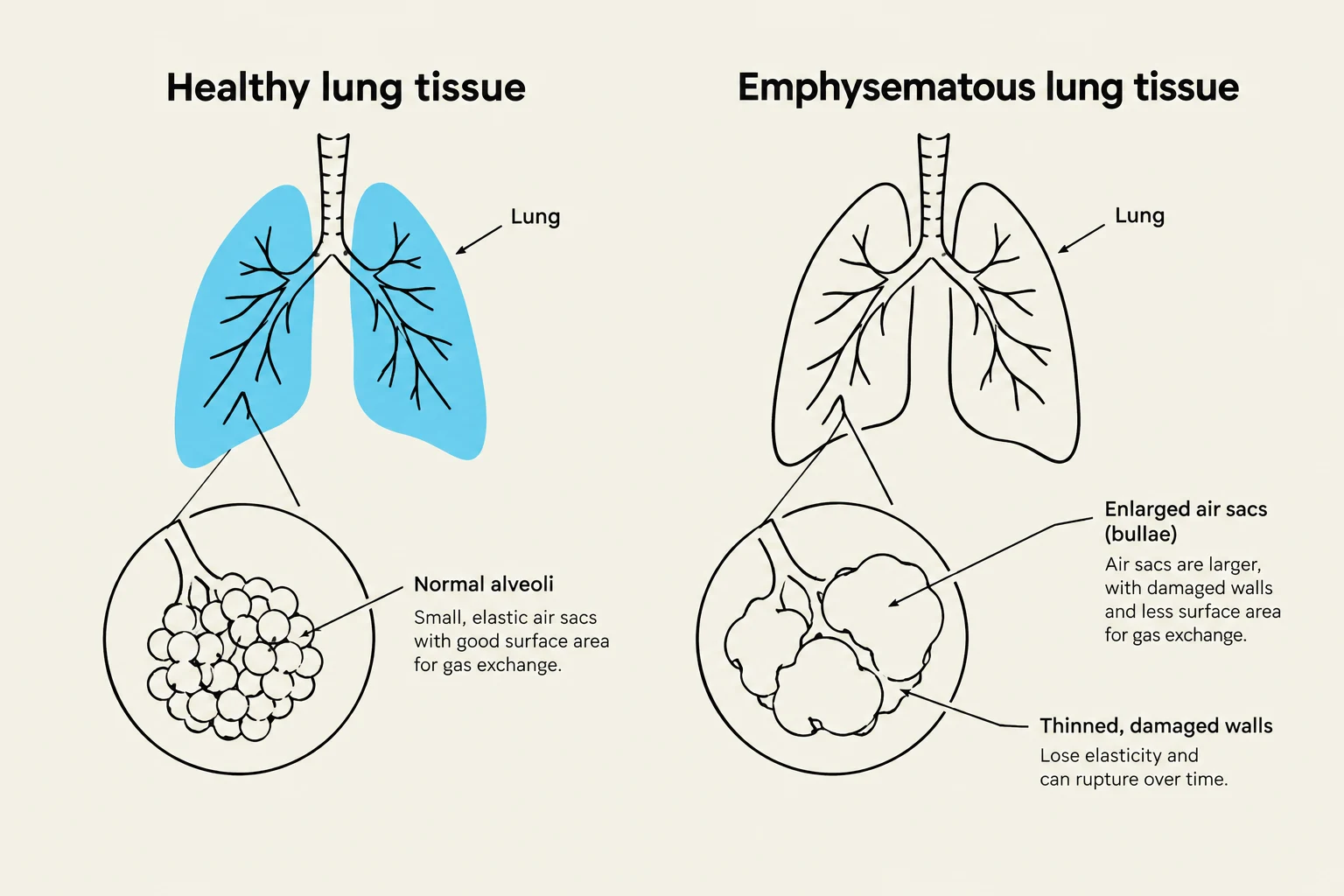
One of the most significant findings during inspection is the barrel chest. In this configuration, the thorax becomes round, and the AP diameter increases until it is equal to the lateral diameter, creating a 1:1 ratio. This is frequently observed in clients with Chronic Obstructive Pulmonary Disease (COPD) or chronic asthma.

Keep reading for free.
Create an account to finish this reading and make it part of your study routine.
Continue reading freeAlready have an account? Log in
Updated