


Reproduction is the fundamental biological process that ensures the continuity of a species. Because all individual organisms eventually die, a species must successfully produce offspring to avoid extinction. In the plant kingdom, this can be achieved through two primary strategies: asexual reproduction, which focuses on speed and efficiency, and sexual reproduction, which focuses on genetic diversity.
Asexual Reproduction in Plants
Asexual reproduction involves a single parent producing offspring that are genetically identical to itself. This method is highly efficient because it does not require a mate, requires less energy and time, and allows for rapid population growth. However, because the offspring are clones, there is a lack of genetic diversity, which can make an entire population vulnerable to a single disease or environmental change.
Plants utilize several specialized structures to facilitate asexual reproduction:
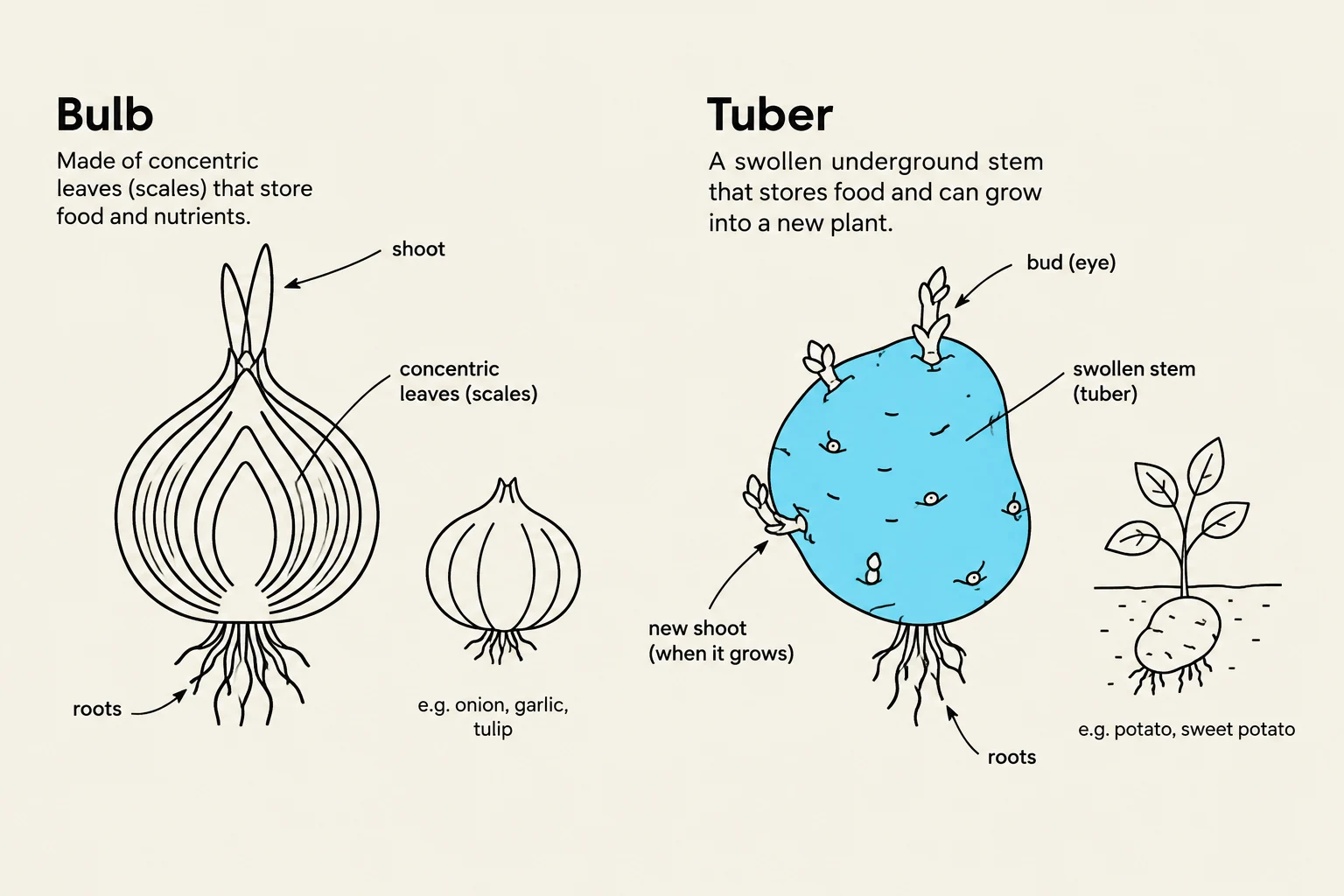
- Bulbs: These are compressed shoots with fleshy storage leaves attached to a stem plate. New roots grow from the bottom, and "daughter bulbs" can grow from axillary meristems between the scales, creating genetically identical copies. Examples include onions and lilies.
- Tubers: These are swollen parts of underground stems or roots used for food storage. Stem tubers (like potatoes) grow from modified stem organs, while root tubers (like sweet potatoes) grow as fleshy bulges on the roots.
- Rhizomes: These are horizontal, underground stems that store food. They are often thick or woody and possess nodes with buds; growth occurs from these buds. Ginger and turmeric are common examples.
- Stolons (Runners): Unlike rhizomes, stolons are horizontal stems that grow above the ground. Where the stolon touches the soil, it can develop roots and a new plantlet. Strawberries are a classic example of this method.

Keep reading for free.
Create an account to finish this reading and make it part of your study routine.
Continue reading freeAlready have an account? Log in
Updated