


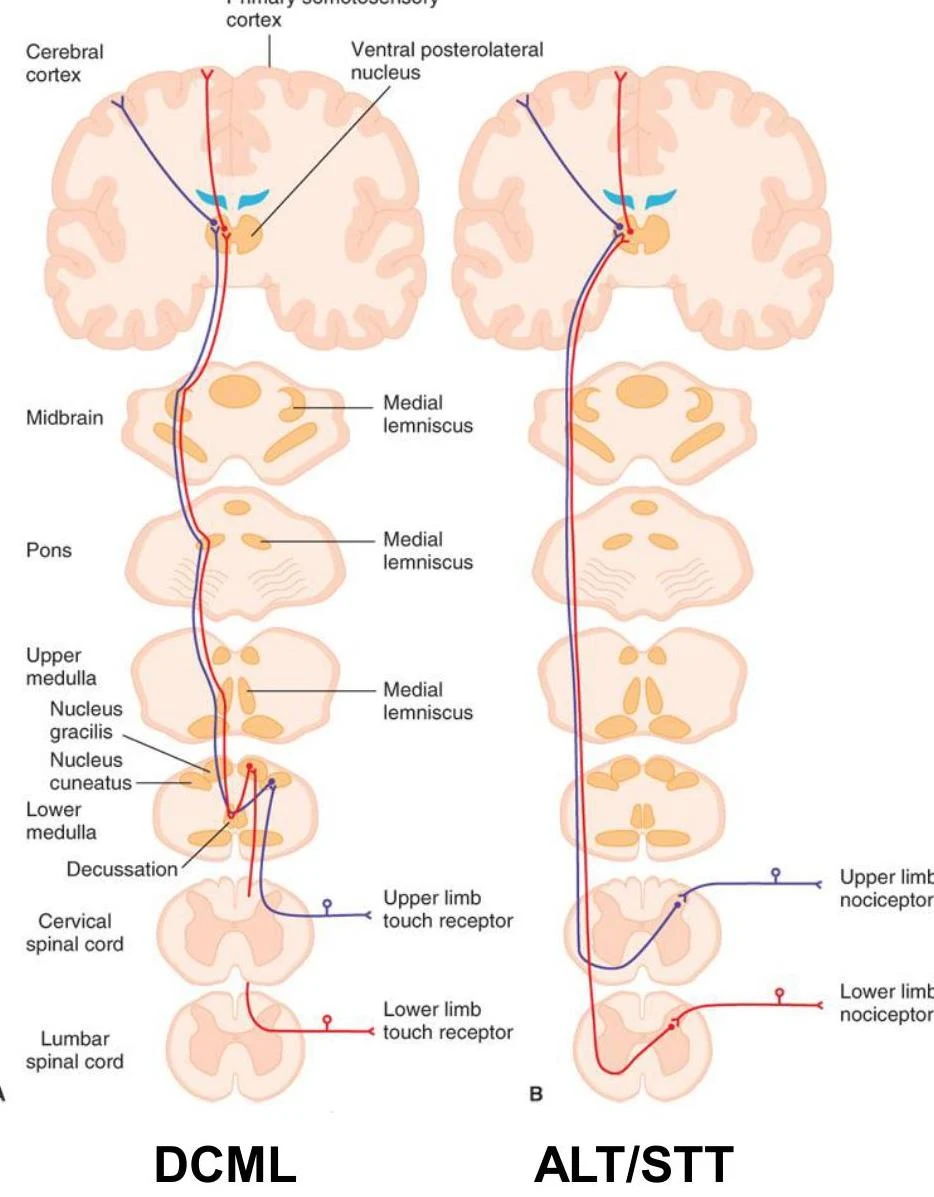
The spinal cord serves as the primary communication highway between the body and the brain. This communication is organized into specialized pathways: ascending tracts, which carry sensory information from the periphery toward the brain, and descending tracts, which carry motor commands from the brain to the muscles. To understand how we perceive the world—from the sharp sting of a needle to the precise position of our fingers—we must examine the two primary ascending sensory pathways: the Anterolateral (Spinothalamic) Tract and the Dorsal Column Medial Lemniscus (DCML) Tract.
The Anatomy of Sensory Input
Before diving into specific tracts, it is essential to understand the starting point for almost all somatic sensory information. Sensory input begins with peripheral sensory neurons. The cell bodies of these primary neurons are located in the dorsal root ganglia, which are clusters of nerve cell bodies situated just outside the spinal cord.
From these ganglia, axons travel into the spinal cord to transmit signals. The type of sensation transmitted is often determined by the diameter and myelination of the nerve fiber:
- A fibers: Thinly myelinated fibers that transmit "first pain"—sharp, well-localized sensations—and temperature.
- C fibers: Unmyelinated, smaller fibers that transmit "second pain"—dull, diffused, and often aching sensations.
- A fibers: Large, heavily myelinated fibers responsible for touch and pressure.
The Anterolateral (Spinothalamic) Tract
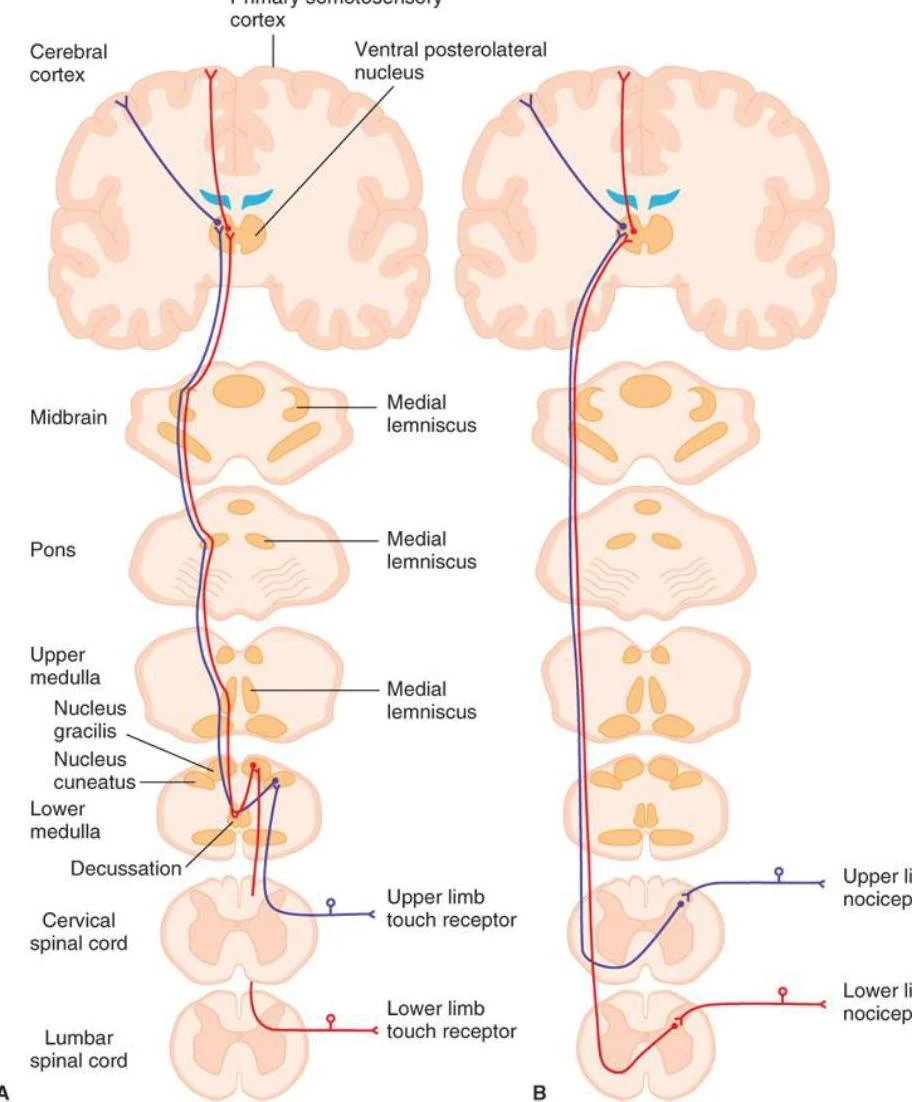
The Anterolateral tract, often referred to as the Spinothalamic Tract (STT), is the primary pathway for transmitting "protective" sensations.
Sensory Modalities
This tract is specialized for:
- Pain (nociception): The perception of noxious stimuli.
- Temperature: Both hot and cold sensations.
- Crude touch: Non-discriminative sensations from the skin.
Keep reading for free.
Create an account to finish this reading and make it part of your study routine.
Continue reading freeAlready have an account? Log in
Updated