


Preparing for an art history exam requires more than just memorizing dates; it demands an understanding of how specific artistic techniques, social structures, and religious beliefs manifest in physical objects. This review covers the essential periods and works spanning the Aegean, Greece, South America, and Mesoamerica, focusing on the intersection of craftsmanship and cultural identity.
Cycladic and Minoan Art: Sea, Ritual, and Color
The early Aegean civilizations, specifically the Minoans, utilized art to express their connection to the natural world and their social hierarchies. A primary example is the Minoan Frying Pan, an object that demonstrates how 2D decoration and swirling patterns can establish a civilization's identity. While its exact purpose remains a mystery—it could be a mirror or a ritual object—the swirling patterns clearly evoke the sea, reflecting a seafaring society.
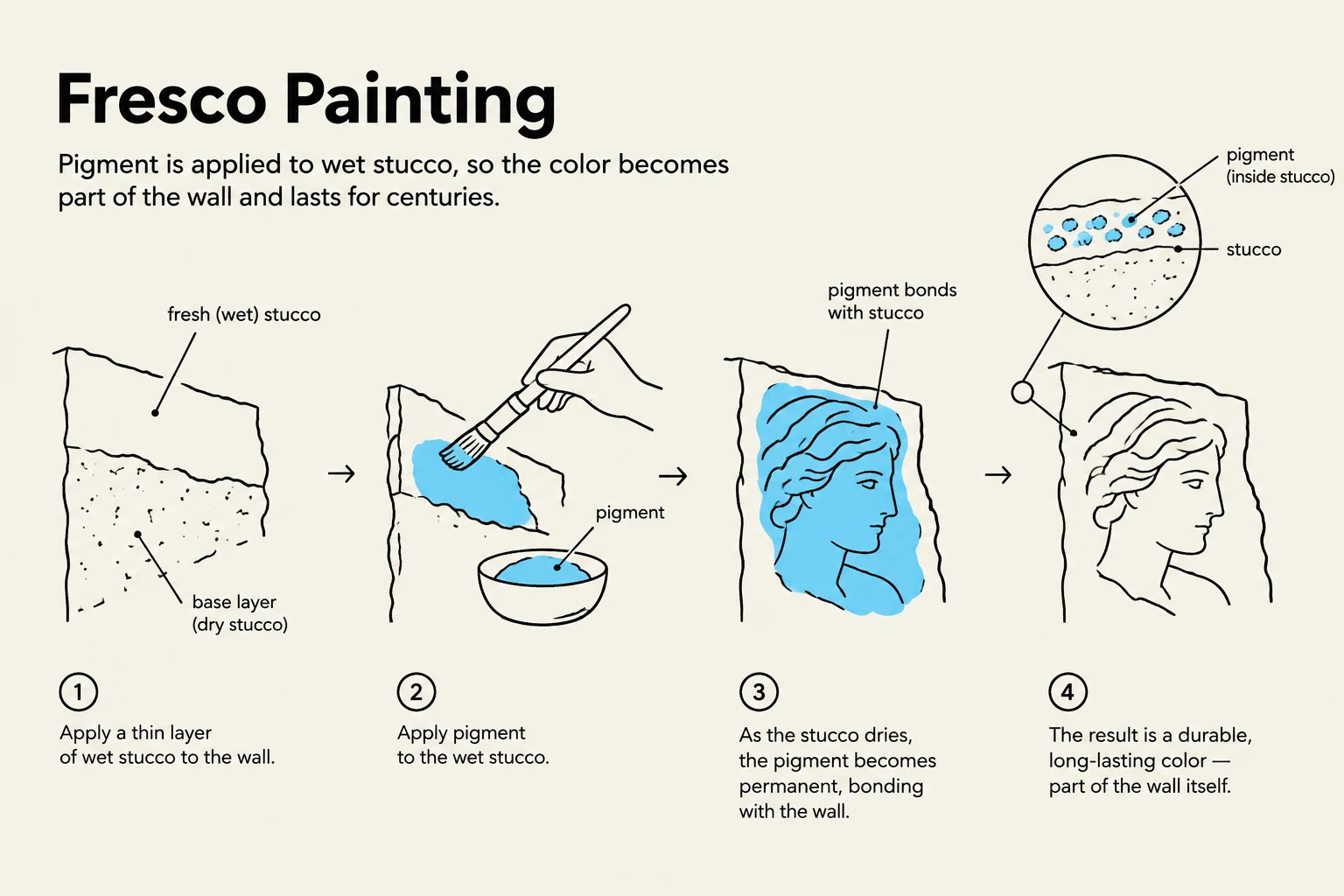
To achieve the vibrant colors seen in Minoan wall art, artists utilized the fresco technique. This involves applying pigment onto wet stucco or plaster. Because the paint is absorbed into the wet surface, it becomes a permanent part of the wall rather than just a layer on top, ensuring the colors remain vivid for centuries. These frescoes often focus on female-centric imagery, such as scenes involving medicinal or ritual practices related to fertility and the female experience.
Mycenaean and Iron Age Greek Art: Power and Myth
As we move into the Mycenaean period, art begins to reflect Mycenaean patronage through themes of conflict and strength. The Lion Hunt Blade serves as a ceremonial tool that depicts violence, marking a shift from earlier art where order always triumphed over chaos; here, the depiction of a death suggests a more realistic acknowledgment of the cost of conflict.
Keep reading for free.
Create an account to finish this reading and make it part of your study routine.
Continue reading freeAlready have an account? Log in
Updated