


The innate immune system serves as the body's first line of defense, providing rapid, non-specific protection against a wide array of pathogens. While physical barriers like the skin and mucous membranes act as the initial shield, the body also utilizes specialized chemical substances to actively destroy microbes and inhibit their growth. These antimicrobial substances—specifically the complement system, interferons, and iron-binding proteins—work in concert to neutralize threats before they can establish a systemic infection.
The Complement System
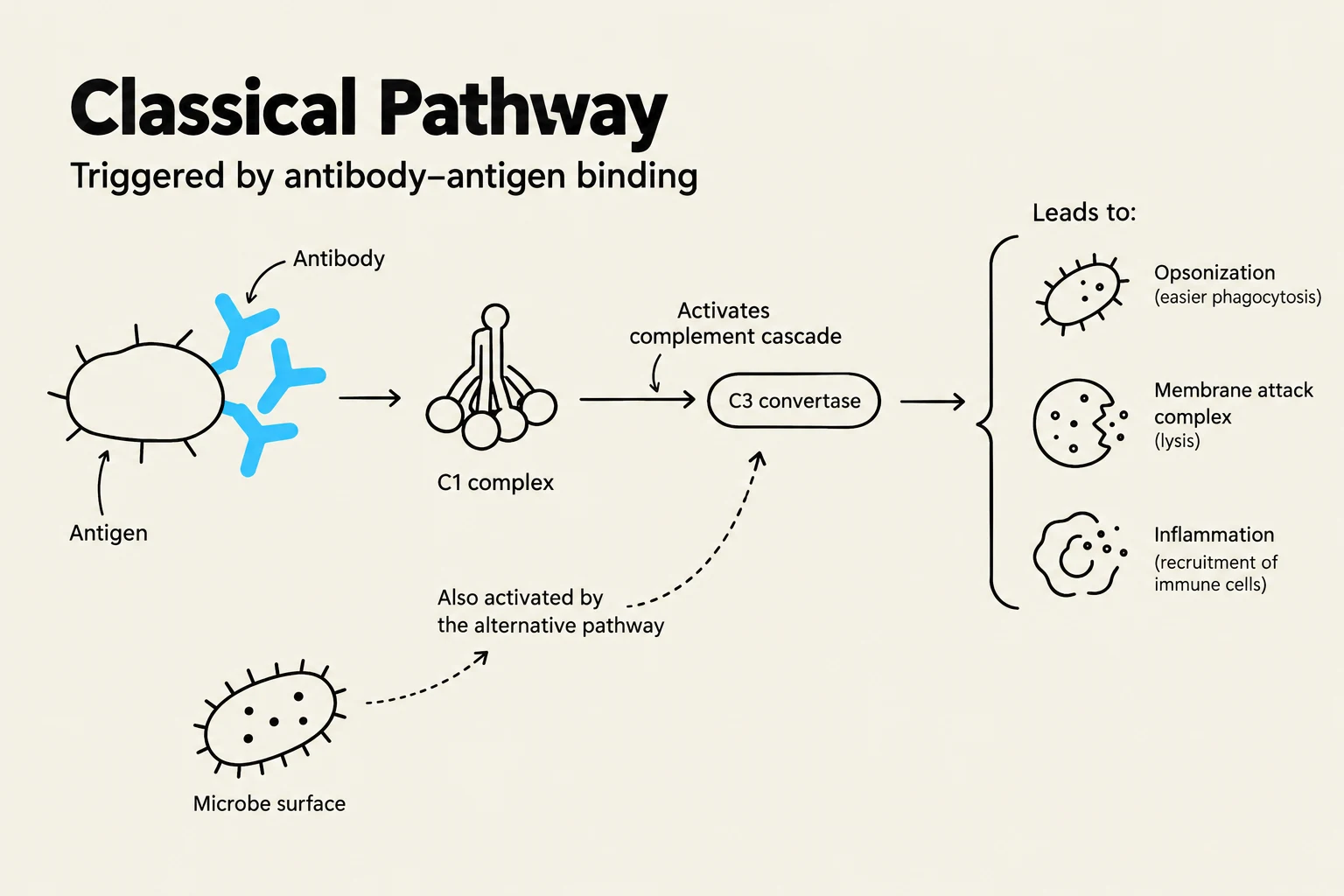
The complement system is a sophisticated group of over 30 serum proteins produced by the liver. These proteins circulate in an inactive state until they encounter a pathogen, at which point they trigger a "cascade" of activation. In this cascade, one activated protein triggers the next in a sequential chain reaction. Proteins in this system are designated with uppercase "C" followed by a number (e.g., C3). When these proteins are cleaved or activated, they are identified by lowercase letters, such as "a" or "b".
There are two primary pathways that initiate this cascade:
- The Classical Pathway: This pathway is triggered when antibodies bind to specific antigens on a microbe's surface. This binding activates the C1 protein, which then splits and activates C2 and C4.
- The Alternative Pathway: This pathway provides a more direct route to activation. It occurs when C3 present in the blood combines directly with factors B, D, and P on the surface of the microbe.
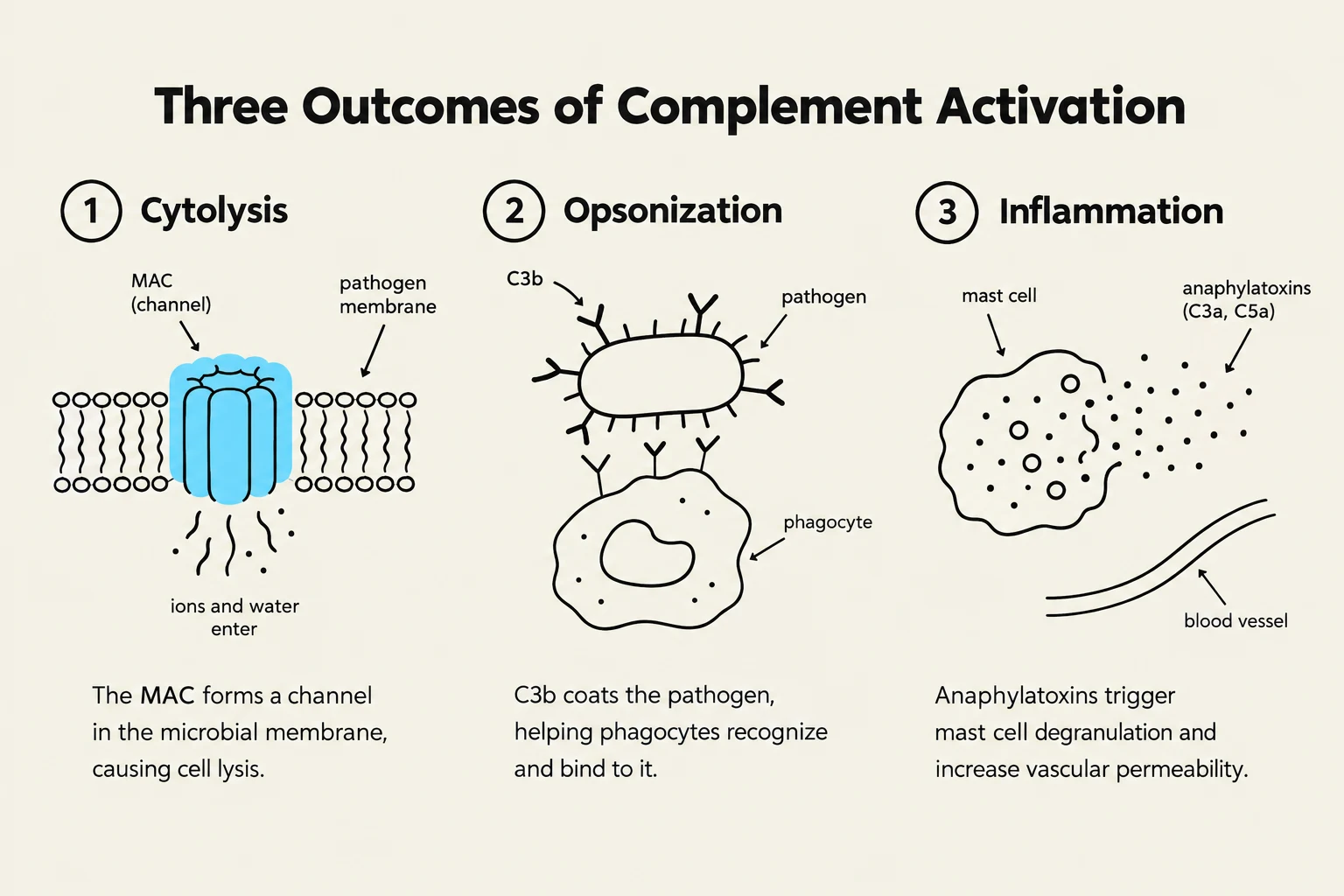
Regardless of how the cascade begins, both pathways converge at the activation of C3, which splits into two critical fragments: C3a and C3b.
Keep reading for free.
Create an account to finish this reading and make it part of your study routine.
Continue reading freeAlready have an account? Log in
Updated