Antimicrobial Resistance and ESBL Pathogens in Dairy Farming: A One Health Perspective
Explores the rise of antimicrobial resistance (AMR) and Extended-Spectrum Beta-Lactamases (ESBLs) in dairy farming, examining the role of antibiotic use in livestock and the mechanisms of resistance spread through horizontal gene transfer. Discusses genomic insights and future directions for managing AMR in a One Healt
The rise of antimicrobial resistance (AMR) is one of the most pressing challenges to global public health. As pathogens evolve to evade the drugs designed to kill them, the mortality rates associated with common infections are projected to increase. This phenomenon is not confined to hospitals; it is a complex web involving humans, animals, and the environment. By applying a One Health framework, researchers can better understand how antibiotic use in livestock, such as dairy cows, creates reservoirs of resistant bacteria that can eventually impact human medicine.
The Threat of Enterobacteriaceae and ESBLs
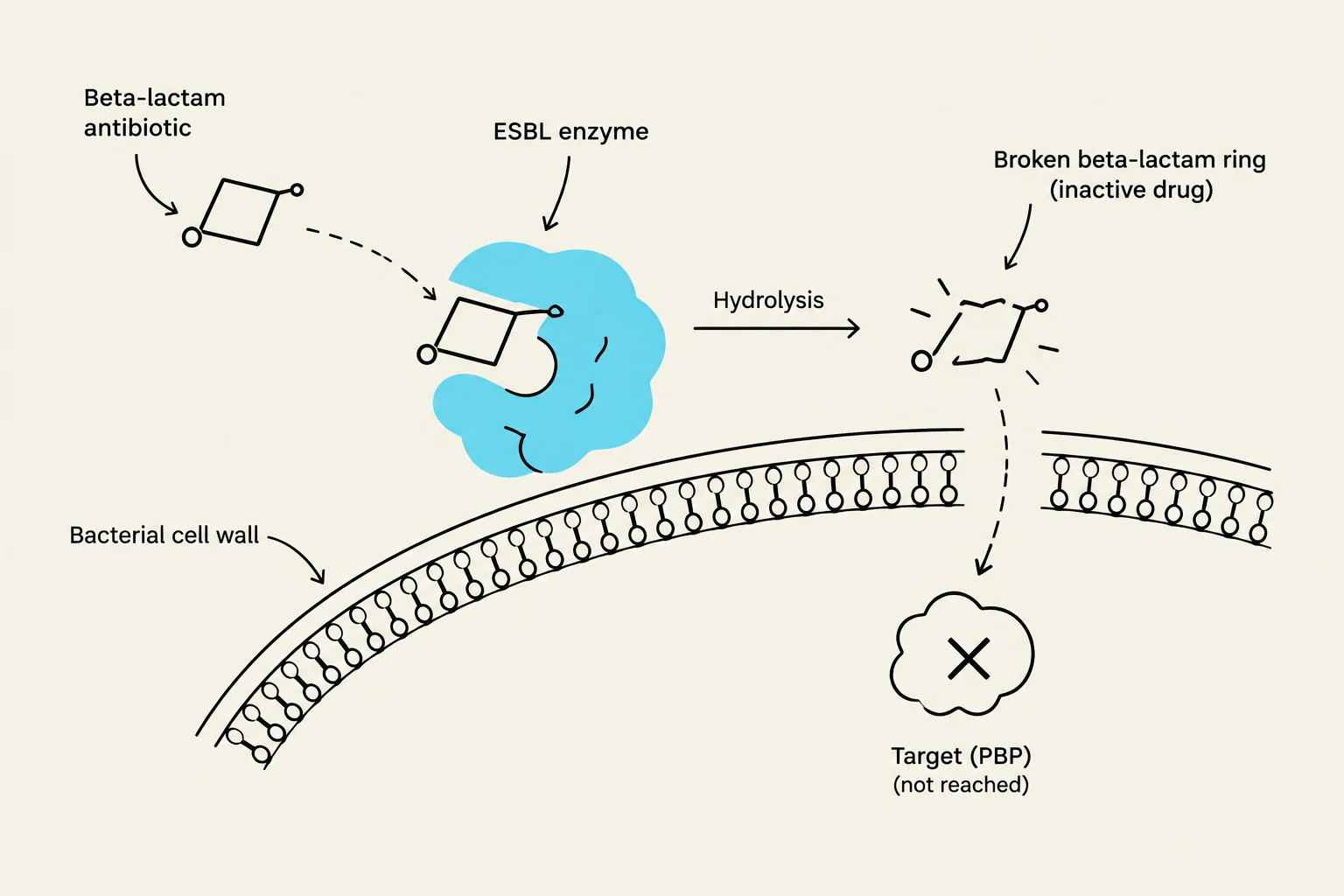
This diagram illustrates how the ESBL enzyme hydrolyzes a beta-lactam antibiotic, rendering it inactive and unable to reach its target (PBP) on the bacterial cell wall.
At the heart of the AMR crisis are members of the Enterobacteriaceae family. This group includes notorious pathogens such as Salmonella, Klebsiella, and Escherichia coli (E. coli).
A primary driver of resistance within this family is the production of Extended-Spectrum Beta-Lactamases (ESBLs). These are specialized enzymes produced by bacteria that hydrolyze (break down) beta-lactam antibiotics, including many common penicillins and cephalosporins. When bacteria produce these enzymes, standard antibiotic treatments may fail, leaving clinicians with fewer options for treating infections.
Antibiotic Administration in Dairy Herd Management
Comparison of localized versus systemic antibiotic dissemination in cows.
In dairy farming, antibiotics are frequently used as part of standard management strategies. Research indicates that approximately 90% of dairy farms report using antibiotics like ceftiofur. The method of administration significantly influences how the antibiotic is distributed within the animal and how it might drive resistance:
Intramammary Administration: This is often used prophylactically to treat subclinical mastitis during the "dry-out" period. The antibiotic is flushed directly into the milk canal, resulting in localized dissemination.
Intramuscular Administration: This is used for the systemic treatment of clinical infections, such as metritis (an inflammatory infection of the uterus following birth), foot rot, or respiratory diseases. Because the drug enters the bloodstream, it results in systemic dissemination.
Study Note: Metritis
Metritis is a significant concern in dairy management, affecting between 10% and 25% of lactating herds. It is an inflammatory bacterial infection of the uterus that occurs after a cow has given birth, often requiring antibiotic intervention.
Identifying Resistant Isolates: E. coli and MDR
When researchers examine the bacteria recovered from cows treated with ceftiofur, a clear pattern emerges. In both studied herds, the overwhelming majority of ceftiofur-resistant isolates were identified as E. coli.
While these specific E. coli isolates were not classified as "diogenic" (pathogenic to humans), they exhibited significant multidrug resistance (MDR). This means the bacteria were not just resistant to ceftiofur, but also to multiple other classes of antibiotics.
Comparing Treatment vs. Control
The presence of ESBL-producing bacteria varies depending on whether the cow received antibiotic treatment:
In Study 1 (Intramammary focus): There was a significant difference between groups. Approximately 53% of isolates from treated cows were ESBL-positive, compared to only 30% in the control group.
In Study 2 (Intramuscular focus): While treated cows showed a slightly higher percentage of ESBL-positive isolates (40% vs 32%), the difference was not statistically significant.
The Risk of Horizontal Gene Transfer
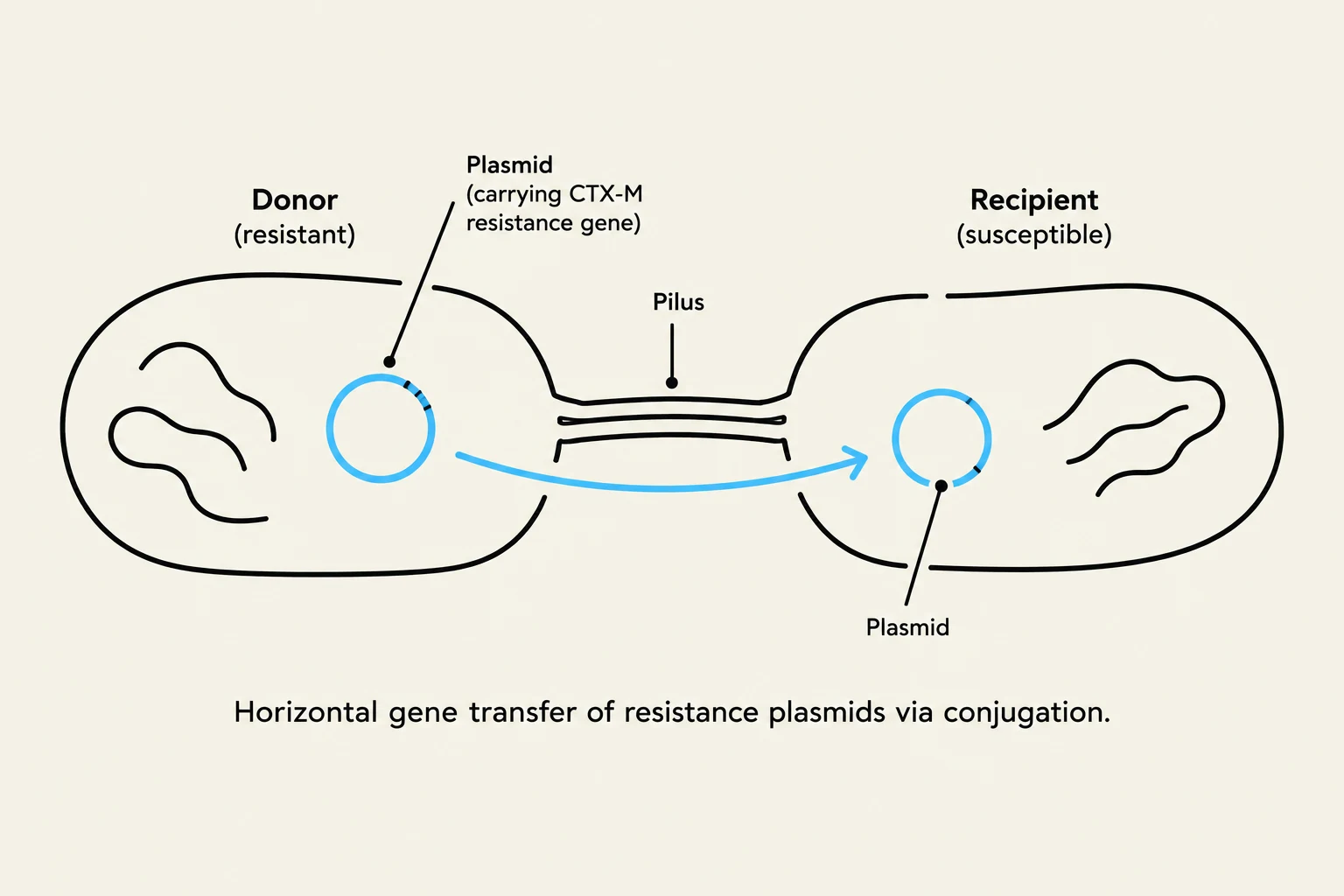
Diagram illustrating horizontal gene transfer of resistance plasmids between bacteria via conjugation, showing a donor cell transferring a plasmid to a recipient cell through a pilus.
Perhaps the most concerning aspect of AMR is not just the presence of resistant bacteria, but their ability to "share" resistance with other bacteria through horizontal gene transfer (HGT). Resistance genes, such as those for CTX-M and other ESBLs, are often located on plasmids—small, circular pieces of DNA that can move between different bacterial cells.
To test this, researchers used conjugation assays via the filter paper mating method. They used the ceftiofur-resistant E. coli from the cows as "donors" and a susceptible lab strain (E. coli K-12) as the "recipient".
Key Findings from Conjugation Assays:
High Transfer Rates: Three-quarters of the ceftiofur-resistant isolates were capable of transferring their resistance to the susceptible recipient strain.
The CTX-M Factor: The frequency of transfer was significantly higher when the donor isolates were CTX-M positive.
This suggests that strains carrying CTX-M genes pose a heightened risk for disseminating resistance throughout bacterial populations, potentially moving from the farm environment into human populations.
Genomic Insights and Future Directions
Recent genomic work using hybrid long-read and short-read sequencing has provided a deeper look at the diversity of these pathogens. Preliminary findings show:
Diversity of Sequence Types: Study 1 (intramammary) showed a higher diversity of E. coli sequence types (17 types) compared to Study 2 (7 types), suggesting different circulation patterns.
Plasmid Complexity: Many of the detected plasmids belong to multi-replicon types (such as IncN or IncF), which are known for their ability to carry multiple resistance genes simultaneously.
Understanding whether the same bacterial clones or the same plasmids are circulating within a herd over time is the next frontier in managing AMR. This knowledge is vital for developing better treatment protocols and minimizing the environmental impact of antibiotic use in agriculture.
Summary for Students
When studying AMR in a One Health context, remember the "Three Pillars":
The Pathogen:Enterobacteriaceae (like E. coli) producing ESBL enzymes.
The Driver: Antibiotic use (Intramammary vs. Intramuscular) in livestock.
The Mechanism: Horizontal gene transfer via plasmids (specifically CTX-M genes).
Keep reading for free.
Create an account to finish this reading and make it part of your study routine.