


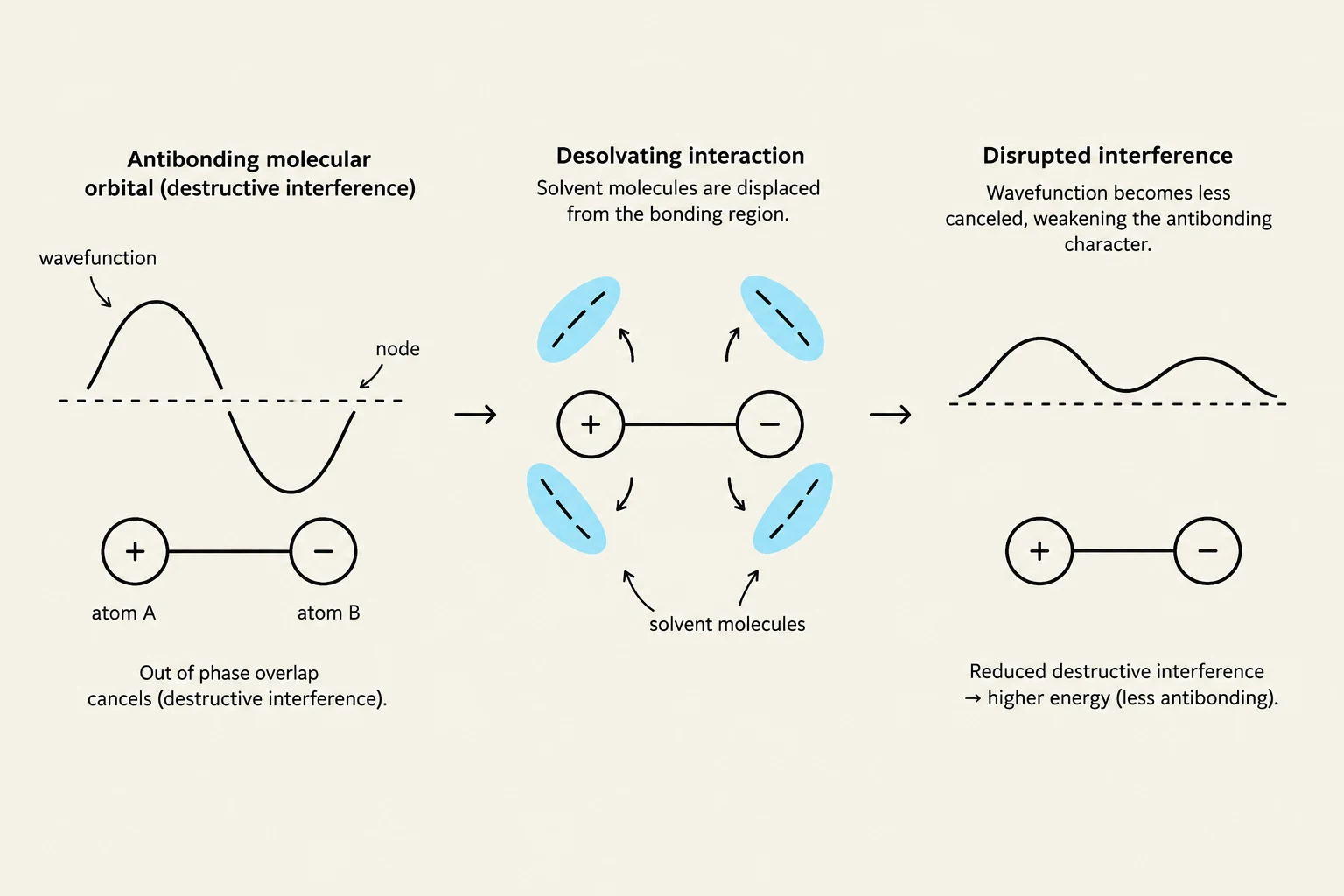
In the study of molecular orbital (MO) theory, understanding how atoms combine to form molecules requires a deep dive into the behavior of electron waves. While bonding orbitals facilitate the stability of a molecule by increasing electron density between nuclei, antibonding orbitals represent a state of higher energy and potential instability. A unique phenomenon occurs during specific chemical environments, such as a desolvating interaction, where the standard rules of orbital formation undergo a significant shift.
The Fundamentals of Atomic Orbital Overlap
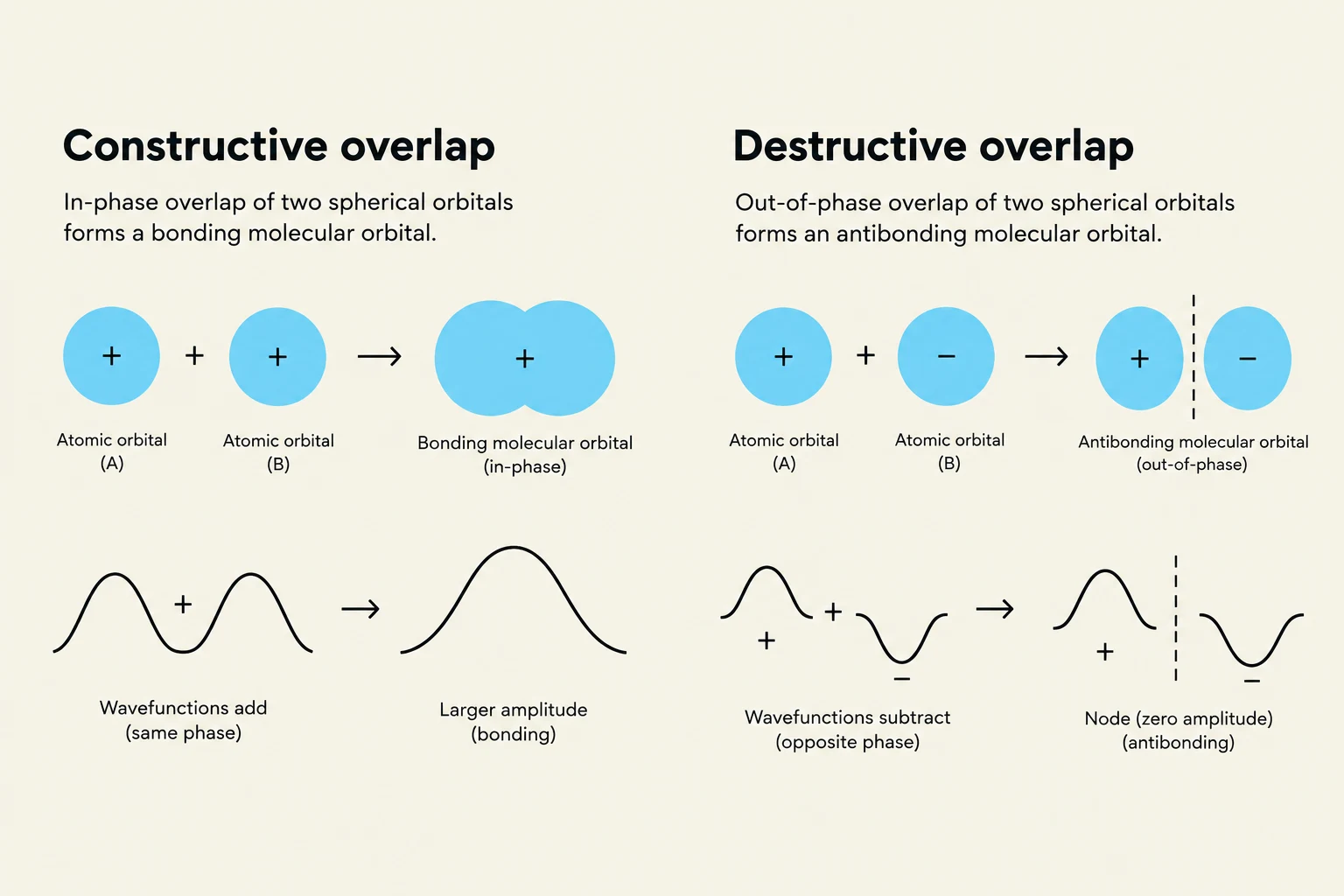
Molecular orbitals are not simply "new" containers for electrons; they are the mathematical result of the interaction between atomic orbitals (AOs) from individual atoms. When two atoms approach one another, their respective atomic wavefunctions begin to interfere with each other. This interference is governed by the principle of superposition.
The degree to which these orbitals interact is known as the overlap. Depending on the phase of the wavefunctions, this overlap can be either constructive or destructive. In constructive overlap, the wavefunctions add together, increasing the probability of finding an electron between the nuclei, which leads to a bonding molecular orbital. Conversely, destructive overlap occurs when the wavefunctions are out of phase, leading to a node—a region of zero electron density—between the nuclei.
Keep reading for free.
Create an account to finish this reading and make it part of your study routine.
Continue reading freeAlready have an account? Log in
Updated