This content explores how antibiotics work, the development of antibiotic resistance, and the clinical implications of pathogens like Clostridioides difficile. It covers antimicrobial agents, mechanisms of action, resistance strategies, and treatments like Fecal Microbiota Transplantation.
Antibiotics are among the most significant advancements in medical history, serving as the cornerstone for modern procedures such as organ transplantation, cancer chemotherapy, and invasive surgeries. However, the efficacy of these drugs is constantly threatened by the natural evolution of bacteria. Understanding the distinction between different antimicrobial agents, the mechanisms by which antibiotics function, and the biological strategies bacteria use to resist them is essential for clinical practice and public health.
Antimicrobial Agents: A Distinction
In microbiology, it is crucial to distinguish between agents based on their application and origin:
Disinfectants: Antimicrobial agents applied to inanimate objects, such as floors, tables, or walls.
Antiseptics: Antimicrobial agents that are non-toxic enough to be applied to living tissues, such as hand sanitizers.
Antibiotics: Antimicrobial agents produced by bacteria and fungi that are exploited by humans for therapeutic use, delivered either topically or internally.
Measuring Antibiotic Efficacy
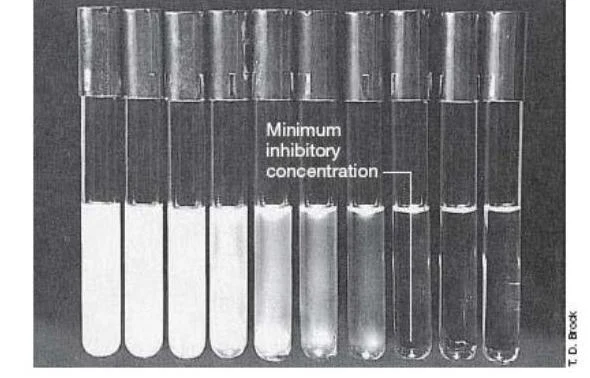
To determine how effective a specific drug is against a pathogen, clinicians and microbiologists use Antibiotic Susceptibility Testing. One of the most critical metrics in this process is the Minimum Inhibitory Concentration (MIC).
The MIC is defined as the lowest concentration of an agent that inhibits visible bacterial growth. This can be determined using several methods:
Culture Tubes: A series of tubes containing varying concentrations of the antibiotic; the MIC is the lowest concentration where no growth is observed.
Antibiotic Strips (Etest): A faster method using strips with a pre-defined concentration gradient.
This image illustrates the concept of minimum inhibitory concentration, showing a series of test tubes with varying concentrations of a substance, likely an antibiotic, and their effect on microbial growth.
Mechanisms of Antibiotic Action
Antibiotics work by targeting essential bacterial components that are either absent or significantly different in eukaryotic (human) cells. Common targets include:
Cell Wall Synthesis Inhibition: Targeting the peptidoglycan layer.
Protein Synthesis Inhibition: Targeting bacterial ribosomes.
Focus on Cell Wall Synthesis: β-lactams and Vancomycin
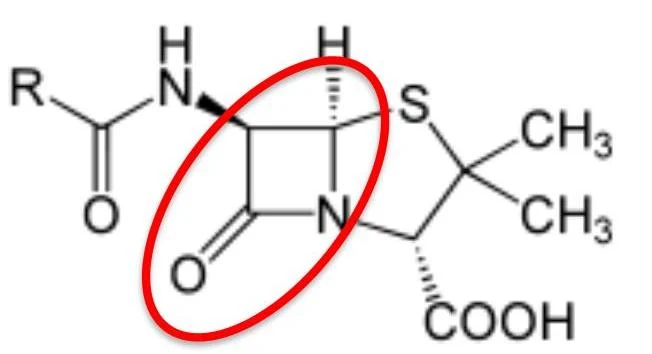
The bacterial cell wall is a primary target for many drugs. β-lactam antibiotics, such as Penicillin, contain a β-lactam ring that binds to bacterial "penicillin-binding proteins" (PBPs), which are transpeptidases responsible for creating peptide cross-links in the cell wall. Without these cross-links, the cell wall becomes weak, leading to cell death.
Chemical structure of penicillin, highlighting the beta-lactam ring.
Some bacteria develop resistance by producing β-lactamase, an enzyme that destroys the β-lactam ring. To combat this, chemically modified penicillins like Methicillin were developed; these cannot be cleaved by β-lactamases. However, bacteria can further adapt by producing alternative PBPs (such as PBP2a, encoded by the mec gene) that the drug cannot bind to.
Another critical drug for Gram-positive bacteria is Vancomycin, a glycopeptide antibiotic. It inhibits cell wall synthesis by binding to the terminal D-Ala-D-Ala residues of the peptide linkage. Resistance occurs when bacteria use van genes to change these residues to D-Ala-D-Lac, preventing the drug from binding.
The Rise of Antibiotic Resistance
Antibiotic resistance is a consequence of natural selection. When a population of bacteria is exposed to an antibiotic, the susceptible cells die, but those with resistant traits survive and multiply. This process is accelerated by the misuse of antibiotics, including:
Empiric (blinded) use and overreliance on broad-spectrum agents.
Prescribing antibiotics for viral infections.
Patients failing to complete a full course of treatment.
The use of antibiotics in animal feed.
Genetic Mechanisms of Resistance
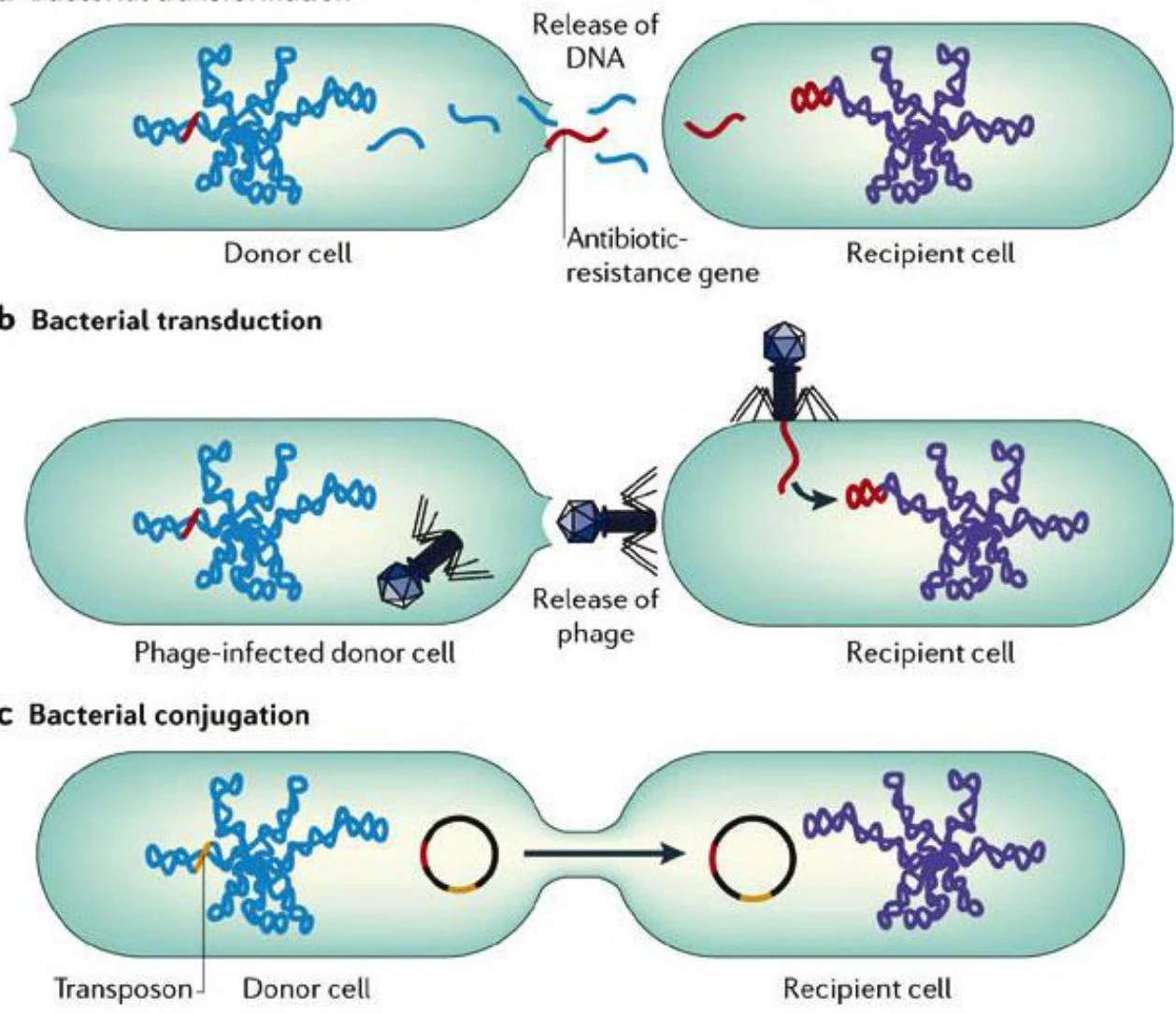
Resistance is not just a result of random mutations; it is often genetically encoded via plasmids (mobile genetic elements). These elements allow for horizontal gene transfer, where bacteria acquire new resistance genes from other bacteria through mechanisms like conjugation, transformation, or transduction.
Diagrams illustrating three mechanisms of bacterial genetic exchange: transformation, transduction, and conjugation.
Bacteria employ several active strategies to survive:
Prevention of entry: Using outer membranes (in Gram-negatives) to block the drug.
Modification: Using enzymes like β-lactamase.
Efflux: Actively pumping the antibiotic out of the cell.
Target Alteration: Modifying PBPs or ribosomes.
Bypassing: Using alternative metabolic pathways (e.g., environmental folic acid).
The ESKAPE Pathogens
The most concerning resistant bacteria are often grouped as the ESKAPE pathogens, which include:
Enterococcus faecium
Staphylococcus aureus
Klebsiella pneumoniae: A Gram-negative bacterium known for producing carbapenemase (such as NDM-1), leading to carbapenem-resistant Enterobacteriaceae (CRE).
Acinetobacter baumannii
Pseudomonas aeruginosa
Enterobacter species.
Clinical Implications: Clostridioides difficile
A significant side effect of broad-spectrum antibiotic use is the disruption of the normal intestinal microbiota. When the "good" bacteria are suppressed, opportunistic pathogens like Clostridioides difficile (C. diff) can overgrow.
C. diff is a Gram-positive, spore-forming anaerobe that can exist as an asymptomatic carrier or cause life-threatening pseudomembranous colitis. This inflammatory condition is characterized by diarrhea, abdominal pain, and fever. The damage is mediated by exotoxins (specifically A-B toxins). The "B" domain of the toxin facilitates entry into the host cell, while the "A" domain inactivates regulatory proteins, causing cell death and inflammation.
Clinical Note: In cases of C. diff infection, clinicians should avoid antidiarrheal agents, as these can decrease the clearance of toxins from the body.
Treatment and Fecal Microbiota Transplantation (FMT)
While specific antibiotics like oral vancomycin or metronidazole are used to treat C. diff, a highly effective treatment for recurrent infections is Fecal Microbiota Transplantation (FMT). FMT involves infusing donor feces into the patient to restore the diversity of the gut microbiome.
Clinical studies have shown that FMT is significantly more effective than standard vancomycin therapy alone. For example, one study reported an 81% resolution rate after the first infusion of donor feces, compared to much lower success rates for vancomycin alone.
Exam Tip: Remember that C. diff is not considered an invasive bacterium; rather, its pathogenicity is driven by the production of exotoxins that damage the intestinal lining.
Keep reading for free.
Create an account to finish this reading and make it part of your study routine.