


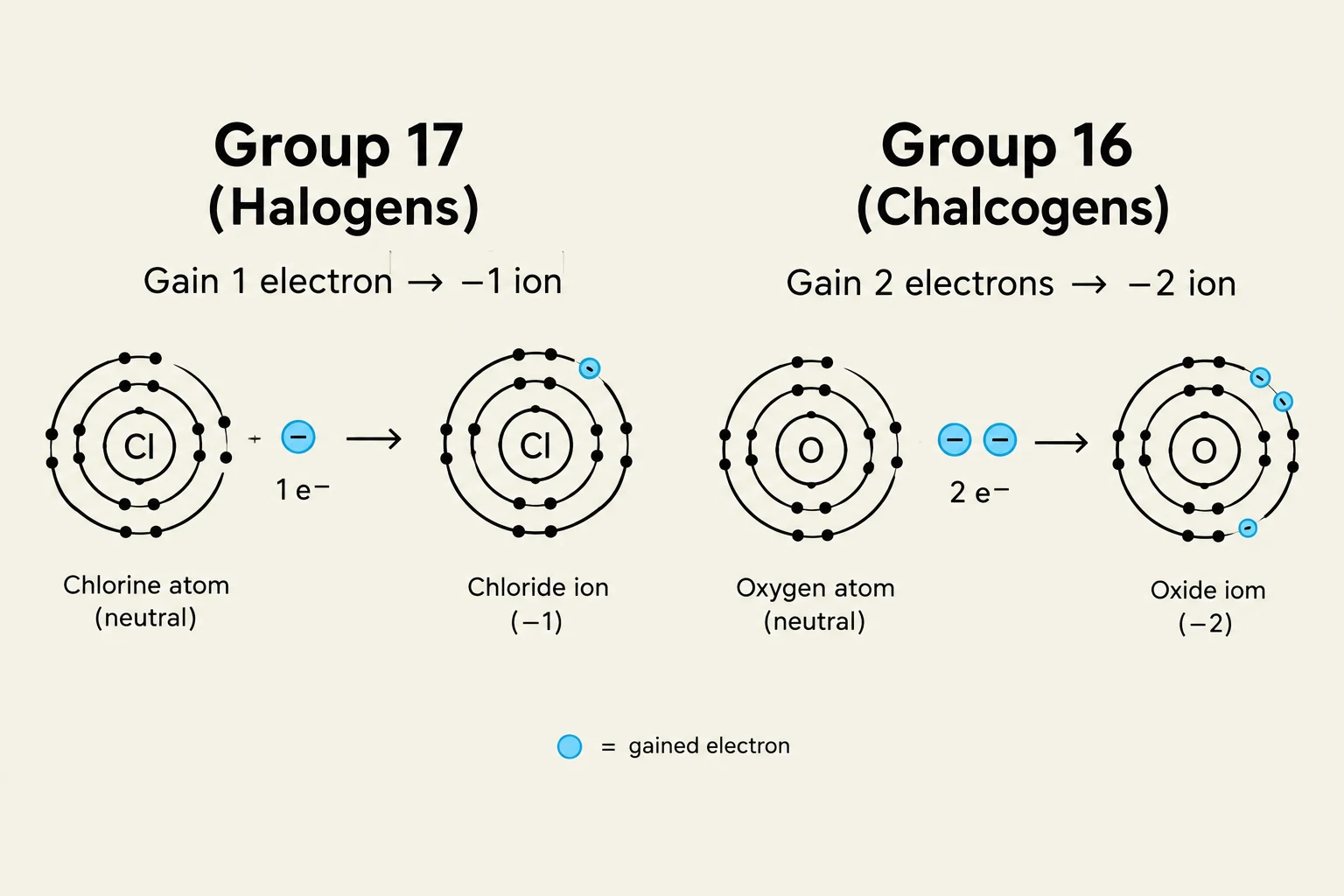
In the world of chemistry, atoms are constantly seeking stability. Most atoms are not "happy" in their neutral state; they possess incomplete outer electron shells that make them chemically reactive. To achieve a stable electron configuration—usually resembling the noble gases—many atoms undergo a process of gaining or losing electrons. When a neutral atom gains one or more electrons, it acquires a net negative charge. This negatively charged particle is known as an anion.
The Drive for Stability: The Octet Rule
The fundamental driver behind anion formation is the Octet Rule. This rule states that atoms are most stable when their outermost (valence) shell is full, typically containing eight electrons. For many nonmetals, the valence shell is just one or two electrons short of this magic number.
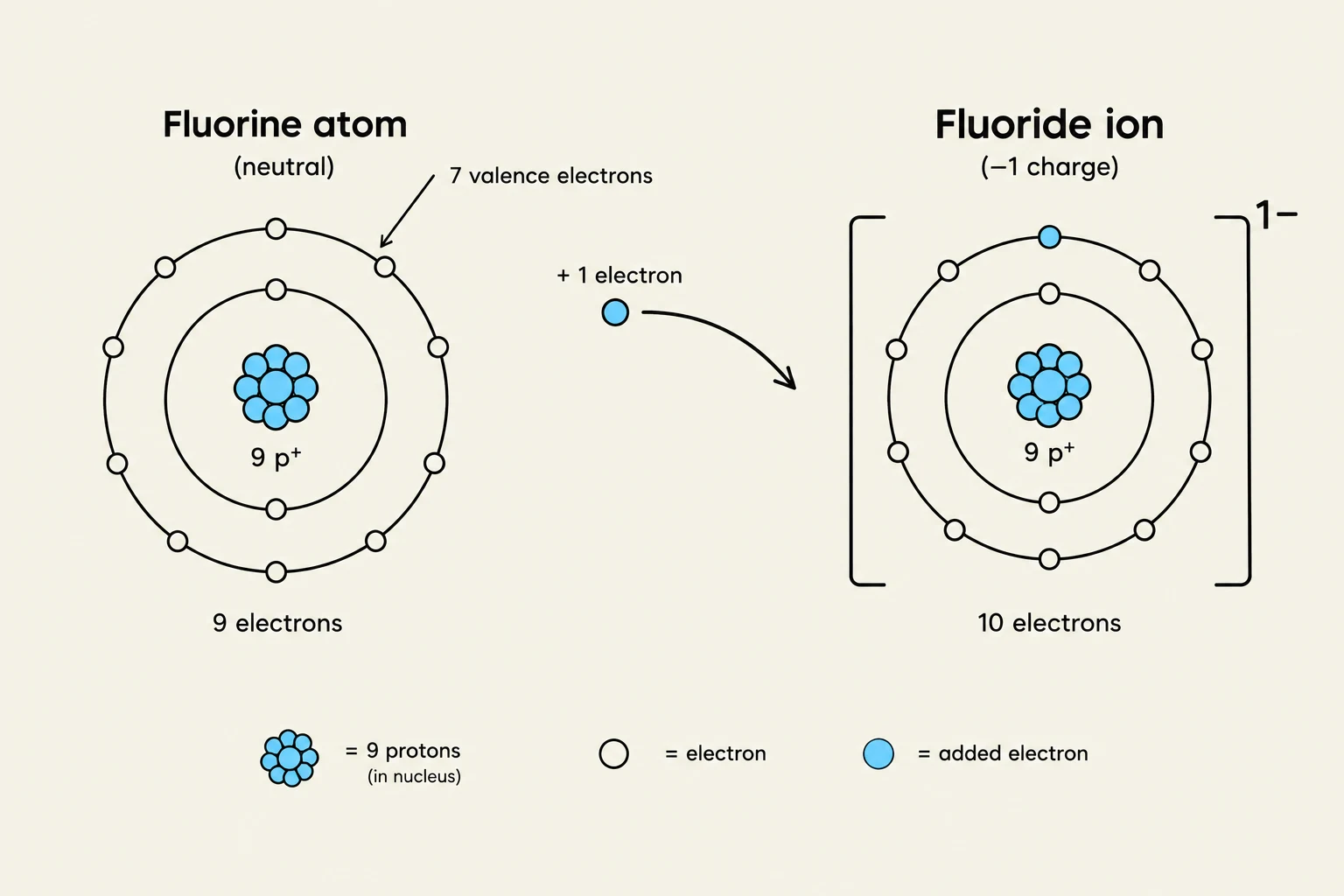
Because electrons carry a negative charge, adding an electron to a neutral atom increases the total number of negative charges relative to the positive protons in the nucleus. This imbalance results in an ion. The process can be represented by a general equation:
Where represents the number of electrons gained.
Exam Tip: Always remember that the charge of an anion is determined by the difference between the number of protons (positive) and the number of electrons (negative). If an atom has 9 protons and gains 1 electron, it has 10 electrons, resulting in a $1-$ charge.

Keep reading for free.
Create an account to finish this reading and make it part of your study routine.
Continue reading freeAlready have an account? Log in
Updated