Animal Maintenance Feeding and Nutrient Requirements
Explores the physiological basis of maintenance feeding in animal science, comparing different rearing systems, and detailing energy, protein, and water requirements for non-ruminant species like poultry and pigs.
In animal science, understanding the distinction between nutrients required for survival and those required for production is fundamental to successful livestock management. Whether managing a flock of poultry or a herd of pigs, a nutritionist must first ensure that the animal's "maintenance" needs are met before addressing growth, reproduction, or milk production. This article explores the physiological basis of maintenance feeding, compares different rearing systems, and details the specific energy, protein, and water requirements for non-ruminant species like poultry and pigs.
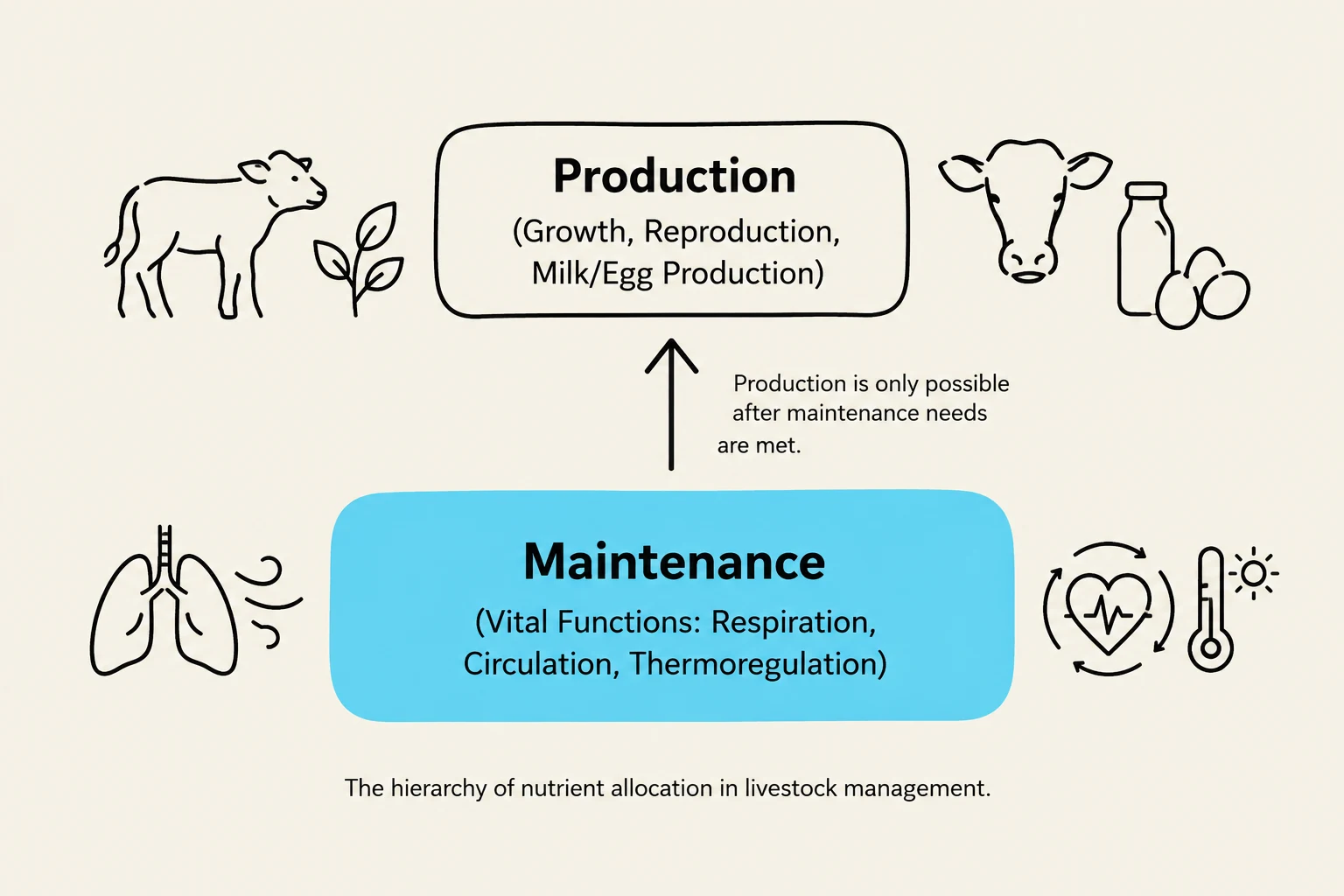
This diagram illustrates the hierarchy of nutrient allocation in livestock management, distinguishing between maintenance needs (vital functions like respiration, circulation, and thermoregulation) and production needs (growth, reproduction, and product output).
Understanding Maintenance Requirements
Maintenance requirements refer to the nutrients necessary to maintain an animal's current body weight and support vital physiological functions. These functions include respiration, circulation, digestion, and thermoregulation, as well as the replacement of lost tissues such as skin and hair.
It is important to note that when an animal is fed strictly for maintenance, no gain in weight or production (such as eggs or milk) is expected. Several factors influence these requirements, including:
Body weight and surface area
Environmental temperature
Activity level
Breed and genetics
Health status and diet digestibility
Grazing vs. Stall-fed Systems
The method by which animals access their nutrients significantly impacts their physiological needs and management complexity.
Grazing systems involve animals foraging on pasture. While this can be cost-effective, grazing animals often have higher energy and water requirements due to increased movement and exposure to environmental fluctuations. Furthermore, monitoring individual nutrient intake is more difficult, often necessitating supplementation.
Stall-fed systems involve animals kept in controlled housing. This method allows for precise feeding and easier monitoring of intake, enabling the nutritionist to provide exact nutrient densities tailored to the animal's specific stage of life.
Energy Requirements in Non-Ruminants
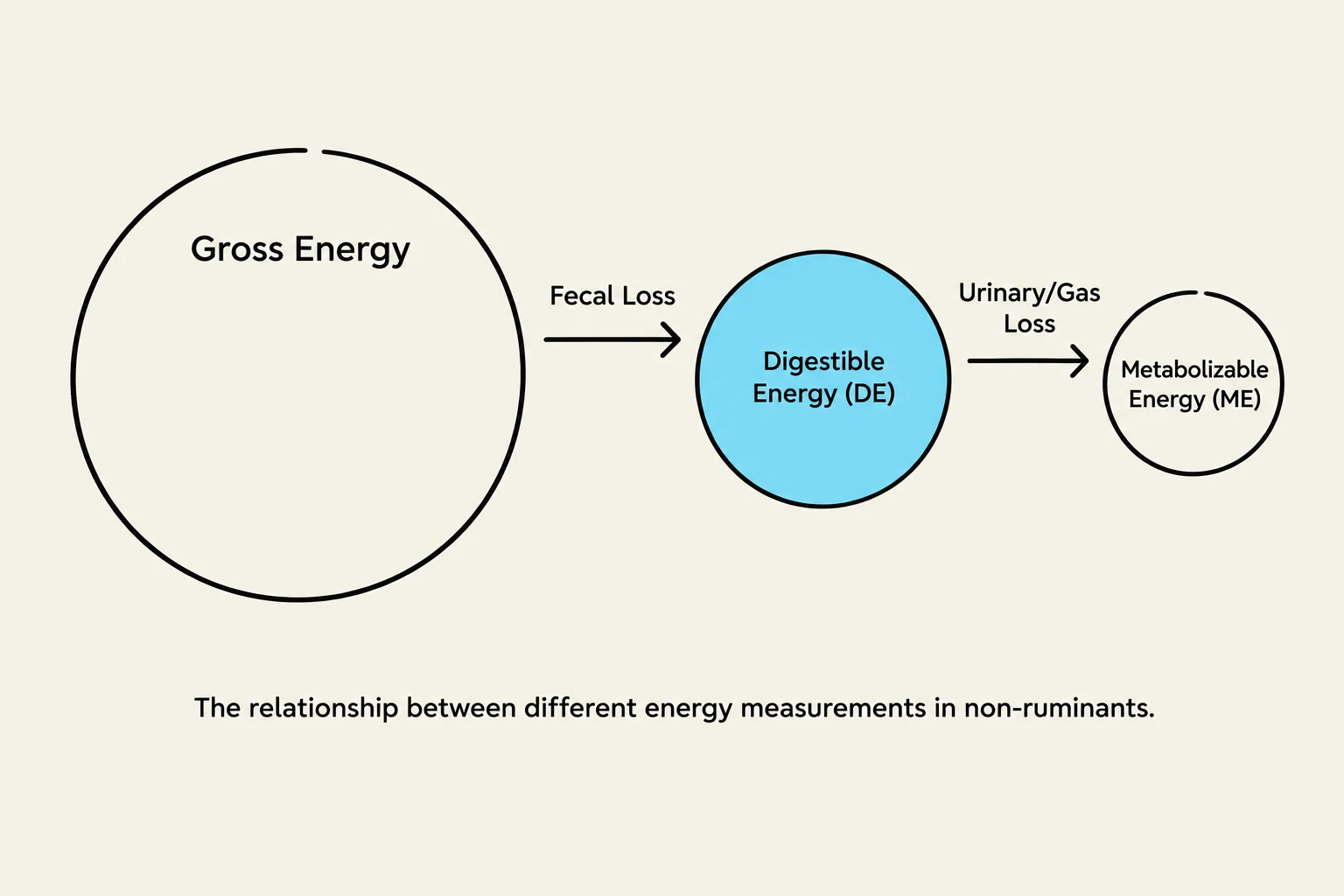
The relationship between different energy measurements in non-ruminants.
For non-ruminant animals like pigs and poultry, energy is a primary driver of metabolic processes. Unlike ruminants, who often use Net Energy (NE) systems, non-ruminants rely on two main energy measurements:
Digestible Energy (DE): The energy remaining after accounting for losses in feces.
Metabolizable Energy (ME): The energy available to the animal after accounting for losses in feces and urine.
In poultry, the Metabolizable Energy (ME) basis is the standard for formulating rations. For pigs, both DE and ME are utilized to ensure the animal has enough energy for maintenance before allocating the remainder to growth or reproduction.
Protein and Essential Amino Acids
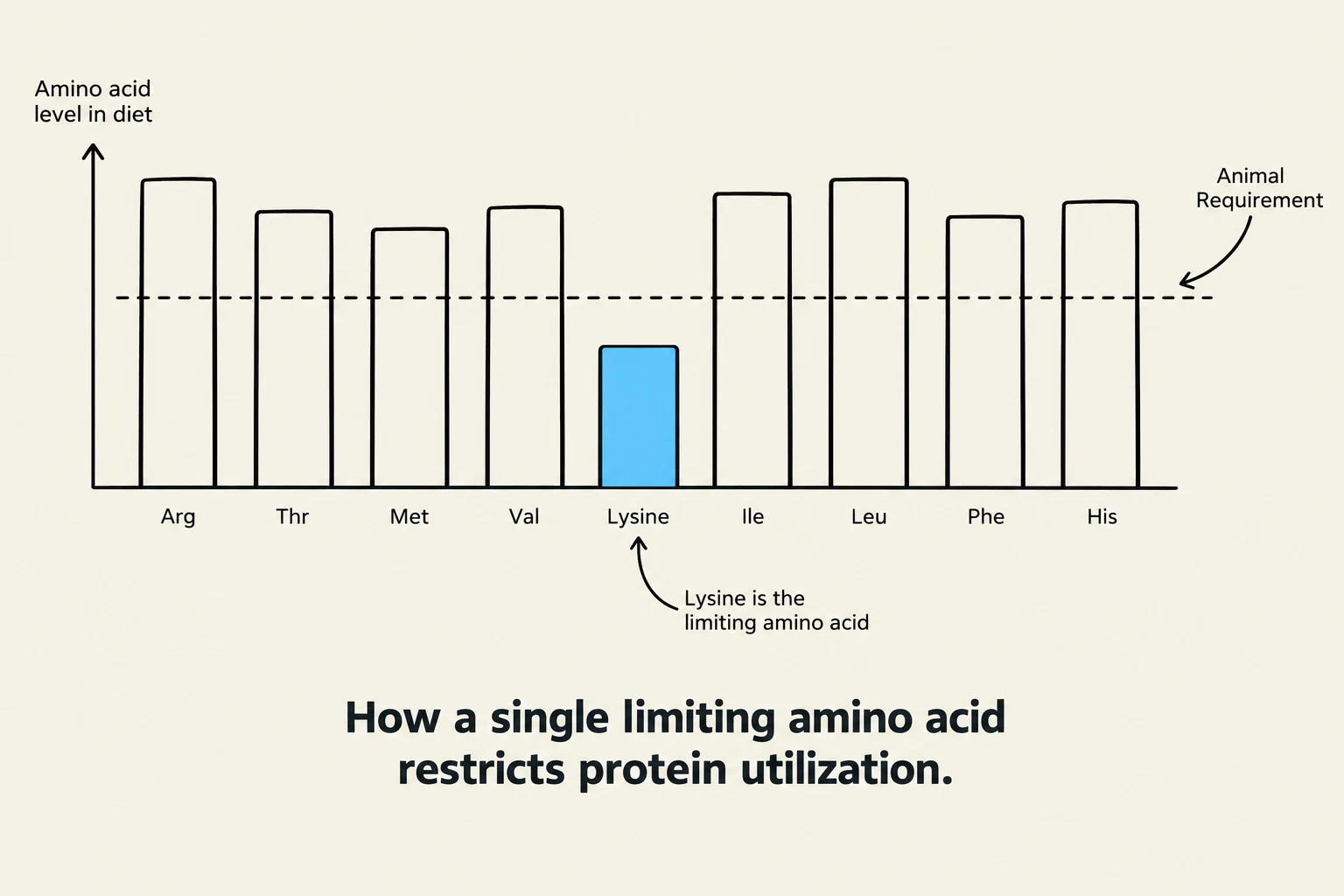
This graph illustrates how the level of different amino acids in a diet relates to animal requirements, highlighting Lysine as a limiting amino acid that restricts protein utilization.
Protein is essential for the synthesis and maintenance of tissues. In nutritional formulation, protein is often expressed as Crude Protein (CP), which is an estimate of total nitrogen content.
However, for non-ruminants, the quality of the protein is just as important as the quantity. This is because they rely on a specific profile of essential amino acids—nutrients that the animal cannot synthesize itself and must obtain through diet. Key amino acids for pigs and poultry include:
Lysine: Often the first limiting amino acid in many diets.
Methionine: Crucial for protein synthesis and feathering in poultry.
Threonine: Important for gut health and immune function.
Exam Tip: When formulating diets for non-ruminants, always check for "limiting amino acids." If even one essential amino acid (like Lysine) is insufficient, the animal cannot utilize the excess protein provided, leading to wasted nitrogen and increased costs.
Water Requirements
Water is the most vital nutrient, yet it is frequently overlooked in nutritional planning. Requirements vary based on body size, ambient temperature, activity level, and the type of feed being consumed.
Poultry: Generally require 2–3 times their feed intake in water. This requirement increases significantly with ambient temperature.
Pigs: Adult pigs typically require 3–5 liters per day, though this increases substantially for lactating sows.
Species-Specific Maintenance Profiles
Nutrient requirements must be tailored to the specific class of animal to ensure efficiency and prevent health issues.
Poultry
Laying Hens: Maintenance must support both body condition and the high metabolic demand of egg production. They require significant Calcium (3–4%) for shell formation and approximately 200 mL of water daily.
Broilers: While broilers are raised for rapid growth, their nutritional foundation begins with meeting maintenance needs before transitioning to high-energy growth phases.
Breeders: Nutrition for breeders requires a delicate balance between maintaining the parent bird and supporting reproductive health.
Pigs
Sows: Nutrition must account for maintenance plus the massive demands of gestation and lactation.
Boars: Due to their higher activity levels and weight, boars often have higher maintenance needs.
Growers and Finishers: These animals are fed above maintenance levels to promote efficient weight gain.
Nutrient Formulation: A Worked Example
To formulate a ration, one must calculate the requirements based on the animal's physiological status.
Example 1: Adult Pig Maintenance
For an adult pig weighing 100 kg, we might estimate the following:
Digestible Energy (DE): Using a factor of 110 kcal/kg BW0.75DE=110⋅(100)0.75≈3481 kcal/day(Note: The source provides a simplified estimate of ~5000 kcal/day for a 100kg pig depending on specific metabolic factors)
Crude Protein (CP): Using a requirement of ∼0.5 g/kg BWCP=0.5⋅100=50 g/day
Example 2: Laying Hen Maintenance
A laying hen requires a diet balanced for both energy and mineral content to sustain production:
ME: 280–300 kcal/day
CP: 15–18% of the total diet
Calcium (Ca): 3–4% of the diet
Water:∼200 mL/day
By accurately calculating these values, producers can avoid the consequences of poor nutrition, such as stunted growth, weakened bones, or reproductive failure.
Keep reading for free.
Create an account to finish this reading and make it part of your study routine.