


In the evolutionary history of plants, angiosperms (flowering plants) represent a pinnacle of reproductive complexity and efficiency. While gymnosperms paved the way with the development of seeds and pollen, angiosperms refined these processes through specialized structures that facilitate highly efficient pollination and nutrient delivery. Central to this success is the development of two distinct, highly reduced gametophytes: the microgametophyte (male) and the megagametophyte (female).
Understanding these developmental pathways is essential for grasping how flowering plants achieve successful fertilization and produce the complex seeds and fruits that dominate modern ecosystems.
Angiosperm Microgametophyte Development
The male reproductive process begins within the stamen, a modified sporophyll. The development of the microgametophyte occurs within a specialized cavity known as the pollen sac.
From Mother Cells to Microspores
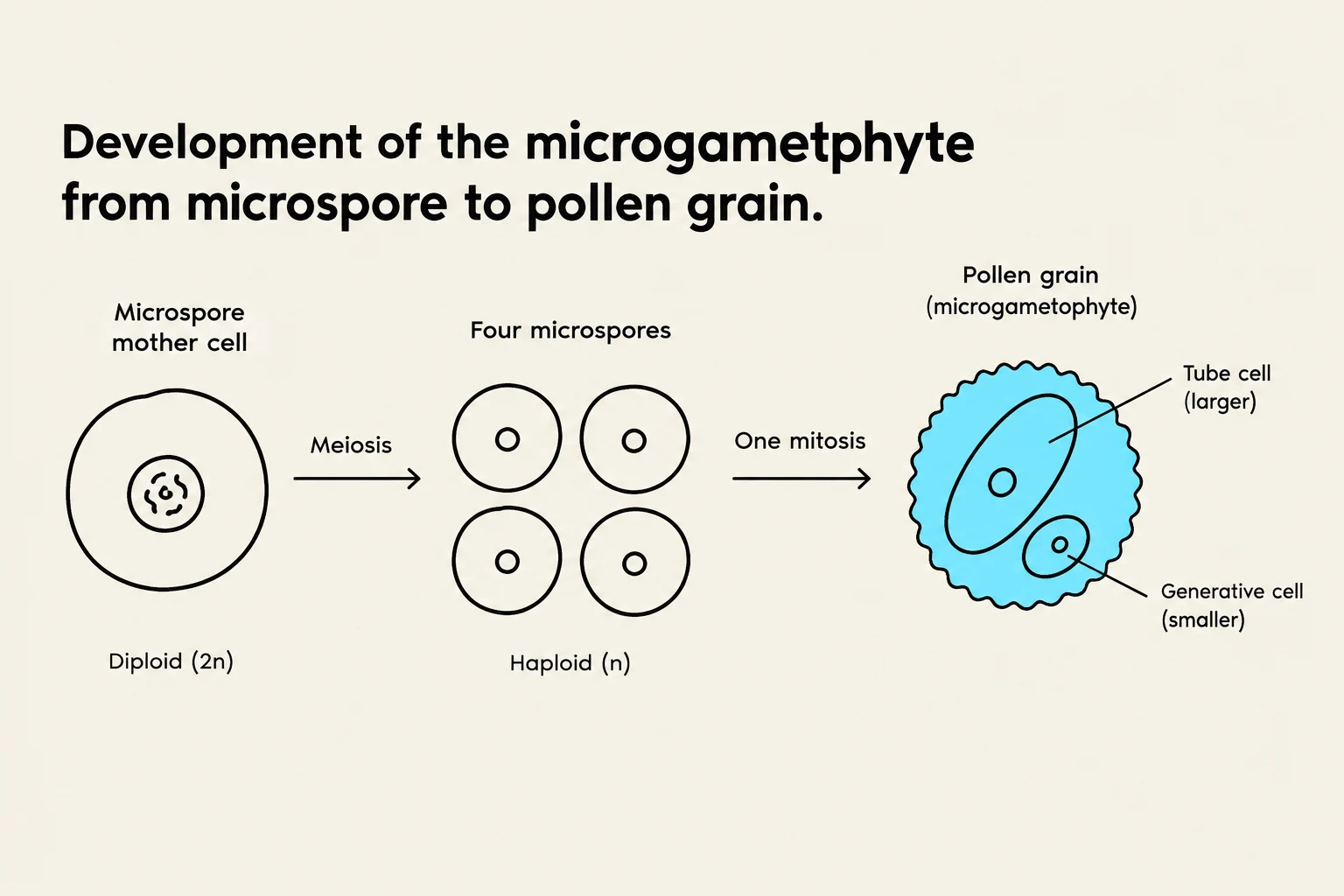
The journey from a diploid sporophyte to a haploid gametophyte begins with the microspore mother cells located inside the pollen sac. These diploid ($2n$) cells undergo meiosis, a reduction division that results in the production of four haploid () microspores.
Mitosis and Cellular Differentiation
Unlike many other plant groups where the gametophyte may be large and independent, the angiosperm microgametophyte is highly reduced. Once the microspores are formed, each individual microspore undergoes a single round of mitosis. This mitotic division results in a multicellular structure—the pollen grain—which contains two specialized haploid cells:
- The Generative Cell: This cell is destined to divide further to form the two sperm nuclei required for the unique process of double fertilization.
- The Tube Cell: This cell is responsible for generating the pollen tube, the structure that will eventually penetrate the female reproductive tissues to deliver the sperm.
Keep reading for free.
Create an account to finish this reading and make it part of your study routine.
Continue reading freeAlready have an account? Log in
Updated