


The pancreas is a unique and complex organ located in the abdomen that serves a dual purpose in human physiology. It functions simultaneously as an exocrine gland, essential for the breakdown of nutrients during digestion, and as an endocrine gland, responsible for regulating blood glucose levels through hormone secretion. Because of these two distinct roles, diseases can affect the pancreas in vastly different ways—some impacting how we process food, and others impacting how our bodies manage energy.
Normal Anatomy and Physiology of the Pancreas
The pancreas is positioned such that it plays a central role in the digestive tract. Anatomically, it is situated near the duodenum (the first part of the small intestine). A critical anatomical relationship exists between the pancreas and the biliary system: the common bile duct, which carries bile from the liver, passes directly through the head of the pancreas. This proximity means that any swelling or growths in the head of the pancreas can obstruct the bile duct, potentially leading to jaundice or other biliary complications.
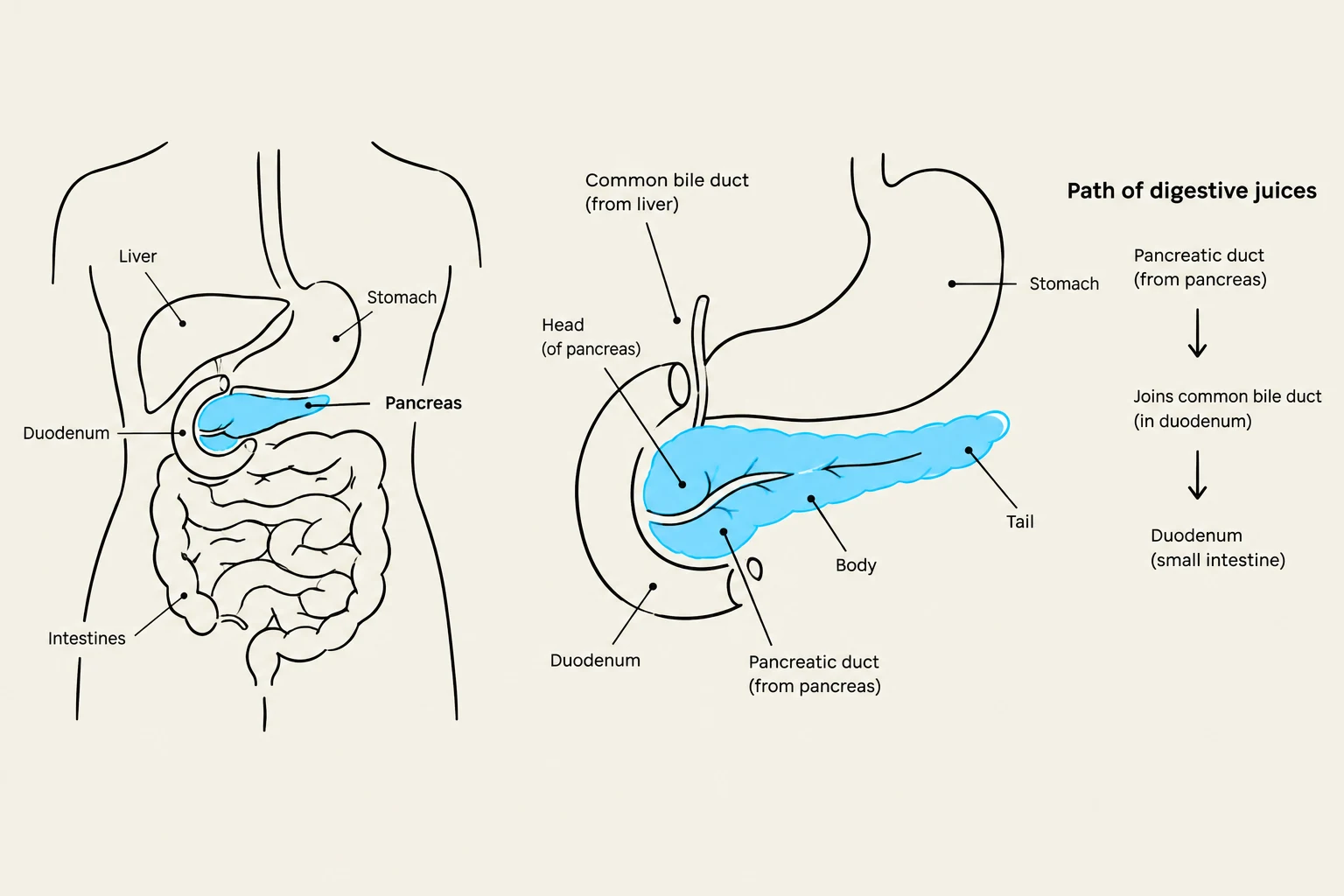
The organ is characterized by its "dual role," meaning it contains two different types of functional tissue: the exocrine system and the endocrine system.
The Dual System: Exocrine vs. Endocrine
To understand pancreatic disease, one must distinguish between these two systems. It is important to note that a disease affecting one system does not necessarily affect the other; for example, a patient may suffer from digestive insufficiency without experiencing issues with insulin production.


Keep reading for free.
Create an account to finish this reading and make it part of your study routine.
Continue reading freeAlready have an account? Log in
Updated