


As you transition from studying the lower body to the upper extremities, you will find that many anatomical concepts feel familiar. The study of the upper limbs follows a structural logic similar to the lower limbs, utilizing comparable terminology and joint classifications. This week, our focus narrows to the complex and highly mobile region of the shoulder, a structure designed to provide a wide range of motion for the arm.
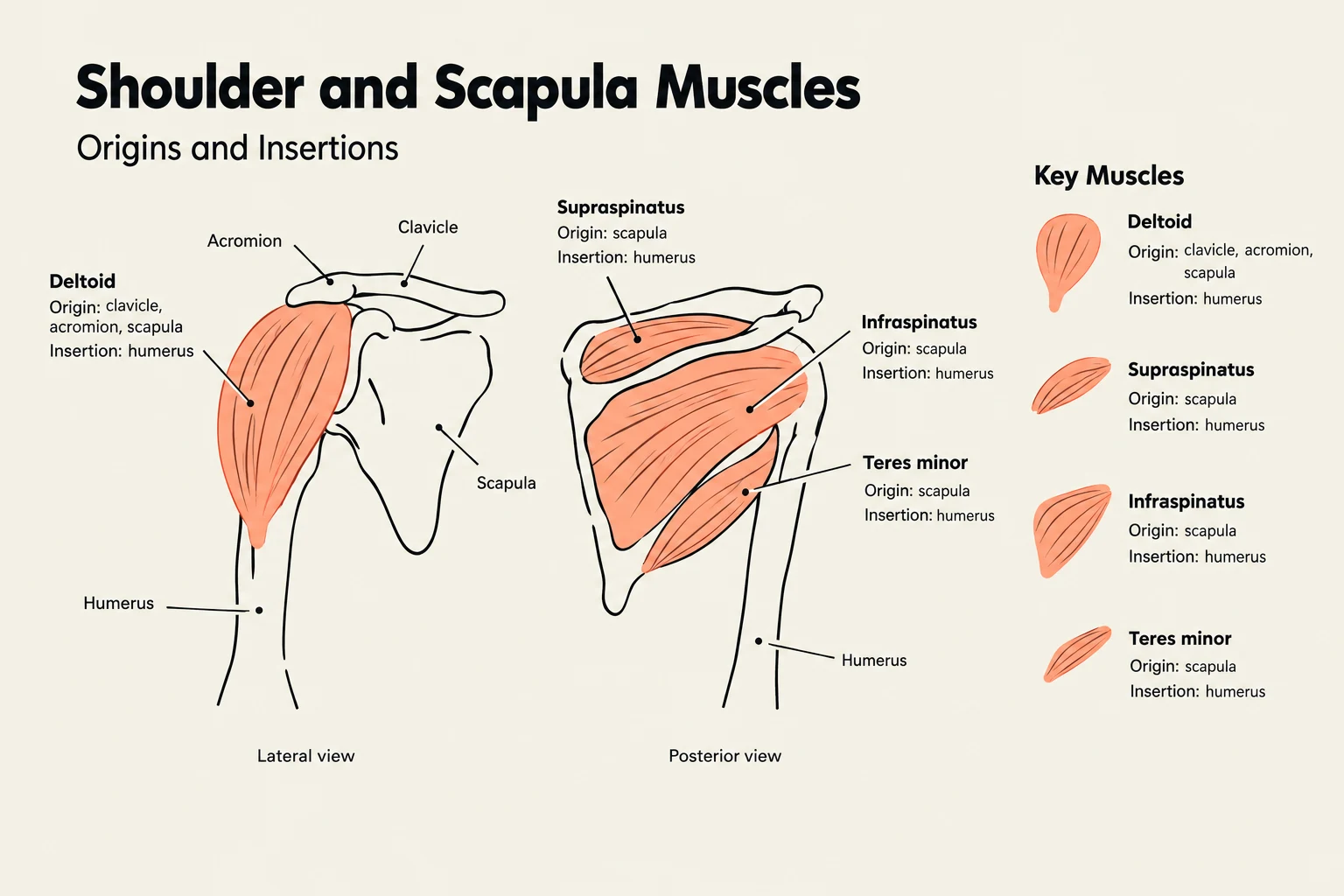
To master this region, you must view it as a series of integrated layers: the bony framework, the muscular drivers, the neurovascular supply, and the surface landmarks that allow us to visualize these deep structures in a clinical setting.
Osteology and Arthrology: The Framework
The foundation of shoulder movement lies in its bones and joints. Unlike the stable, weight-bearing joints of the lower limb, the shoulder complex is optimized for mobility. The primary bony components include the scapula (shoulder blade), the clavicle (collarbone), and the proximal end of the humerus.
The shoulder joints are not a single entity but a complex of several articulations that work in unison. Understanding how these bones meet is essential for understanding how the arm moves through space.
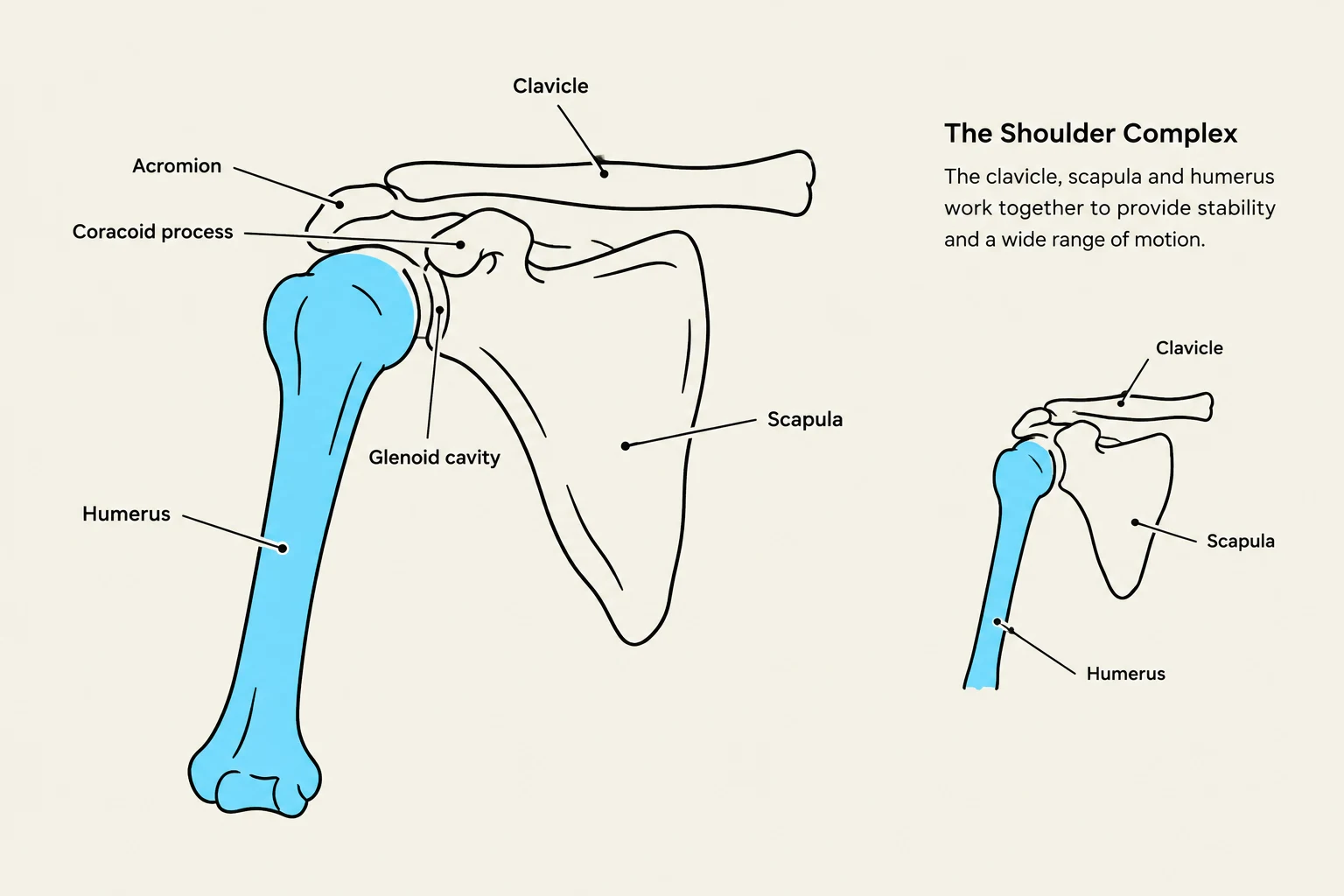
Study Tip: When studying the joints, don't just memorize the names. Think about the type of joint (e.g., synovial, ball-and-socket) and how that specific shape dictates the possible movements, such as abduction or rotation.
Keep reading for free.
Create an account to finish this reading and make it part of your study routine.
Continue reading freeAlready have an account? Log in
Updated