


The knee joint is a complex mechanical system where stability and movement are dictated by the interplay between muscular force and bony architecture. To understand how the knee flexes, extends, and rotates, one must look beyond the superficial structures and examine the specific posterior muscle groups and the bony landmarks that serve as their anchors. This article explores the anatomy of the posterior musculature—specifically the hamstring group—and the critical bony landmarks that define the structural integrity of the knee joint.
The Posterior Musculature: The Hamstring Group
The muscles located on the posterior aspect of the thigh are primarily responsible for flexion of the knee and extension of the hip. These muscles are functionally organized into lateral and medial groups.
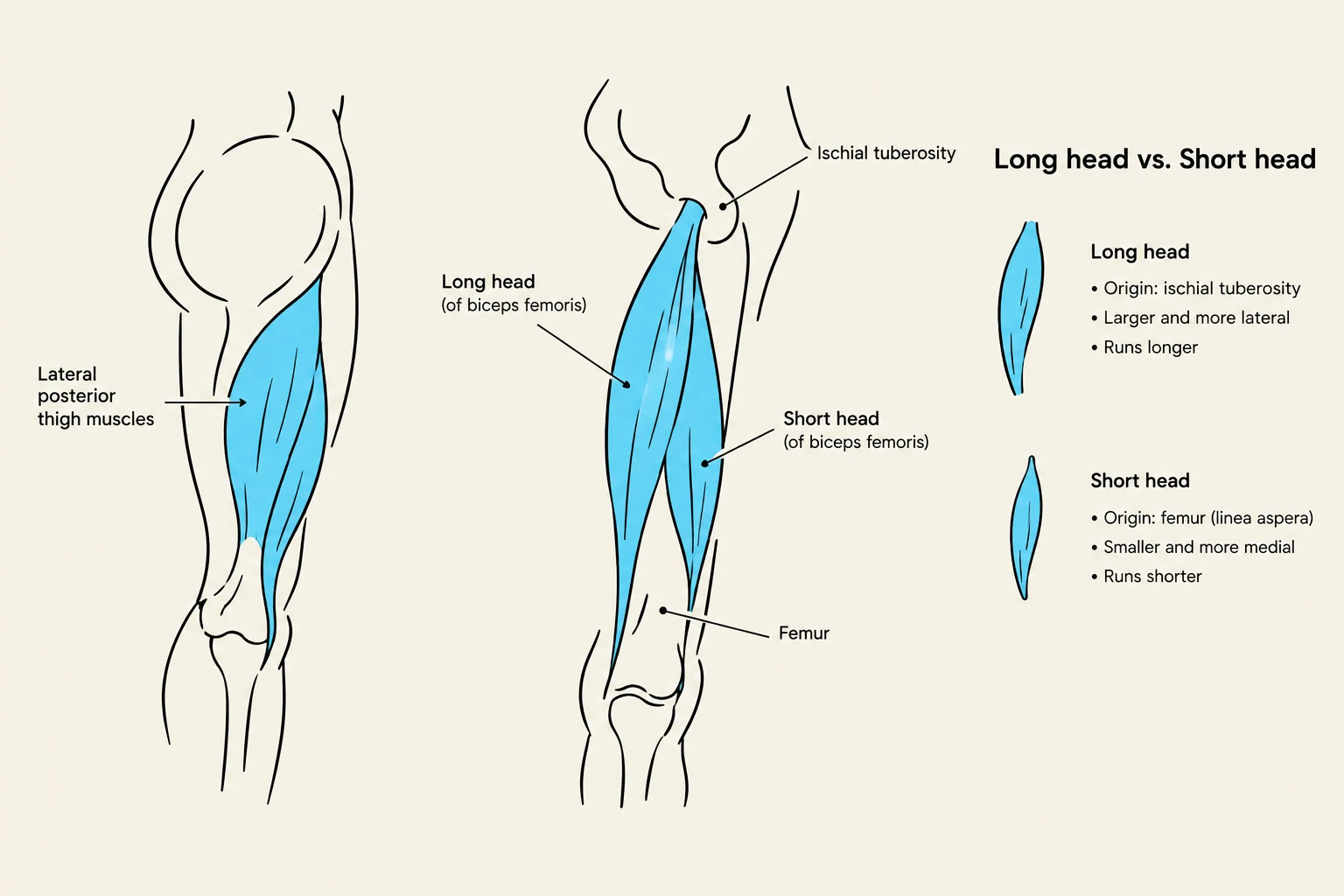
Lateral Posterior Muscles
The lateral aspect of the posterior knee is dominated by the Biceps Femoris. This muscle is unique because it is composed of two distinct parts that serve different roles in the kinetic chain:
- Biceps Femoris Long Head: This is the more proximal component, contributing significantly to hip extension and knee flexion.
- Biceps Femoris Short Head: This component is strictly a knee flexor, as it does not cross the hip joint.
Together, these components allow for powerful flexion and contribute to the lateral stability of the knee during movement.
Medial Posterior Muscles
On the medial side of the knee, the musculature is designed to manage rotation and flexion. This group consists of two primary muscles:

Keep reading for free.
Create an account to finish this reading and make it part of your study routine.
Continue reading freeAlready have an account? Log in
Updated