


The immune system relies on a diverse array of organs to protect the body from infection. While many lymphoid organs, such as the spleen and lymph nodes, act as filters to trap pathogens, the thymus serves a much more specialized role. Rather than acting as a "trap," the thymus is a primary lymphoid organ dedicated to the development and maturation of T cells, which are essential for adaptive immunity.
Anatomy and Location
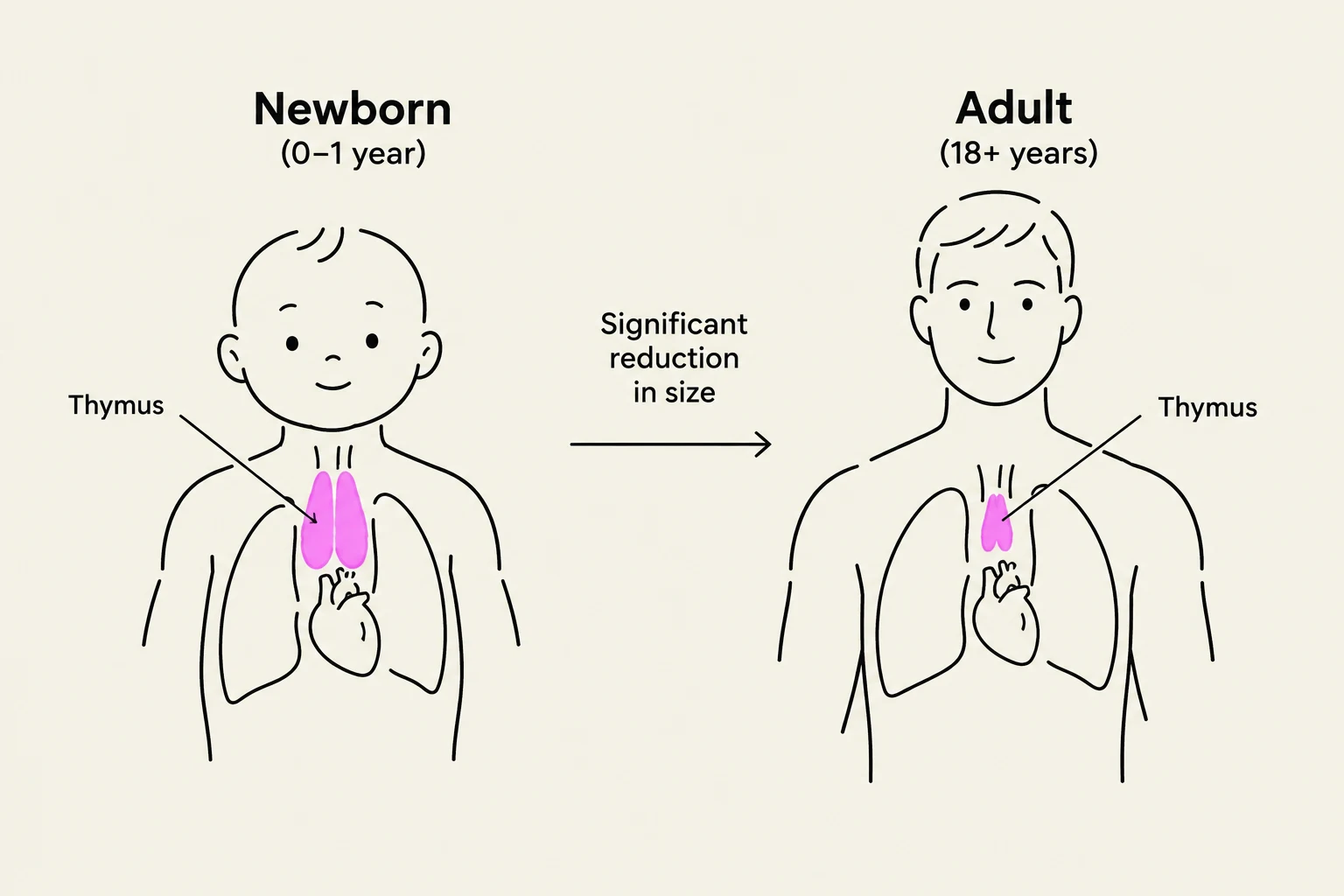
The thymus is a two-lobed endocrine organ located in the superior mediastinum. Its position in the chest cavity allows it to serve as a central hub for lymphocyte maturation during the most critical stages of human development.
Unlike the spleen, which filters blood, or lymph nodes, which filter lymph, the thymus does not function to trap pathogens. Instead, its structure is optimized for the biological "training" of immune cells.
Internal Organization: Thymic Lobules
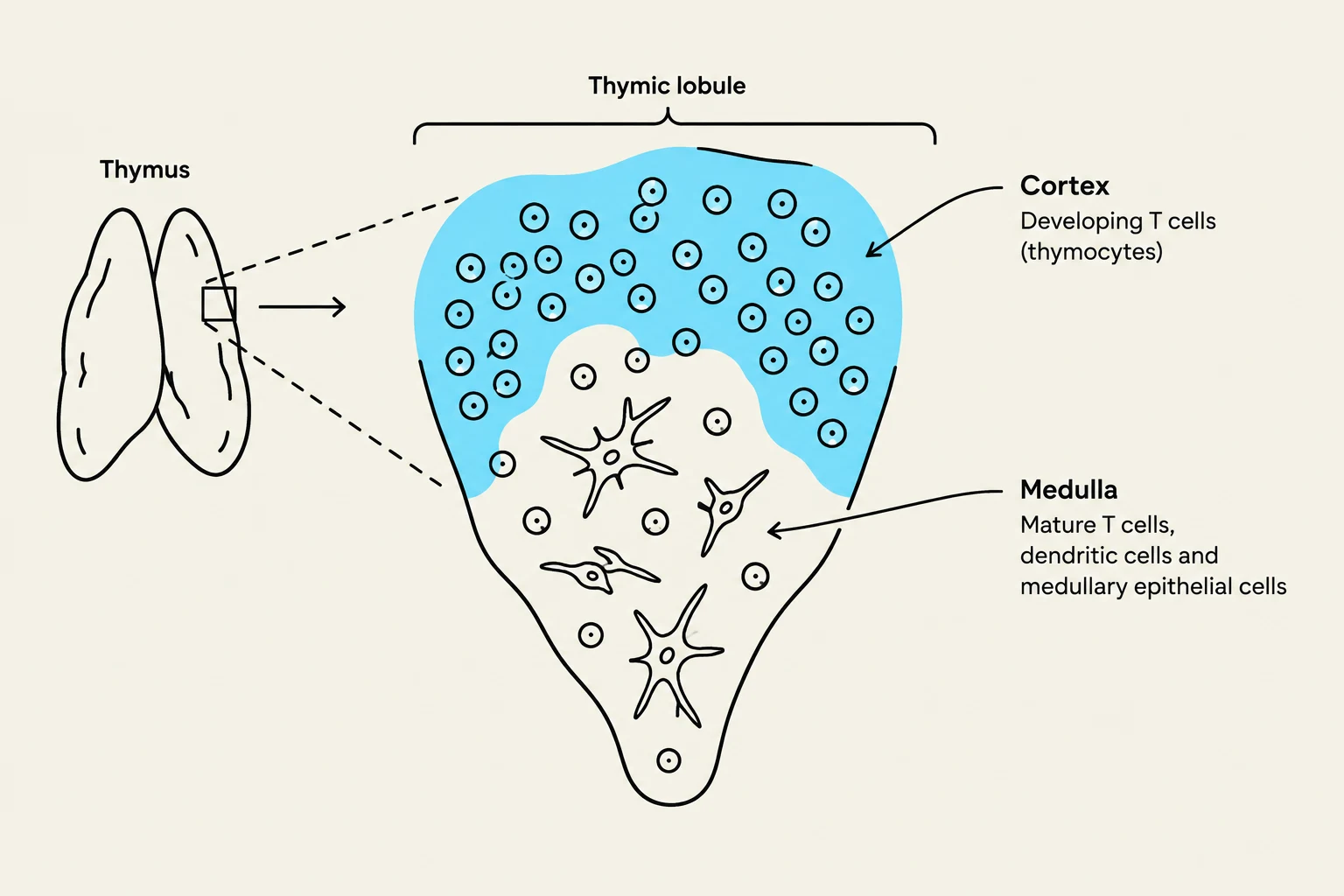
The internal structure of the thymus is organized into smaller units known as thymic lobules. Each lobule is characterized by a distinct layering system that facilitates the progression of T cells from immature precursors to functional immune cells.
The Cortex and Medulla
Each lobule is divided into two functional zones:
- The Cortex: This is the outer layer of the lobule. It is densely packed with developing T cells that are undergoing rigorous selection processes.
- The Medulla: This is the inner layer of the lobule. The medulla serves as a critical site for the destruction of T cells that have not matured correctly or that pose a risk to the body (such as those that might attack "self" tissues).
Keep reading for free.
Create an account to finish this reading and make it part of your study routine.
Continue reading freeAlready have an account? Log in
Updated