


The digestive system is a highly coordinated complex of organs designed to break down food, absorb nutrients, and eliminate waste. This process is not merely mechanical; it is a sophisticated biological operation regulated by a combination of hormones and both long and short neural reflexes. While much of the digestive process involves the stomach and small intestine, the journey begins much earlier, involving a series of specialized structures designed to transform food into a manageable form and propel it safely through the body.
The Oral Cavity: The Starting Point
The process of digestion begins in the mouth (oral cavity). Here, several key functions occur simultaneously: ingestion (the intake of food), mastication (the mechanical grinding of food via the teeth and tongue), salivation, and the beginning of propulsion. To protect the mouth from the physical friction caused by chewing, the oral cavity is lined with stratified squamous epithelium.
The Role of Salivary Glands
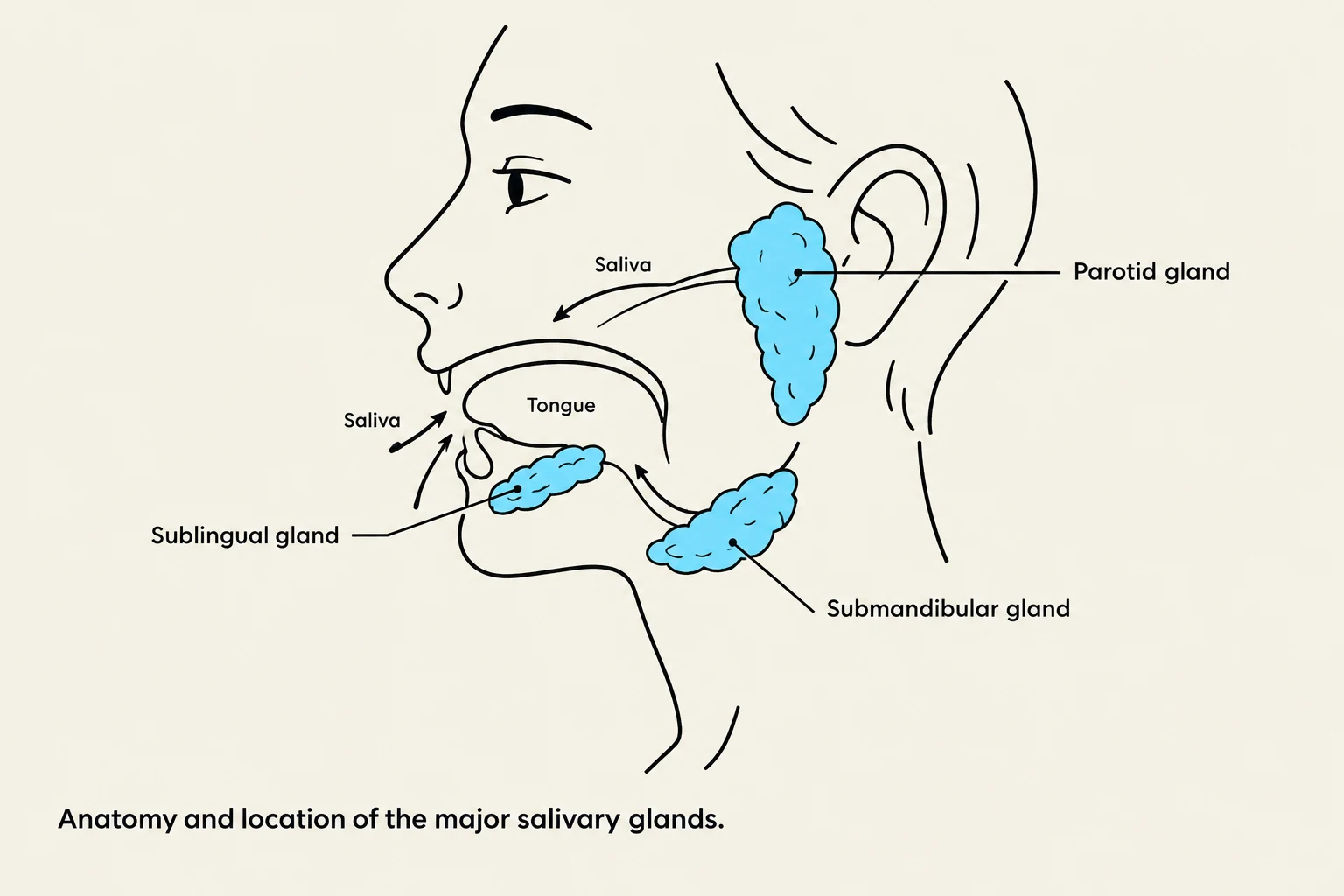
Salivary glands are essential accessory organs that facilitate both mechanical and chemical digestion. They produce saliva, which moistens food to help form a bolus (a soft mass of chewed food) and contains enzymes to begin breaking down macromolecules.
The three major pairs of salivary glands include:
- Parotid glands: Located anterior to the ear.
- Submandibular glands: Located medial to the mandible.
- Sublingual glands: Located under the tongue.
Saliva is more than just a lubricant; it is a chemical tool. It contains salivary amylase to begin the digestion of starches and lingual lipase to begin the digestion of fats. Furthermore, saliva provides a line of defense against pathogens through the inclusion of antibodies, lysozymes, and an acidic pH.
Keep reading for free.
Create an account to finish this reading and make it part of your study routine.
Continue reading freeAlready have an account? Log in
Updated