


The cerebrum is the largest part of the human brain and serves as the primary site for conscious thought, intellectual functions, and complex analytical processes. It is characterized by a wrinkled surface consisting of ridges called gyri and depressions known as sulci. This folding increases the surface area of the cerebral cortex, allowing for a higher density of neurons within the limited space of the cranium.
Organization of the Cerebral Hemispheres
The cerebrum is divided into two halves, known as the left and right cerebral hemispheres. These two halves are separated by a deep groove called the longitudinal fissure, which extends along the midsagittal plane.
While the hemispheres appear to be mirror images of one another, they are not identical in function. This phenomenon is known as hemispheric lateralization. Furthermore, the two hemispheres generally exhibit contralateral control, meaning they receive sensory input from and send motor commands to the opposite sides of the body.
To ensure the two halves can work together as a unified whole, they are connected by bundles of axons called commissural tracts. The largest and most significant of these is the corpus callosum.
Exam Tip: Remember that "contralateral" refers to the opposite side. If your left cerebral hemisphere is processing a sensation, it is likely receiving information from the right side of your body.
The Five Cerebral Lobes
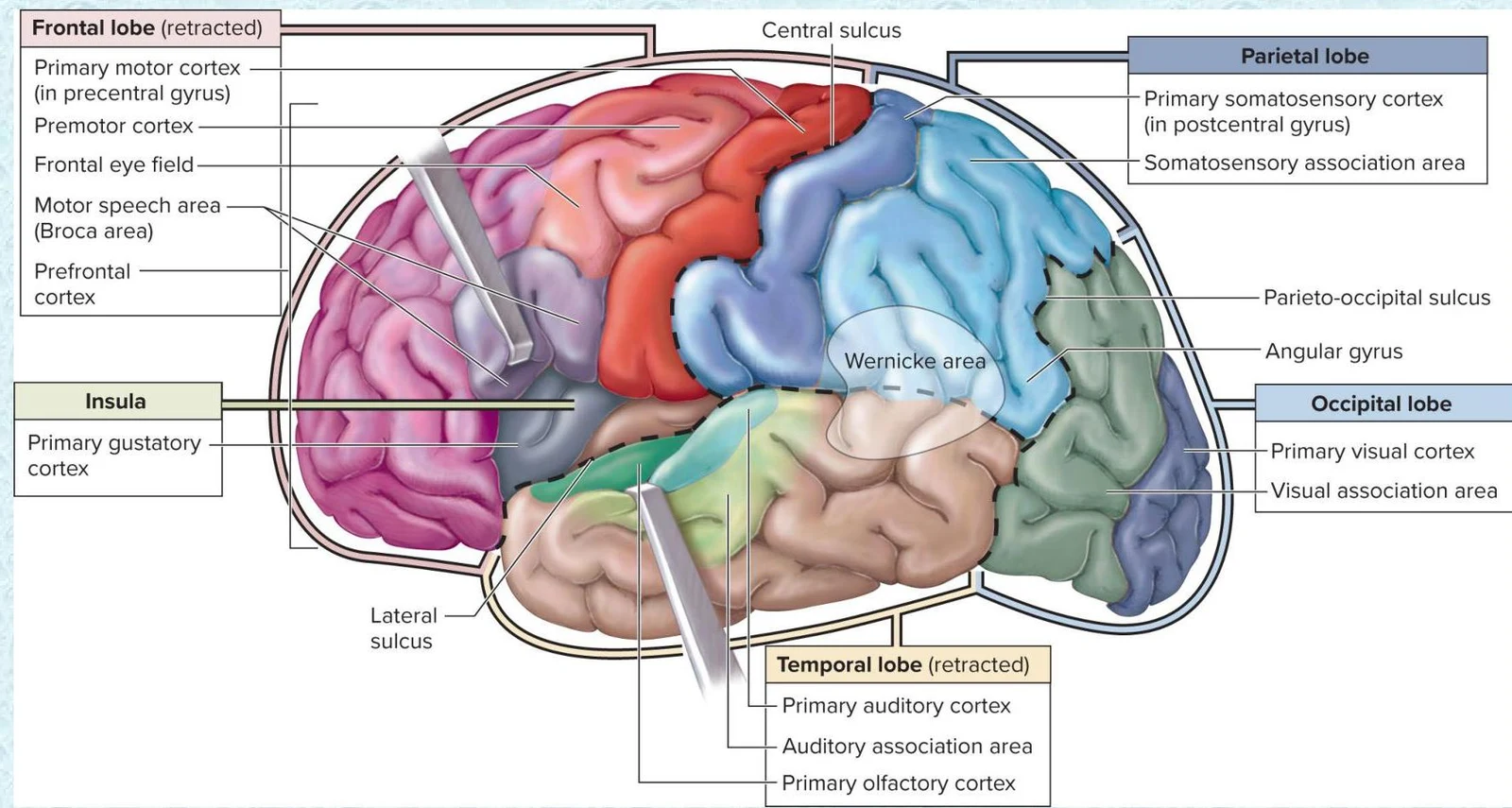
Each cerebral hemisphere is organized into five distinct anatomical regions or lobes, each contributing to different aspects of human experience:
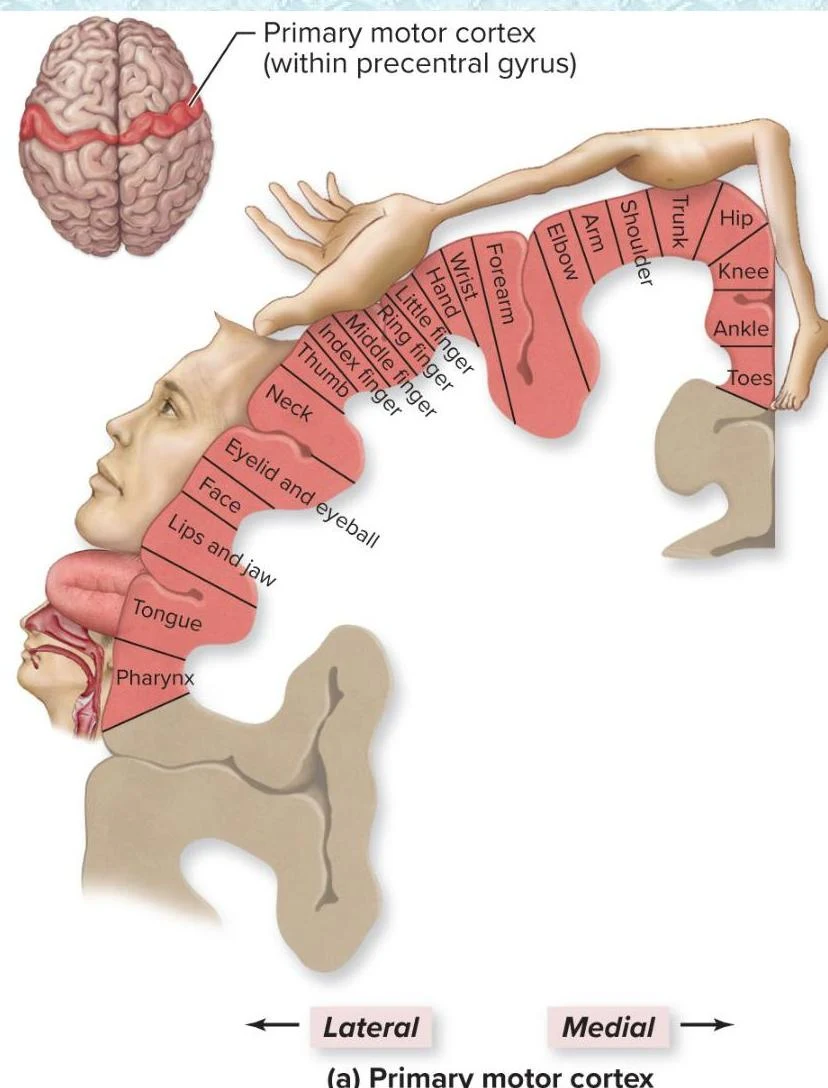
- Frontal Lobe: Located at the anterior part of the hemisphere, it is responsible for voluntary movement, concentration, decision making, planning, and personality.
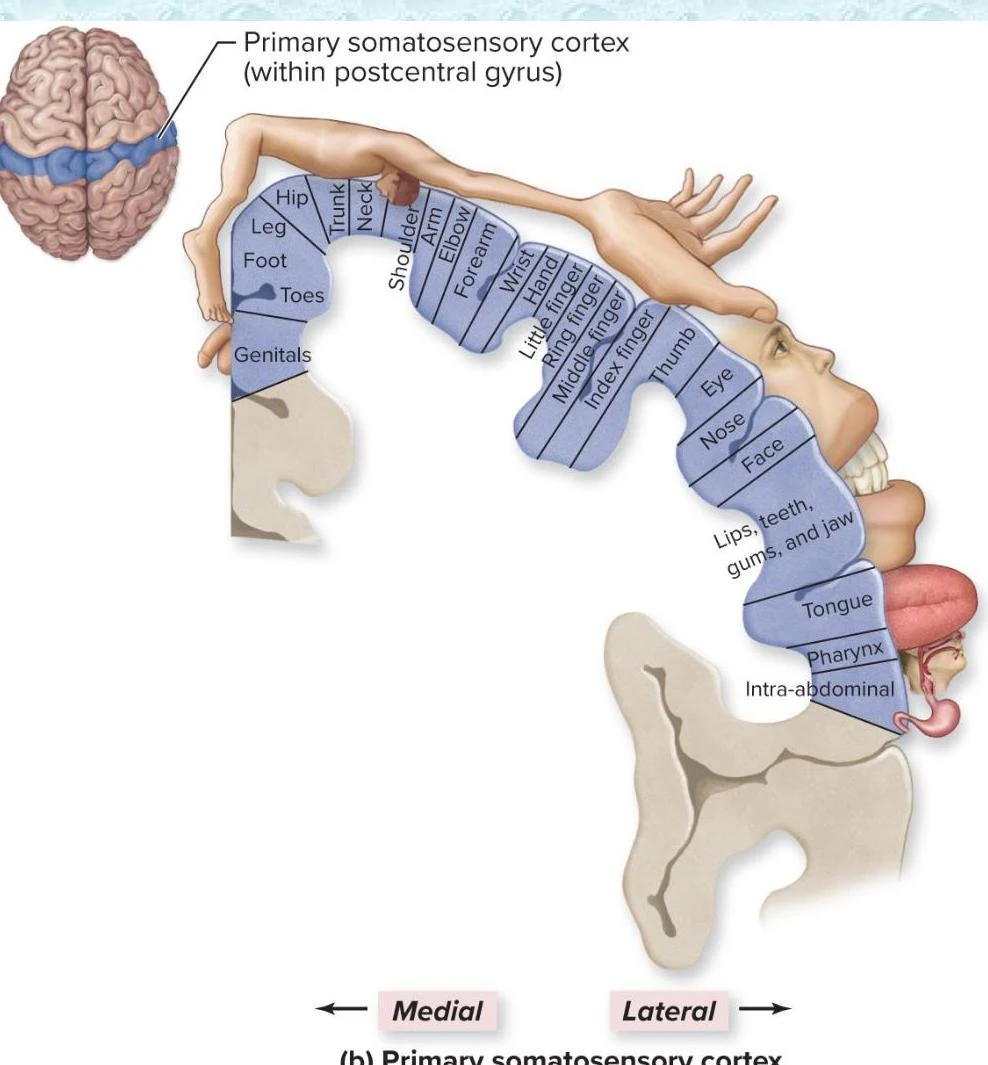
- Parietal Lobe: Situated in the superoposterior part of the hemisphere, it is primarily involved in general sensory functions, such as processing touch, temperature, and spatial awareness.
- Temporal Lobe: Located inferior to the lateral sulcus, this lobe is essential for processing hearing and smell.
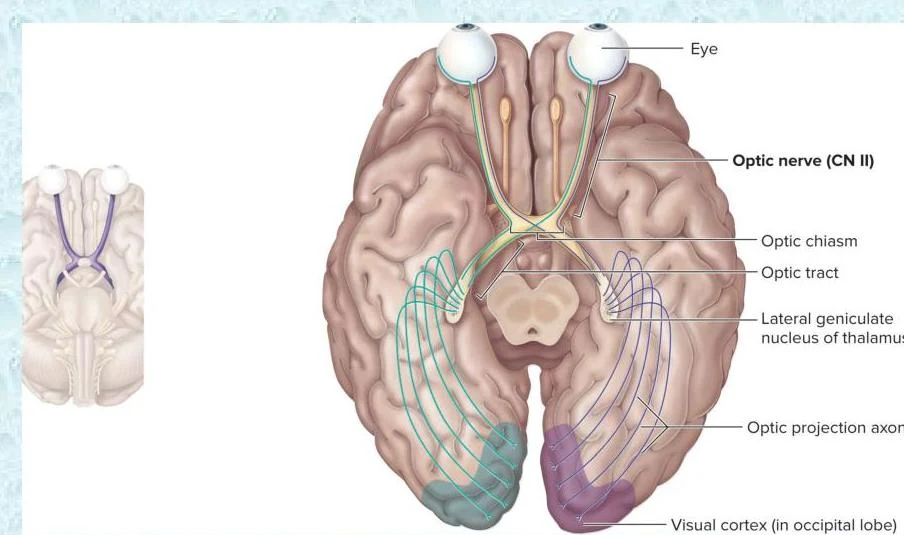
- Occipital Lobe: Located in the posterior region, it is the primary center for processing incoming visual information and storing visual memories.
- Insula: Tucked deep within the lateral sulcus, the insula is involved in emotion, empathy, taste, and interoceptive awareness (the sense of the internal state of the body).

Keep reading for free.
Create an account to finish this reading and make it part of your study routine.
Continue reading freeAlready have an account? Log in
Updated