


The muscles of the neck and jaw are essential for complex physiological processes, including mastication (chewing), swallowing, and phonation (speech). Central to these movements is the hyoid bone, a unique structure that serves as an anchor for two distinct groups of muscles: the suprahyoid and infrahyoid groups. Understanding the origins, insertions, and nerve supplies of these muscles is critical for clinical assessments of jaw movement and laryngeal function.
The Hyoid Muscle Groups
The hyoid muscles are categorized based on their anatomical position relative to the hyoid bone. These muscles work in coordination to manipulate the mandible and the larynx.
The Suprahyoid Group
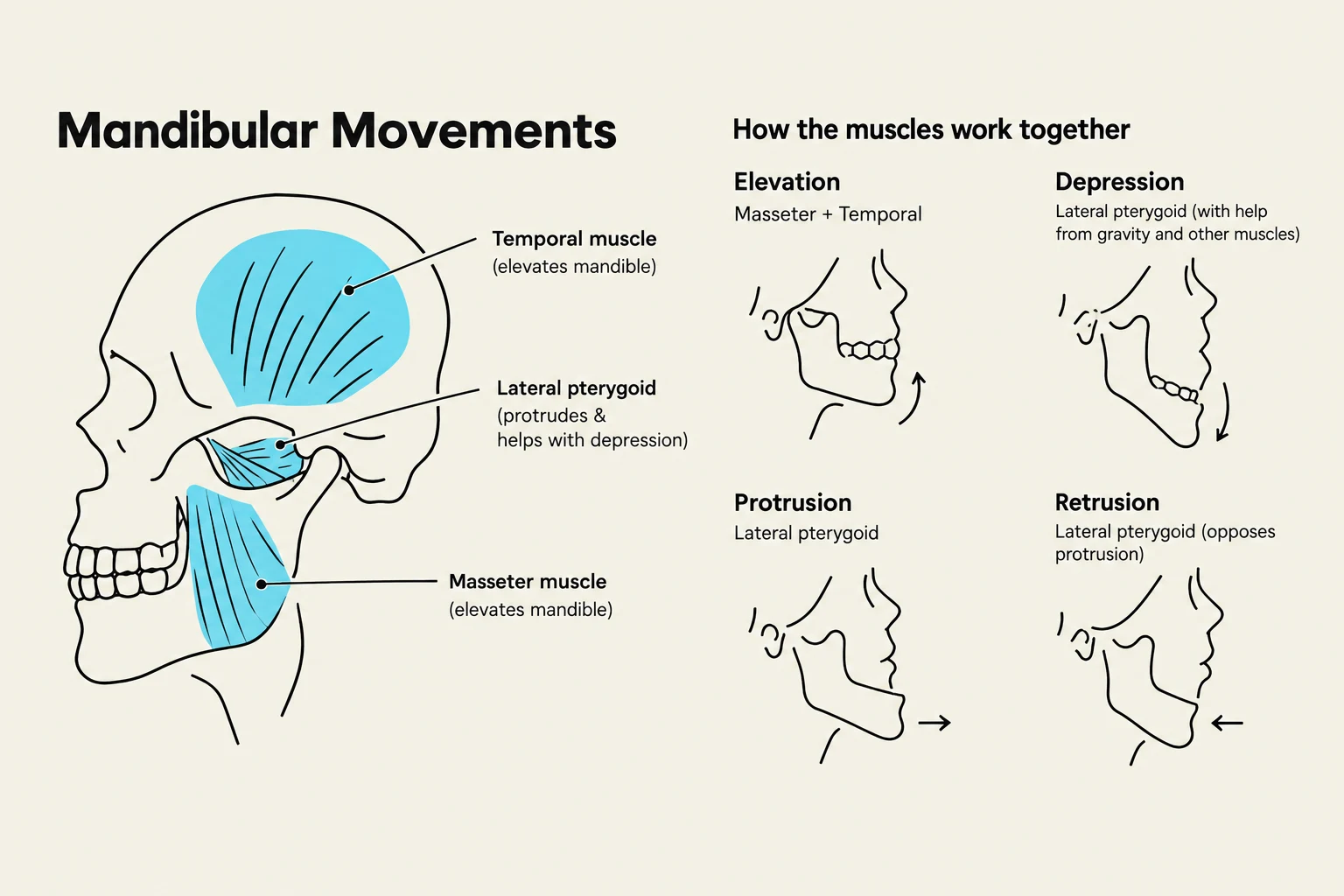
Located above the hyoid bone, the suprahyoid muscles are primarily responsible for depressing the mandible (opening the mouth) or elevating the hyoid bone.
- Digastric Muscle: This muscle consists of two bellies connected by an intermediate tendon. The posterior belly originates from the digastric notch of the temporal bone, while the anterior belly inserts into the digastric fossa on the mandible. It is unique because it is supplied by two different nerves: the trigeminal nerve and the facial nerve.
- Mylohyoid Muscle: This muscle forms the actual floor of the mouth. It originates from the mylohyoid line of the mandible and inserts into the hyoid bone. The left and right sides fuse at the midline to form a structure called a raphe.
- Geniohyoid Muscle: Situated deep to the mylohyoid, this muscle originates from the genial tubercle of the mandible and inserts into the hyoid bone. It is supplied by the first cervical nerve.
- Stylohyoid Muscle: This muscle originates from the styloid process at the base of the skull and pulls the hyoid bone up and back. It is innervated by a branch of the facial nerve (VII).


Keep reading for free.
Create an account to finish this reading and make it part of your study routine.
Continue reading freeAlready have an account? Log in
Updated